


Loading titles…
No cast information available.

A homage to the social housing architecture that is so atypical of Hong Kong - especially the Kwai Shing West Estate. About half of the population lives in such building complexes, where one experiences a strong sense of loneliness. The neighborhoods are the scene of modern living conditions, but also of social protests, which have been punishable by life imprisonment in Hong Kong since 2020 due to a new law.

The Real Story of Fake Democracy. Filmed over three years in five countries, FREEDOM FOR THE WOLF is an epic investigation into the new regime of illiberal democracy. From the young students of Hong Kong, to a rapper in post-Arab Spring Tunisia and the viral comedians of Bollywood, we discover how people from every corner of the globe are fighting the same struggle. They are fighting against elected leaders who trample on human rights, minorities, and their political opponents.
Muted Bridges records five oddly refurbished bridges in the Hong Kong Island which were once heavily covered with slogans, signs and information during the social unrest. It is a direct response to my previous work 'Tugging Diary,' where everything are renewed, erased, as if there’s a new page awaiting.

In 1971, after being rejected by Hollywood, Bruce Lee returned to his parents’ homeland of Hong Kong to complete four iconic films. Charting his struggles between two worlds, this portrait explores questions of identity and representation through the use of rare archival footage, interviews with loved ones and Bruce’s own writings.

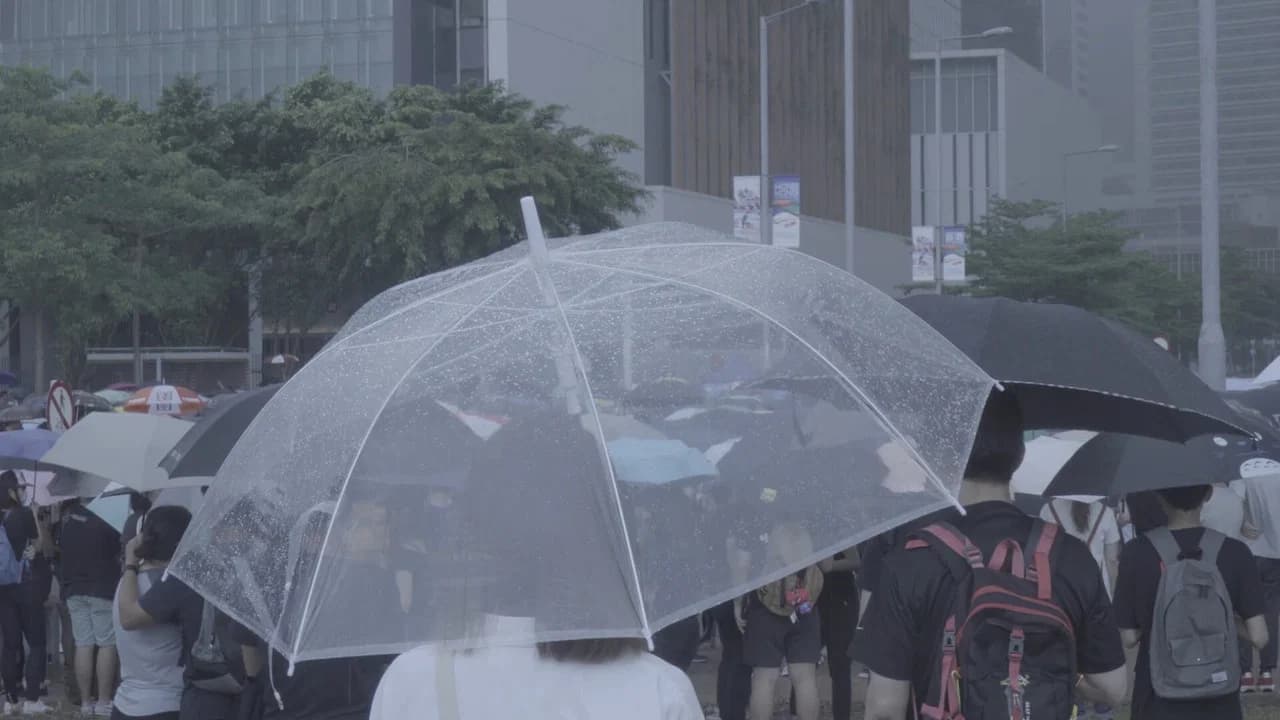
As the 'one country two systems' policy in Hong Kong has slowly eroded, resentment among the territory's citizens has steadily grown. What began as a series of spontaneous protests against an extradition law in March 2019 has now escalated in to a full-blown popular uprising that shows no signs of abating. ABC Four Corners reports from the frontline of the action, capturing extraordinary footage of the growing tension and violence.

The documentary “Not One Less” records the clash in Hong Kong Island on 31st August, 2019, and the assembly on Mid-Autumn festival night supporting protestors in custody. The protests initiated by the "Extradition Bill" has continued for more than 100 days. In this period, over 1000 citizens were arrested, a number of people committed suicide, and there are rumors that some protestors are missing. In the clash scene, protestors strive to protect their comrades from being isolated. After the clash, they still care about their comrades in custody. On the mid-autumn festival night, they sang loudly outside the Lai Chi Kok Reception Centre, to let their comrades know that they were not abandoned.

Mong Kok First Aid investigates the experiences and unheard stories of a group of young volunteers who provided First Aid services to wounded participants during Hong Kong’s landmark Umbrella Movement of 2014. Just half a decade later, their first-person narratives reveal an intense feeling of time passing and memories fading, as this documentary seeks to challenge history by intervening to supplement the record. After all, who decides whose story can be a part of history?

In the life of Mr. Lai Man-wai, he had seen the most turbulent times of recent Chinese history. From the fall of the Qing Dynasty to the founding of the Republic, from the Sino-Japanese War to the founding of the People’s Republic. With a patriotic spirit, he joined the revolution and used the theatre to promote the revolutionary course. For a ‘stronger China’, and ‘education for all’, he chose film as his life long goal and career. Lai was more than the father of Hong Kong cinema was; he was also one of the pioneers of the Chinese cinema. He made Hong Kong’s first short fiction film ‘Zhuangzi Tests His Wife’. He opened the first Chinese owned cinema, the New World Cinema, in Hong Kong…. In the several decades, Lai had devoted his life and fortune in writing this glorious inaugural chapter in early Chinese film history. The technical enhancement, the introduction of foreign techniques and equipment were all part of his contribution to the Chinese cinema.

Franco Mella is a devoted figure whose life bridges Catholicism and Communism. He has journeyed through Asia, lived simply, and fought for social justice, notably within Hong Kong's protest history as depicted in "Ordinary Heroes" (1999). Mella's path weaves through religious and revolutionary movements, from church beginnings to Communist activism and the Handover, always driven by his missionary spirit and communist ideals. For four decades, he has steadfastly championed the oppressed, undeterred by shifting politics, expressing solidarity through music and protest, and remaining a symbol of wisdom and resilience for the people of Hong Kong.

The 2005 World Trade Conference in Hong Kong was the starting point of the "direct action" that emerged from the Hong Kong protest movement. It was also the first time the Hong Kong police used a large number of tear-gas and beanbag rounds on the street after the 1967 riots. Outside the conference, there were many Hong Kong protestors. Why and how did they get involved in this movement centered on Korean farmers?
