

Loading titles…
Documentary
Human hands can be both destructive and healing, Jeffrie Po suggests in his experimental film with spiritual outreach. He portrays a human being as a faun who roams the jungle dauntlessly, yet is destructive. The forest with vanishing cattle becomes a battlefield between dark…
No cast information available.

A kinetic prayer and structuralist intervention. Shot entirely on an iPhone 11 in a desolate Midwest laundromat, 108 spin documents the mechanics of impermanence. The film shifts from heavy turbulence to suspended repetition—not as a path to completion, but as a study of the loop itself. Featuring a layered soundscape, the work asks the viewer to stare into the rotation until the noise becomes a mantra.


In his contribution to the On Art and Artists interview series, Nathaniel Dorsky (b.1943) begins by discussing his childhood love of the John Ford film Stagecoach and its influence upon his decision to make films while attending Antioch College. Describing the affinity he developed for work operating at the intersection of film materiality and personal language, Dorsky explains how he developed his philosophy of the “devotional film” and the “microcosmic viewer.” Dorsky likens his practice to Buddhist sculpture, referring to himself as a “Japanese poet continuing aspects of the ethos of the Marxist revolution.” In the interview, the artist describes his use of the screen as an “altarpiece for the image” and emphasizes his use of editing to create works which “harmoniously coalesce.” Interview conducted by Jeffrey Skoller in May 2000, edited in 2014.

"Bagong Buhay" is a short experimental film that dispels the common belief that packing up and moving to a new place will magically improve one's quality of life. The film challenges this presumption by portraying two contrasting ways of life through objects and locations, encouraging viewers to think critically about the complexities of what makes a better life. In the Philippines, it's believed that relocating to a new area will bring about positive changes in one's existence. True satisfaction is a complex and multifaceted notion, and "Bagong Buhay" encourages us to ponder that relocating to a new place is not a surefire way to attain it.

Women from the different Spanish regions dress in their traditional costumes to attend the triumphal parade celebrating the victory of Francisco Franco and the rebel side over the Second Republic in 1939; the deeds of past heroes are remembered; and a patriotic poem by Nicaraguan poet Rubén Darío is recited.

An experimental visual adaptation of selected poetry written by Salomėja Nėris, Eduardas Mieželaitis, Algimantas Baltakis, Janina Degtutytė, and Justinas Marcinkevičius. Accompanied by the art of Stasys Krasauskas and narrated by Rūta Staliliūnaitė, A Song of Life and Love attempts to capture the city of Vilnius and its surroundings while documenting regular people and places in an attempt to memorialise the ordinary.
P. Adams Sitney, Professor of Visual Art at Princeton University, wrote a short essay for Artforum International "Medium Shots: the films of Morgan Fisher" in which he describes the film "()." "Fisher's most recent film, (), succeeds astonishingly where Frampton's parallel effort, Hapax Legomena: Remote Control (1972) failed; it uses aleatory methods to release the narrative unconscious of a set of randomly selected films. () is made up entirely of "inserts" from feature films organized according to Oulipian principles. Inserts were usually shot by assistants when star actors, large crews, or expensive sets were not needed. These include details of weapons, wounds, letters, signs, tombstones, machinery, games of chance, timepieces, money, and even intimate caresses.

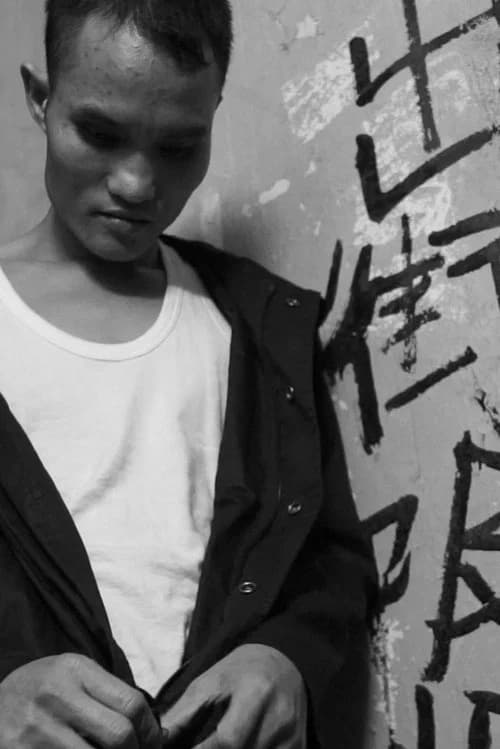
310 Tung Chau Street is a tenement building in Sham Shui Po. Three Vietnamese from the same province share a subdivided flat. Unemployment, drug addiction, and arguments brew and breed incessantly in this heated environment. During filming, the two young directors were encumbered by a series of obstacles, which turned the process into a chance to reflect on documentary truth.
