Loading titles…
Documentary / Music
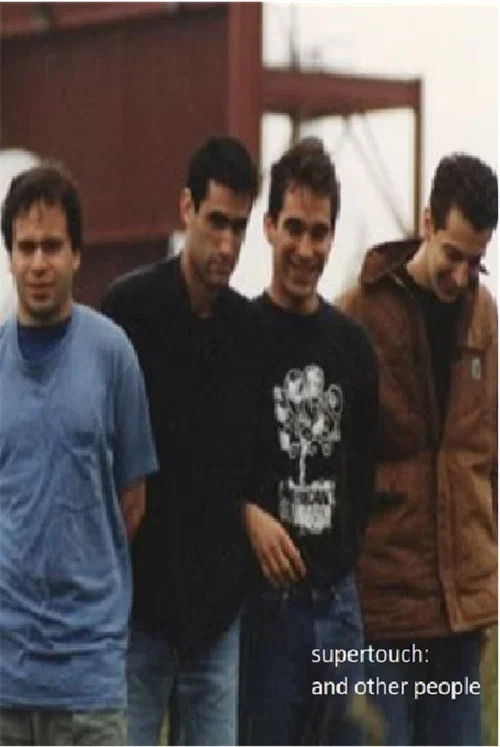
The story about a band from the New York City hardcore scene. Features interviews from members of the band, entourage, and individuals from the NYHC scene. Experience the live setting with some extremely rare footage from the band in their hey day during the late 80s and early…
Cast
Cast
Cast
Cast
Host
Cast
Cast
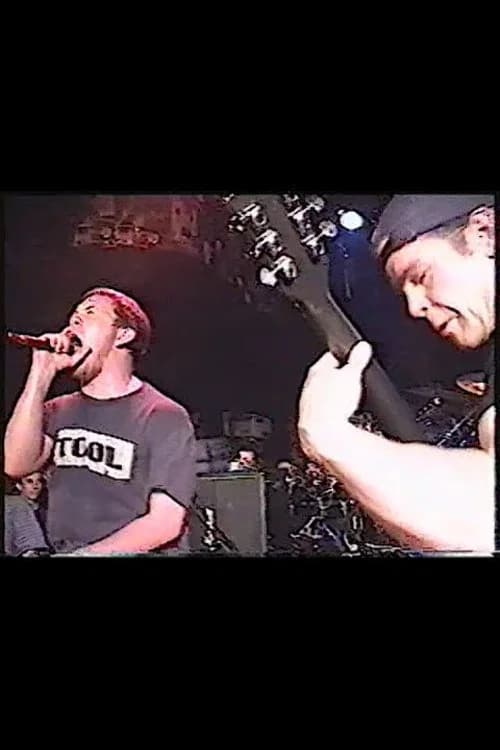
Live at CBGB Saturday the 3rd of June 2000 New York, NY In support of Cattle Press, Discordance Axis, and Disassociate doing a three way release. Distraught, The Dillinger Escape Plan were also billed. This is the show where J.R. continues audibly screaming the lyrics to the song "Forgotten Child", after the mic breaks. He wears a TOOL shirt. Set List 1 - Intro 2 - Blonde Prostitute 3 - White Sand 4 - Patterns Of Failure 5 - Deflower 6 - Treblinka 7 - Hymn (?) 8 - Forgotten Child 9 - Under The Fingernails 10 - Rejection Fetish 11 - Dark Satellites 12 - Oven (Melvins Cover) 13 - 16:40 - I dunno 14 - 18:20 - Yellow Line Transfer J.R. Hayes: Vocals Scott Hull: Guitar Brian Harvey: Drums

This is Poe and Král's first effort, shot on small-gauge stock, before their more well-known endeavor The Blank Generation (1976) came to be. A "DIY" portrait of the New York music scene, the film is a patchwork of footage of numerous rock acts performing live, at venues like Madison Square Garden, Radio City Music Hall, the dive bars of Greenwich Village and, of course, CBGB.


An extraordinary film about memory, and specifically the fading memory of an 86-year-old political activist who has fought tirelessly against historical amnesia and for justice in Argentina. The director’s grandmother, Laura Bonaparte, was one of the founders of the Mothers of the Plaza de Mayo, formed during the 1970s by women whose children and family members had been disappeared by the Videla military dictatorship. Laura herself lost three children and their partners, including the director’s parents. Today, after a lifetime battling that the disappeared never be forgotten, Laura faces her own struggle to remember.
Neuropsychologist Paul Broks travels America in search of the soul of legendary jazz guitarist Pat Martino who was brutally silenced by memory stripping brain surgery. Tracing his remarkable ascent from the depths of amnesia, back to the peak of artistry, Broks explores the nature of memory, self, creativity and the brain systems underlying personal identity. Filmed throughout the US in 2006 and 2007 the film features Delmar Brown, Red Holloway, John Patitucci, Les Paul, Joe Pesci, Carlos Santana and Pete Townshend.

Diana Mariscal reached a moment of fame in the sixties, when at just 18 years of age she was the lead actress of the movie Fando and Lis by Alejandro Jodorowsky. The moment seemed to trigger a promising career, but her public image faded little by little until disappearing. Forty years later the traces of her existence have not been entirely erased.
At the beginning of 2012 the so called war against crime, led by the Mexican Federal Government brought, as consequence, a number of nearly 50,000 casualties and a social climate of violence and distrust. How was this experienced by the men and women who fight this violence from the trenches of science? To the End of Reckoning tells through the eyes of the Jalisco Forensics Institute the development of this engagement, in one of the most violent states in the Country.

During 1950, Miguel Contreras Torres led a group of filmmakers to officially denounce William O. Jenkins' monopoly on film theaters, which was built throughout the country upon crime and corruption. Ever since, Uncle Miguel was ridiculed and eventually forgotten, but it is certain that his proclaim announced the separation of Mexican cinema and its audience. Discoveries may be found in the films made by Miguel, and bringing back to life these moving pictures might recover this history that was never told, a story that is almost lost and that Contreras Torres himself tried to pass on through his writings in The Black Book of Mexican Cinema.

In an unfair country women work day and night far from home while their children learn to survive between loneliness and emptiness. They grow to become teenagers, locked down in one of many low income neighborhoods made up of identical small houses, outlined by overcrowding and scarcity. Their mothers, mostly workers in transnational factories, go in and out in buses that take them to a work place where they carry out twelve hour shifts two hours away from home, while their children muddle through their upbringing in tiny houses of 40 square meters. In spite of everything, they look for a way to move ahead and chase their illusions. This is a story full of youthful aspirations set in a context of difficulties and shortages.