Loading titles…
No cast information available.



GIRI CHIT tells a tale of the subtle trace of irreconcilable worlds. A worker driving a mobile sweeper in hypnotic circles across an already immaculate surface. The high drama of cosplay aficionados clamoring to be seen. A cast of thousands toiling hundreds of feet above the street. Giri translates as ‘duty’ in Japanese, but the concept is in fact far more complicated. Giri is a sort of interpersonal political capital that informs careers, family relations, and much more. Its presence and flow is palpable in Japan, where this film was shot. A “giri chit” then may be a hypothetical voucher for this intangible flow (with a tip of the cap to Thomas Pynchon’s “Vineland”). Selected Screenings and Awards: DaVinci Film Festival (Best Experimental Film), Chicago Underground Film Festival, Athens International Film and Video Festival, Dallas Videofest, ICDOCS Film Festival, NewFilmmakers at Anthology Film Archives, Oxford Film Festival, Director’s Lounge Berlin
Latest installment from the on-going collaboration between filmmaker Paul Clipson & musician Jefre Cantu-Ledesma. Paul's Super8 films, shot entirely in New York City, channel the blissed out states of color drenched psychadellia explored by Brakage as well as lovely black and white still life's that reminisce on Ozu's 'pillow shots' & Chantel Akermans monumental portrait of Pre-Giuliani New York 'Letters Home'. Jefre's music is culled from the same sessions that launched his 2007 release on Students Of Decay 'Shinning Skull Breath', (the two share a track in common). Billowy clouds of distorted guitar expand out into long passages of muffled static and fuzzed out melody.

I am sitting in a room is a sound art piece by American composer and sound artist Alvin Lucier composed in 1969. The first performance of the work was in 1970 at the Guggenheim Museum in New York. In collaboration with his partner Mary Lucier. The piece features Lucier recording himself narrating a text, and then playing the tape recording back into the room while re-recording it. The new recording is then played back and re-recorded, and this process is repeated. Due to the room's particular size and geometry, certain resonant frequencies are emphasized while others are attenuated. Eventually the words become unintelligible, replaced by the characteristic resonance of the room.
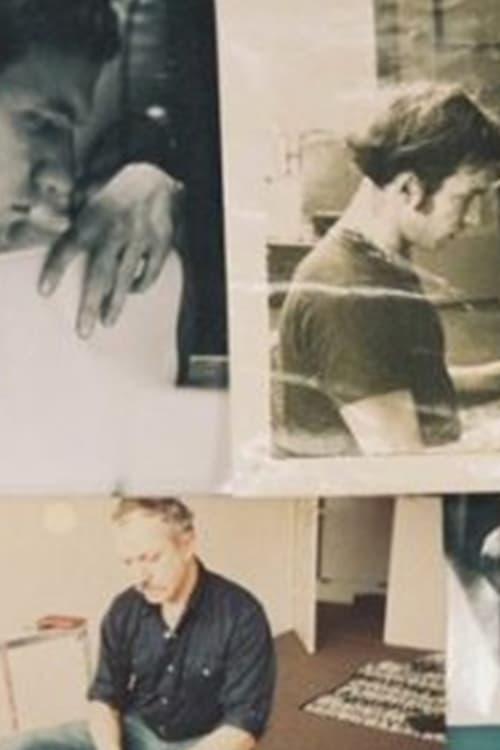
Electro-Pythagorus is an intimate and subjective portrait of the late Martin Bartlett, the Canadian electronic music pioneer who studied with Pauline Oliveros, David Tudor, John Cage, and Pandit Pran Nath. His contribution as an interdisciplinary composer, educator, and founding member of Western Front, though undoubtedly extensive, is in danger of being erased from cultural memory since his death from AIDS in 1993. Navigating an array of archival materials including letters, correspondences, notebooks, personal photos, and a huge body of unreleased music and field recordings held at the archives of Simon Fraser University, Electro-Pythagoras is a journey through the evolution of Bartlett’s musical time and space, softly guided by Luke Fowler’s insightful camera and montage—creating an experimental portrait that defies one-dimensionality.

The people of Antiquity had little problem with nudity and would not find graphic depictions of sexual acts as morally suspect or obscene. But Christianity changed perspectives, bringing in notions of shame and the negation of the body. This documentary looks at the erotic in art over the last two thousand years.
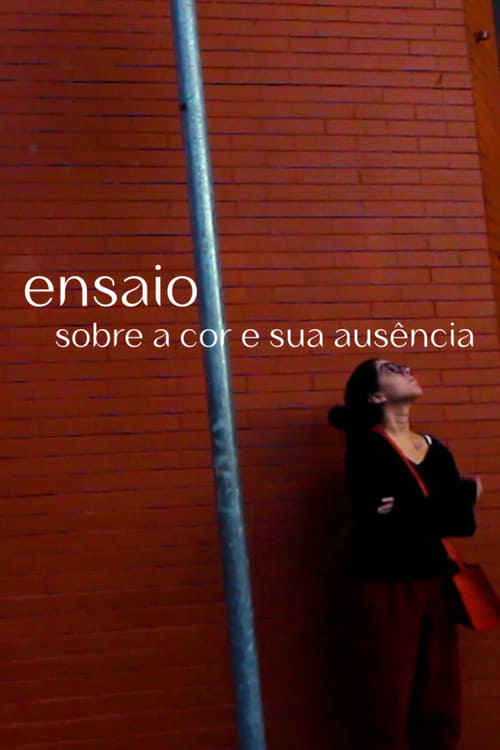
"A l likeness is a gift... it avoids... or confuses time if your prefer." said John Berger. Following this premise, 81.92 is a structuralist inquiry into the notion of presence and absence as it reveals archival radio broadcasts from former Montreal radio host Mike Wolkow. The former (the audible) is left invisible while the later (the visible) seeks to find the missing elements that trace the passage of this vocal presence. Past and present interplay in this piece that shifts between epochs, thus mimicking a radio signal that is being tuned in.