

Loading titles…
Documentary
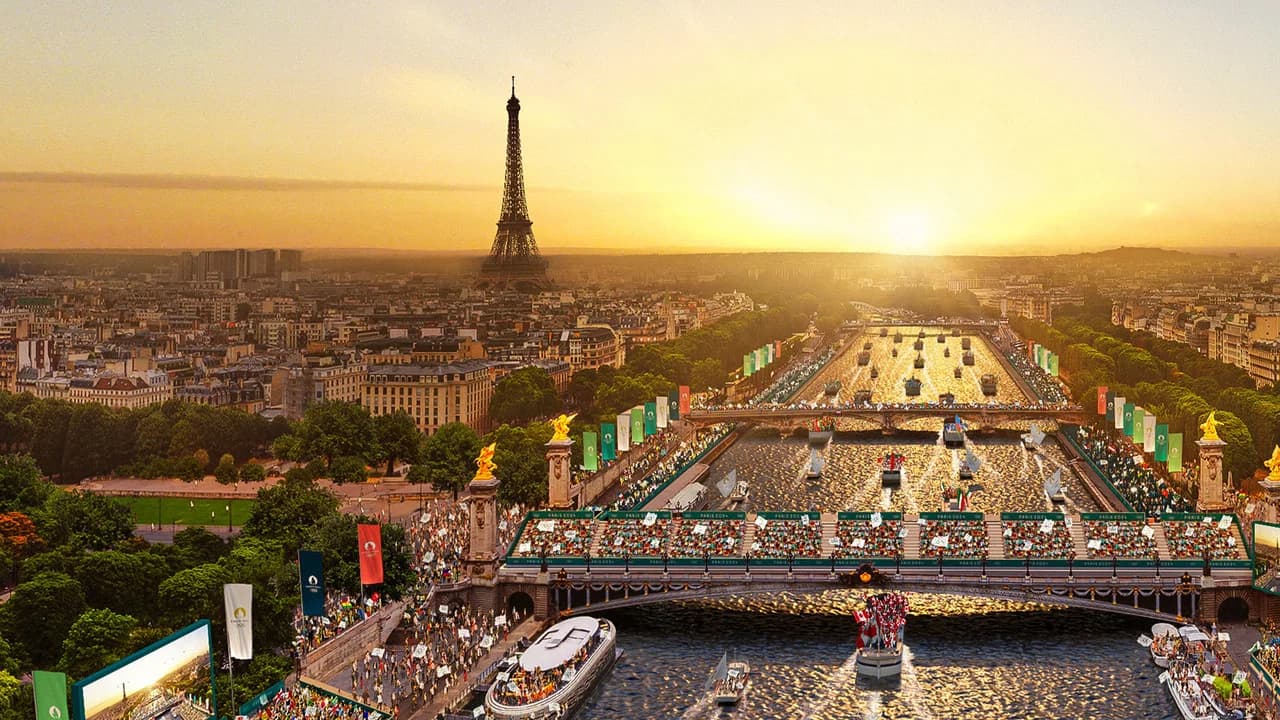
On 26 July 2024, the largest-ever Olympic Games Opening Ceremony took place, beginning at 7.30 p.m. CET. The Opening Ceremony of the Olympic Games Paris 2024 was an unprecedented experience drawing on the natural light of the setting sun with all its nuances to illuminate the…


Self (torchbearer)

Self (torchbearer)

Self
Self (Gojira)
Self (Gojira)
Self (Gojira)
Self (Gojira)

Self
Self

Self

Self

Self


Starting with a long and lyrical overture, evoking the origins of the Olympic Games in ancient Greece, Riefenstahl covers twenty-one athletic events in the first half of this two-part love letter to the human body and spirit, culminating with the marathon, where Jesse Owens became the first track and field athlete to win four gold medals in a single Olympics.


The opening ceremony of the Barcelona Summer Olympics took place on July 25, 1992, at the Montjuïc Olympic Stadium before an audience of over 65,000. This historic event was largely orchestrated by the renowned Catalan troupe La Fura dels Baus, which staged spectacular scenes depicting the history of the Mediterranean and the Labours of Hercules. Music played a central role in the evening, featuring great operatic voices; the audience was captivated by performances from Montserrat Caballé, José Carreras, Plácido Domingo, Alfredo Kraus, and Teresa Berganza. Although he had passed away the previous year, Freddie Mercury was also present—both on screen and in voice—through the broadcast of their iconic duet "Barcelona," which became the definitive anthem of the Games. Additionally, British pop star Sarah Brightman performed the official anthem, "Amigos Para Siempre," alongside José Carreras.

This documentary about legendary French chanteuse Edith Piaf begins at her birth (which was helped along by a cop), travels through her turbulent romantic history, follows her to the pinnacle of her success and reports on her death. Piaf was queen of the torch song, her plaintive wail speaking volumes of the tragedy and joy she'd faced. Hers wasn't exactly, in the words of one of her famous songs, "La Vie En Rose," but it was quite a life.

In this special documentary that inspired a two-season television series, scientists and other experts speculate about what the Earth, animal life, and plant life might be like if, suddenly, humanity no longer existed, as well as the effect humanity's disappearance might have on the artificial aspects of civilization.

Through the experiences of two women in Paris and London, Ghost Dance offers an analysis of the complexity of our conceptions of ghosts, memory and the past. The film focuses on the French philosopher Jacques Derrida, who observes, 'I think cinema, when it's not boring, is the art of letting ghosts come back.' He also says that 'memory is the past that has never had the form of the present.'

