
Loading titles…
Documentary / Adventure
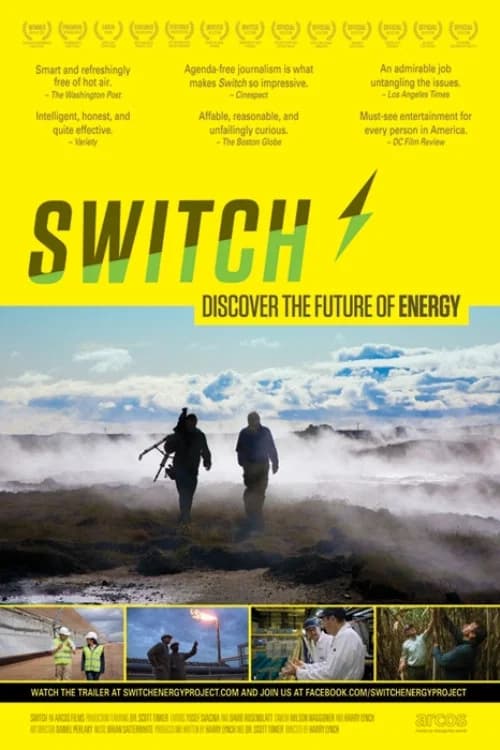
What will it really take, to transition from oil and coal, to the energies of tomorrow? SWITCH goes where no film has gone before, deep into the world's most restricted energy sites, to depoliticize competing power sources, make the technical accessible, and discover the truth…
Himself

“…It is a film that tells in hurried film sequences and a resonant musical score juxtaposing the sublime, funereal despair of Bartok agains tthe gut-bare tones of folk music. Gates has through his filming technique and meticulously selected mining sites, captured all the outrage and sorrow and indignity to the land and its people that strip mining represents. The film is one that all Americans should see, for it shows extremely well the price we have to pay for strip mined coal.” - Dale A. Burk, The Montana “Missoulian”


The “Prophecy of the 7th Fire” says a “black snake” will bring destruction to the earth. For Winona LaDuke, the “black snake” is oil trains and pipelines. When she learns that Canadian-owned Enbridge plans to route a new pipeline through her tribe’s 1855 Treaty land, she and her community spring into action to save the sacred wild rice lakes and preserve their traditional indigenous way of life. Launching an annual spiritual horse ride along the proposed pipeline route, speaking at community meetings and regulatory hearings. Winona testifies that the pipeline route follows one of historical and present-day trauma. The tribe participates in the pipeline permitting process, asserting their treaty rights to protect their natural resources. LaDuke joins with her tribe and others to demand that the pipelines’ impact on tribal people’s resources be considered in the permitting process.

Since World War II North Americans have invested much of their newfound wealth in suburbia. It has promised a sense of space, affordability, family life and upward mobility. As the population of suburban sprawl has exploded in the past 50 years Suburbia, and all it promises, has become the American Dream. But as we enter the 21st century, serious questions are beginning to emerge...


Dr. Helen Caldicott is the most prominent anti-nuclear activist in the world. She's been featured on CNN, 60 Minutes, CBC and Democracy Now. In the 80s, Helen Caldicott campaigned against nuclear weapons testing in the pacific (still responsible today for the majority of tritium we're exposed to), and against the notion of a winnable nuclear war. She was nominated for a Nobel Peace Prize for her efforts. She has always made inaccurate statements regarding civilian nuclear power. But, since the Fukushima-Diachii radiation release has caused (and is projected to cause) zero fatalities... http://www.unis.unvienna.org/unis/en/... ...her tone has changed when speaking to supporters. This has not been acknowledged by prime-time media, as they continue to use her as a source. Any person or media outlet should check Caldicott's history of statements (on any subject) against a domain expert before using her as a source.


In 1971, Bahrain, Qatar and the UAE ceased to be part of Britain’s empire in the Middle East and became fully independent states. BBC News Persia and BBC Arabic collaborate in this gripping film, to uncover the secrets and shady deals that underpinned the decolonization process. From eye-witness accounts of a British-organised coup to Iran being left in control of disputed islands, it's a fascinating insight to a murky history.

Mr. Conductor's supply of magic gold dust, which allows him to travel between Shining Time and Thomas's island, is critically low. Unfortunately, he doesn't know how to get more. Meanwhile, Thomas is fending off attacks by the nasty diesel engines. Getting more gold dust will require help from Mr. C's slacker cousin, his new friend Lily and her morose grandfather, plus the secret engine.