Loading titles…
Documentary / History
The past drags itself into the present day, taking us back to the era of the Dominican Republic's greatest dictator, while we explore the traces of Nazism in the corners of the island. This short documentary borders on a dark and little-known aspect of Dominican history, taking…

Himself
Himself
Narrator
Cuban announcer
Mistery Man
Himself
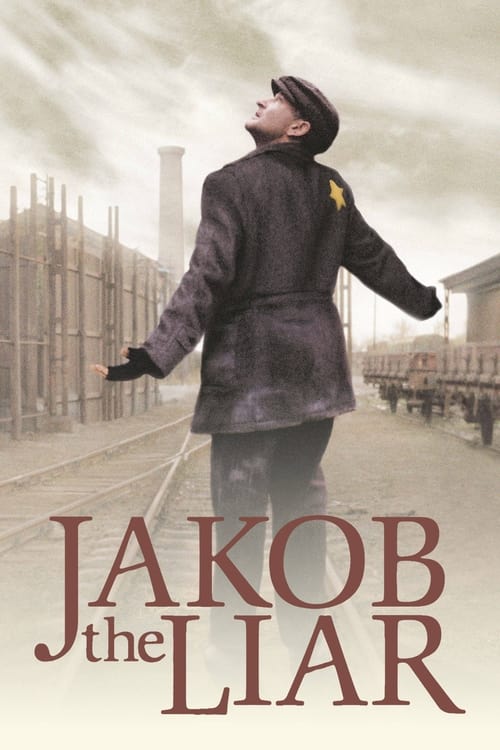
In 1944 Poland, a Jewish shop keeper named Jakob is summoned to ghetto headquarters after being caught out after curfew. While waiting for the German Kommondant, Jakob overhears a German radio broadcast about Russian troop movements. Returned to the ghetto, the shopkeeper shares his information with a friend and then rumors fly that there is a secret radio within the ghetto.
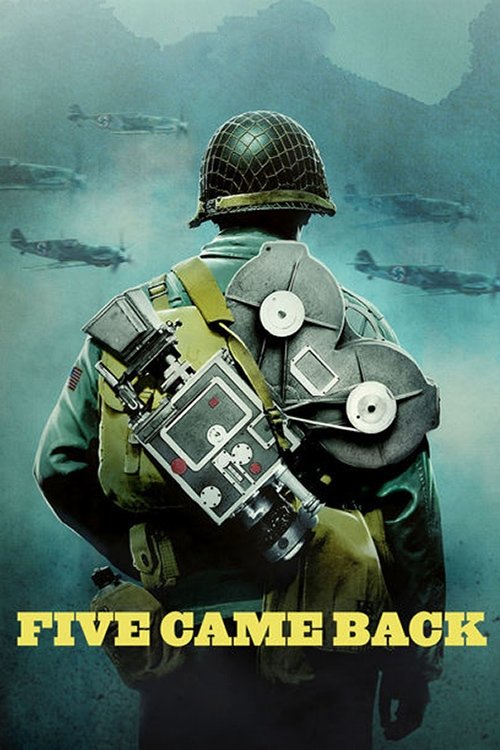
The extraordinary story of how Hollywood changed World War II – and how World War II changed Hollywood, through the interwoven experiences of five legendary filmmakers who went to war to serve their country and bring the truth to the American people: John Ford, William Wyler, John Huston, Frank Capra, and George Stevens. Based on Mark Harris’ best-selling book, “Five Came Back: A Story of Hollywood and the Second World War.”
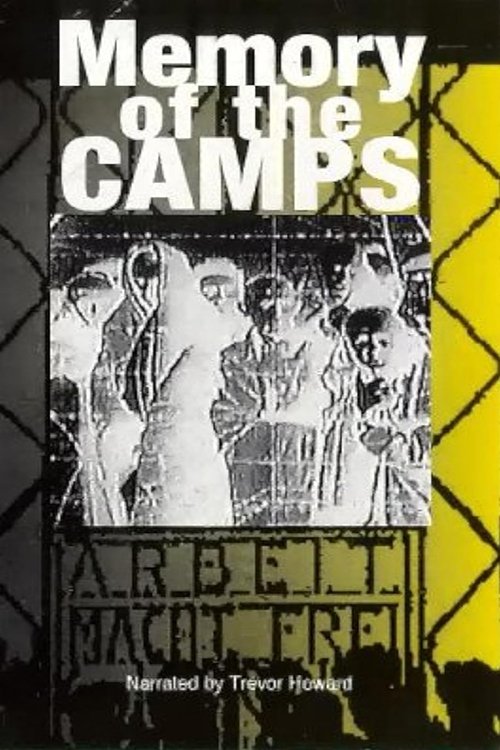
In 1945, Allied troops invaded Germany and liberated Nazi death camps. They found unspeakable horrors which still haunt the world’s conscience. A film was made by British and American film crews who were with the troops liberating the camps. It was directed in part by Alfred Hitchcock and was broadcast for the first time in its entirety on PBS FRONTLINE in 1985.

Drops of fire that create a universe of magmatic asteroids. Liquid and gravitational reality. Cosmic energy. Atomized Rhythm. Neurons of a liberated unconscious. Elimination of the idea of "soul" as "everything", reducing it to the condition of units of energy in perpetual process, elementary particles, without duration, that arise in perfect dependence. The "I" as a stream of units of force in ceaseless becoming that procures the illusion of an entity. Karmic chain. The idea that eternity resides in the transitory, the eternal belongs to it instantly. Eternity not as infinite duration but as absence of temporality. Universe of a mobile, procedural, relational and interactive nature of everything that exists. Here the "object" is conceived as something that is constituted, completed, lost and recovered with the vibrating rhythm of a universe in constant production.
102 Years in the Heart of Europe: A Portrait of Ernst Jünger (Swedish: 102 år i hjärtat av Europa) is a Swedish documentary film from 1998 directed by Jesper Wachtmeister. It consists of an interview by the journalist Björn Cederberg with the German writer, philosopher and war veteran Ernst Jünger (1895-1998). Jünger talks about his life, his authorship, his interests and ideas. The actor Mikael Persbrandt reads passages from some of Jünger's works, such as Storm of Steel, The Worker, On the Marble Cliffs and The Glass Bees.