

Loading titles…
Documentary
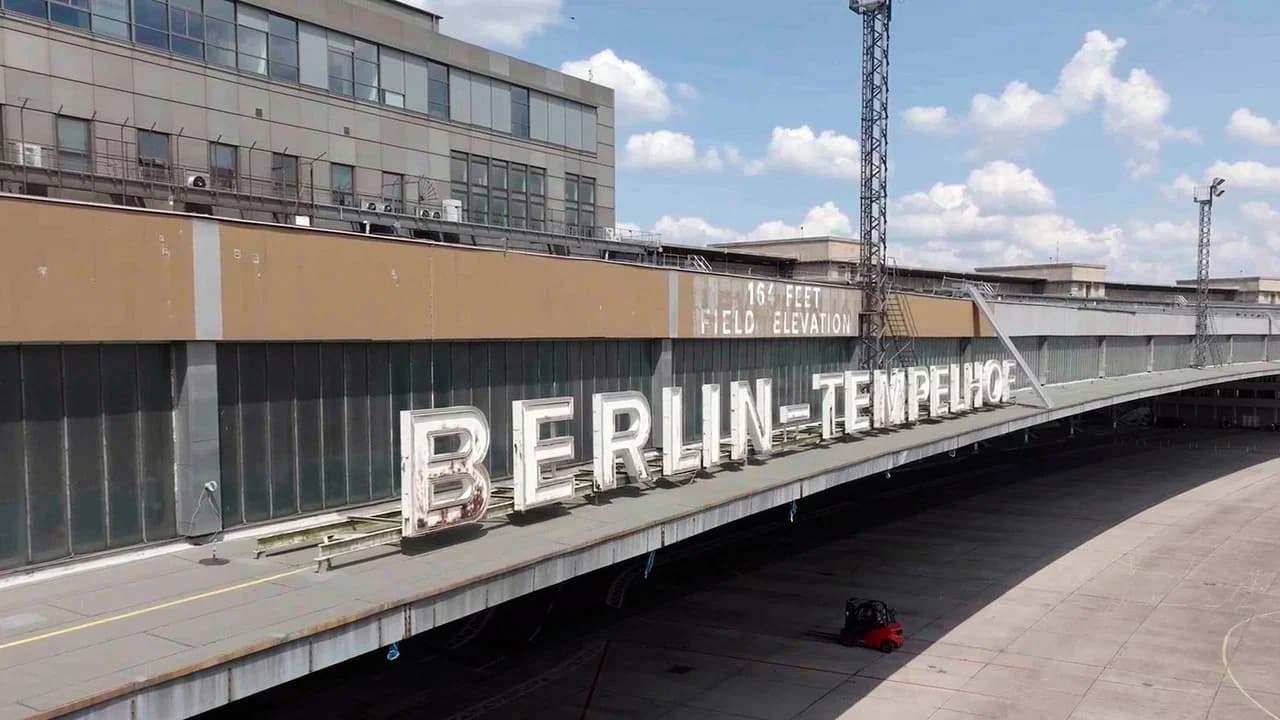
Located in former West Berlin, Tempelhof Airport reflects the dramatic history of the 20th century. Once a Nazi showpiece, it later became a symbol of freedom during the Berlin Airlift and the Cold War. In 1978, East German citizen Constanze Glien unexpectedly arrived here after…

Self - Narrator (voice)


A heavily dramatized Civil Defense film that demonstrates how a public fallout shelter is supposed to function after a nuclear attack. This scenario takes place in a fictional any town called "Middlebury". The film describes the situation in a public shelter in Middlebury following an attack on the United States.
This Cold War film "Information Within Public Shelters" (1953) takes place in a fallout shelter, showing how a well-trained staff that provides information to shelter occupants, can keep them busy and calm during nuclear armageddon. This film was produced as the U.S. Government began to shift from promoting privately-owned "family" fallout shelters to the concept of large, public shelters.
This documentary explores the events surrounding the greatest maritime tragedy in the history of the Pacific coast, the sinking of the Princess Sophia. The Canadian Pacific steamer had left Skagway, Alaska, on October 23, 1918, on its way to Vancouver, when a fierce blizzard hit. The ship veered off course and ran aground on a reef. Despite the proximity of several other ships, the harsh weather prevented any evacuation attempt. Almost 48 hours later, the Sophia slipped off the reef and sank. The following morning, rescue ships faced the terrible evidence: only the tip of its mast was visible. None of the 353 passengers and crewmembers survived. Archival photos, 3D animation, exclusive interviews and underwater photography relate an important chapter of maritime history, while vividly portraying a place and time.

2005-2008. Video. In 2005 San Francisco real estate magnate Angelo Sangiacomo commissioned Strickland to make a movie that would chronicle final stages in the construction of his new house in Pebble Beach, CA. Amidst the spectacle of the building site, the videographer sought to portray a design project of operatic proportions that involved a sometimes dissonant cast of characters and took more than 6 years to unfold. The owners hoped that this video record might lend future visibility to a structure’s bones and soul that otherwise vanish from sight by the time building is completed.

From an official perspective, marginal youth culture did not exist in East Germany. The topic of subcultures was taboo in the GDR, and groups such as goths, skinheads, anti-skins, punks and neo-Nazis were dismissed as social deviations promoted by western countries. Director Roland Steiner had access to such young East Germans in the late 1980s. Over the course of four years, he brought them before the camera in an attempt to understand what drew them to these groups.

In a document from November 1st, 1007, Wellerstadt is mentioned for the first time verifiably. The royal couple Heinrich and Kunigunde make the plan to establish a diocese, with Bamberg at its centre. During the imperial synod in Frankfurt in 1007, the bishops approve the plan. Heinrich transfers his royal court Forchheim together with 14 villages, including Wellerstadt, to the diocese. As “Waldrichesbach”, Wellerstadt is not only presumably earlier mentioned in documents than Baiersdorf but is in fact older than Baiersdorf. A once presumably Thuringian settlement at the river Regnitz has by now become the district of the small Franconian town of Baiersdorf: Founded at a ford, destroyed during the Thirty Year’s War, rebuild, often flooded by the Regnitz, pushed back and forth between the diocese and the margraviate. Waldrichesbach has turned into Wellerstadt, an endearing small village in Middle Franconia.

