

Loading titles…
Drama
France, 1950s. From the Quartier Latin to Saint-Tropez via New York, a young Parisienne becomes the icon of a whole generation. In 1954, 19-year-old Francoise Sagan shot to fame with her first novel, Bonjour Tristesse. Flamboyant, scandalous and underrated, Sagan lived her life…


Françoise Quoirez dite Sagan

Jacques Chazot

Peggy Roche

Astrid

Bernard Frank

Jacques Quoirez

Guy Schoeller



The friendship between two children is threatened by their parents’ differences. Malú is from a family that was upper-class before the Revolution and remains well-to-do through remittances from relatives overseas, and her single mother (Larisa Vega Alamar) does not want her to play with Jorgito, as she thinks his background coarse and commonplace. Jorgito’s mother (Luisa María Jiménez Rodríguez),


Following political upheaval, traditionally poor countries have stopped exporting raw materials. The Western world is entering an economic crisis, which is rapidly spreading to Norway. Unemployment rises sharply, and it becomes more difficult to obtain food. The government does not officially acknowledge the crisis, but fear spreads among the population. Demonstrations between the population and the police are now a daily occurrence. Thomas and Vera are also unemployed. The only way out of their predicament is to move out of the city and rent an abandoned farm. The sale of food is banned. Military forces arrive to confiscate what little they have. Later, the city population follows, traveling to the countryside in panic to secure something to eat.

A drama centred on three people: Sarah is a barista who finds the love of her life in Mark. Her mother Barbara depends on Mark to keep her in Sarah's life while resenting her daughter's deep love for him. When severely traumatised by the sudden death of Mark Sarah's relationship with her mother finally cracks. Now faced with losing her struggle to cope Sarah feels Mark's presence return. Based on true events Transition is the story of a love that transcends this realm and the strength of human character in survival.
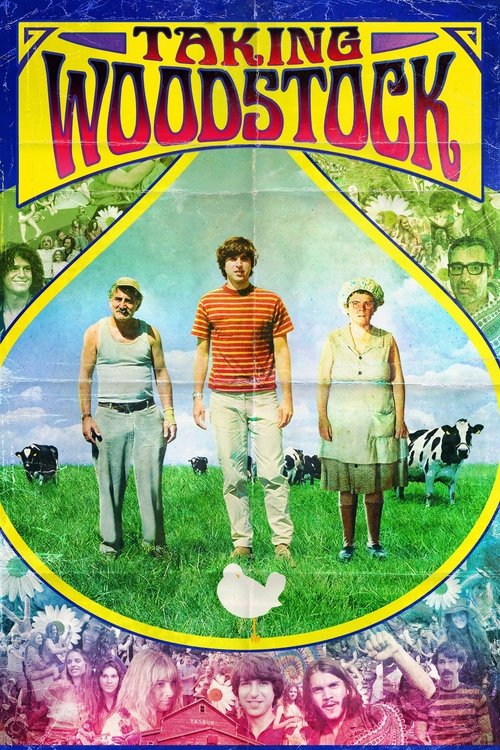
The story of Elliot Tiber and his family, who inadvertently played a pivotal role in making the famed Woodstock Music and Arts Festival into the happening that it was. When Elliot hears that a neighboring town has pulled the permit on a hippie music festival, he calls the producers thinking he could drum up some much-needed business for his parents' run-down motel. Three weeks later, half a million people are on their way to his neighbor’s farm in White Lake, New York, and Elliot finds himself swept up in a generation-defining experience that would change his life–and American culture–forever.

The story of El Nani, a juvenile delinquent from the years of the Transition, whose disappearance in a police station after an interrogation has not yet been clarified, putting the accent on the denunciation of police brutality and speculating on the outcome of the story. A story that mixes political denunciation and social chronicle of an era.
The true story of a Czechoslovak mountaineering expedition that set out in 1969 to conquer one of the most challenging peaks in the Himalayas. In a semi-documentary manner, it depicts the men's harrowing journey, which is beset by problems with local guides, worsening weather, and growing rifts between them. In addition, news reaches the expedition leader of the tragic end of the Czechoslovak expedition to Hindukusha. Each of the six men must face their own problems and dilemmas, but the common goal of overcoming the difficult mountain brings them together. But will the desire to climb one of the world's most dangerous peaks be stronger than the cost of human life?

In the 1950s, guitar-playing drifter Dude Delaney wanders into a quiet town looking to play music and generally cause trouble, much to the chagrin of the local sheriff, known as Sarge. While palling around with his B-movie-obsessed friend Nixer, Dude meets the beautiful Donna, and is offered a position in a rockabilly band, but the sheriff is intent on getting rid of him by any means necessary.

1547. Fernando de Gama, a young "Soldier of Fortune" from Portugal, set sail for the Orient in an effort to find a man who murdered his father and, with luck, like many of their compatriots, to make his fortune. A vicious storm in the Indian Ocean almost ended his plans when he was on the ship sank. The sole survivor, he was washed up on a tropical beach only to be captured by Arab slavers and taken to Ayutthaya in the kingdom of Siam, where he was offered for sale as a slave.
Philippe

René Julliard

Florence Malraux

Suzanne Quoirez

Mme Lebreton