Loading titles…
No cast information available.


Light Pharmacy: 4.1 is part of a series of 'film haiku' concerned primarily with the reflection and refraction of sunlight, and dream representation.---AGN "A surreal fantasy - almost a homage to Maya Deren. Nigrin has a fine feeling for imagery and pacing."---William Sloan, Museum of Modern Art, New York City, 1988.

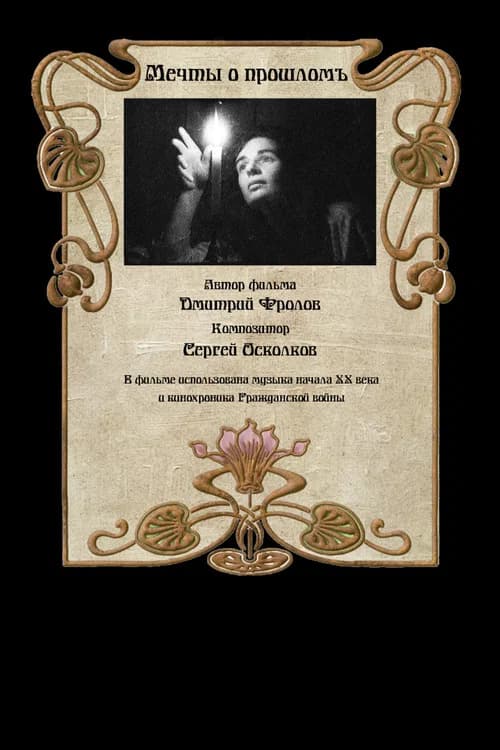
A film about peace, love and war. Dedicated to the 100th anniversary of the end of the Civil War in Russia. The film takes place at the end of the summer of 1917, when Russia and the whole world were at a crossroads between two eras. None of the people could even imagine how much his life would change in the very near future. In a strange way, the atmosphere of the film echoes our current reality and what is happening in Russia today. According to the form of visualization, the film belongs to experimental mockumentary cinema. To give greater authenticity to what is happening on the screen, the shooting was carried out on black-and-white negatives of 16 and 35 mm, hand-operated cameras were used and the material was developed in manual spiral tanks. The documentary chronicle of the Kolchak army of 1919 and the White army in the Far East of 1922 is embedded in the finale of the film.

Sistine Chapel is an audio-visual collage of new footage and samples from Paik’s past videos, which featured many of his friends, collaborators, and public figures. It was Paik’s own way of summarizing his artistic career with video. The film installation consists of fast-paced and overlapping images that completely cover the gallery walls and ceiling—one of the most under-appreciated parts of architecture, according to Paik. With its electronic visuals and booming audio, interspersed with periods of silence, the immersive installation stands in stark contrast to the experience of its namesake.

This film was made out of the capture of a live animation performance presented in Rome in January 2005 by Pierre Hébert and the musician Bob Ostertag. It is based on live action shooting done that same afternoon on the Campo dei Fiori where the philosopher Giordano Bruno was burned by the Inquisition in 1600. A commemorative statue was erected in the 19th century, that somberly dominate the market held everyday on the piazza. The film is about the resurgence of the past in this place where normal daily activities go on imperturbably. The capture of the performance was reworked, shortened and complemented with more studio performances.
Shifting Margin Part 1 (1991) Produced, Directed, Photographed, and Edited by Albert Gabriel Nigrin Special Thanks: Brodsky and Treadway and DAK Productions Length: 3 minutes A statue of a horse [located in the Luxembourg Gardens in Paris, France] shot at 18fps on Kodachrome color super 8mm film transferred to high quality video. The film camera was shaken at various intensities to simulate the various forms of horse locomotion -- walk, trot, gallop, etc. The film is silent yet one hears the rhythm of hooves. The green color of the statue's faded bronze was amplified, as was the blue sky in post-production. A homage to Pegasus, Le Magnifique in Cocteau's Beauty and the Beast, and Eadweard Muybridge.---AGN

American cartoons are the starting point for Martin Arnold's new work. Sequences of short films form the basis of a process of fragmentation, deconstruction, dismantling and repetition. Arnold uses fun, family entertainment to create films with open-ended possibilities for association. His pieces, such as Hydra (2013), Charon (2013), Nix (2013) and Self Control (2011), feature characters whose anatomy is no longer recognizable as such, but rather resemble puppets, remotely controlled from the outside. Trembling hands, dancing tongues, blinking eyes and snoring mouths move like ghosts against an abyss-like deep black background, in which bodily elements constantly disappear, only to reappear once more.