
Loading titles…
Self
Self
Self
Self
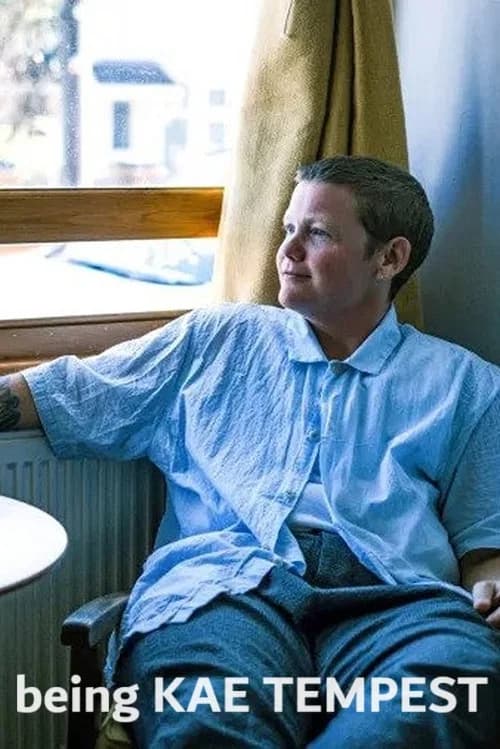
Poet, rapper, playwright and recording artist Kae Tempest is one of the most viscerally exciting artists working in Britain today. They are the youngest ever recipient of the prestigious Ted Hughes prize and have been nominated for both the Brit and Mercury music awards. Tempest has always found support and respect within the queer art scenes, a place close to their heart. In July 2020, they came out as non-binary, announcing that they would publish and perform under the name Kae. This film delves deep into their creative process and gains rare, intimate insights into Kae’s life throughout a period of profound personal and artistic change.

In the foundation of the culture of Japanese MANGA and animation, there lies the humor filled art form, shunga. Shunga is a type of Japanese art by famous ukiyo-e artists of the Edo Period, such as Utamaro, Hokusai, and Kiyonaga, but the artform’s development was thwarted by social norms that tabooed sex. The film Introduces the world of shunga through enthusiasts - collectors, curators, and scholars, including Andrew Gerstle who inspired The British Museum’s historical shunga exhibition in 2013 and Michael Fornitz who owns an auction house in Denmark. Exploring the significance of shunga by analyzing it from historical, cultural, artistic and contemporary female points of view.
Poème Électronique is an 8-minute piece of electronic music by composer Edgard Varèse, written for the Philips Pavilion at the 1958 Brussels World’s Fair. The Philips corporation commissioned Le Corbusier to design the pavilion, which was intended as a showcase of their engineering progress. The pavilion was shaped like a stomach, with a narrow entrance and exit on either side of a large central space. As the audience entered and exited the pavilion, the electronic composition Concret PH by Iannis Xenakis (who also acted as Le Corbusier's architectural assistant for the pavilion's design) was heard. Poème électronique was synchronized to a film of black and white photographs selected by Le Corbusier which touched on vague themes of human existence.


In this film, Laerte conjugates the body in the feminine, and scrutinizes concepts and prejudices. Not in search of an identity, but in search of un-identities. Laerte creates and sends creatures to face reality in the fictional world of comic strips as a vanguard of the self. And, on the streets, the one who becomes the fiction of a real character. Laerte, of all the bodies, and of none, complicates all binaries. In following Laerte, this documentary chooses to clothe the nudity beyond the skin we inhabit.

United by the same dream, Yves Fagniart and Olivier Larrey, watercolorist and wildlife photographer respectively, set up home in a shack just a few square meters square, in the middle of the no-man's-land between Finland and Russia. Their aim: to document the intimate life of a pack of wolves, presumed to frequent this frozen peat bog landscape.


