
Loading titles…
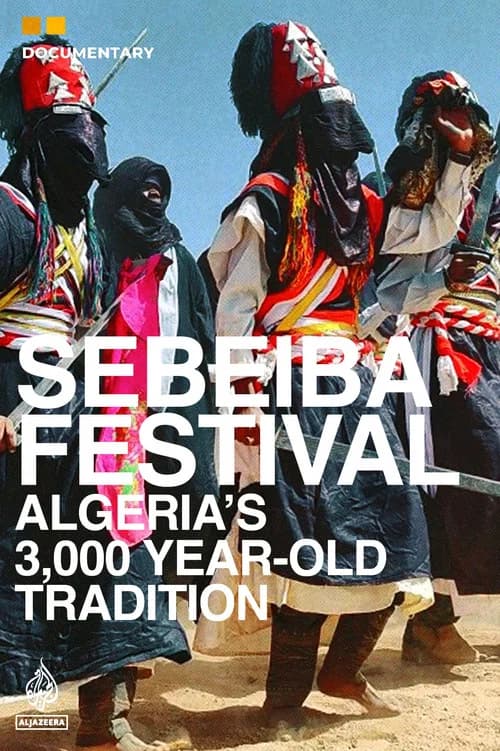
In Algeria, the Sebeïba (Tifinagh: ⵙⴱⵉⴱⴰ; Arabic: السبيبة) is a competitive celebration observed by two communities in Djanet. It combines dance, song, and the wearing of traditional costumes. In 2014, UNESCO inscribed it on the Representative List of the Intangible Cultural…
No cast information available.

Two young officers, Saint-Avit and Morhange, get lost in the desert and find themselves prisoners of the beautiful Antinéa, queen of the city of Atlantis. Saint-Avit, blinded by his love for her, obeys her when she orders him to kill his comrade... With L’Atlantide, Pabst offers a psychoanalytic reading of Benoit’s novel, with a dominant female figure who enslaves her lovers before destroying them. The film’s fantasy dimension is disturbing, L’Atlantide bathes in a humid nightmare atmosphere, between the desperate search for a missing friend and the apparitions of an underworld lost in the desert. A long, discursive flashback suggests the Parisian origins of Antinéa, born from the marriage between Clémentine, a pretty, light-thighed French Cancan dancer, and an Arab prince seduced during a theatrical performance. But again, it's impossible to know whether these are the ramblings of an old alcoholic or the strange truth.

In the 1980s, young people of North African descent born in France and a priest from the Lyon suburbs organized the "March of the Beurs." Launched on October 15, 1983, by seventeen people from the La Cayolle neighborhood in Marseille following a racist crime, the march concluded two months later—on December 3—on the streets of Paris, with 100,000 participants. This movement demanded equal rights. Was their cry heard?

Following in the footsteps of Frison Roche, 7 climbers explore the main Hoggar massifs in Algeria. Their main objective is the ascent of the Garet El Djenoun summit via the north ridge, a long climb symbolic of a certain difficulty and a significant commitment, due to its location in the desert. They also attempt the Diedre Agresti, a daring route from the 70s, opened in around ten days on artificial, and unequipped; it is a path that has never been repeated; the objective is to do it free and almost only on wedges, with difficulties up to 7b/c in a sometimes very delicate rock... Excerpts from the film shot in 1970 by Henri Agresti on this same route, allow us to compare the technical and material means of the time to those of today. They also discover the beauty of the Algerian desert, its silence, its rock paintings, the customs of the Tuaregs, etc... a fascinating journey.

In the midst of the Algerian liberation war, two characters, a meddah (traditional storyteller) and a guerrab (water distributor), having become aware of their subhuman condition in their own country, join the National Liberation Army (ALN) to fight against inhumane colonialism. They will climb the ranks to become political commissioners before falling on the field of honor, the first in a skirmish and the other in Barberousse prison (Serkadji) where he will be guillotined.

Djamila, a young Algerian woman living with her brother Hadi and her uncle Mustafa in the Casbah district of Algiers under the French occupation of Algeria, sees the full extent of injustice, tyranny and cruelty on his compatriots by French soldiers. Jamila's nationalist spirit will be strengthened when French forces invade her university to arrest her classmate Amina who commits suicide by ingesting poison. Shortly after the prominent Algerian guerrilla leader Youssef takes refuge with her, she realizes that her uncle Mustafa is part of this network of anti-colonial rebel fighters. Her uncle linked her to the National Liberation Front (FLN). A series of events illustrate Jamila's participation in resistance operations against the occupier before she was finally captured and tortured. Finally, despite the efforts of her French lawyer, Jamila is sentenced to death...

The story of the post-independence nationalization of the mill of Monsieur Fabre, an old man attached to the land of Algeria where he was born. In this small town in eastern Algeria, there was nothing else to nationalize and they were actively preparing for the arrival of high dignitaries who would elevate the mill to the rank of an industrial flour mill even though it was threatened with ruin. The comedy gets worse when the football player from the local team withdraws for love, the officials' visit is canceled and Mr. Fabre returns.

Strict teachers, all those hours inside four walls, all your desires and youthful energy repressed. School is an endless drag - until she comes along. Uhm Ji Young has a perfect body and metric tons of sex appeal, and she knows it. Needless to say, all the students go crazy, and the male teachers too! They should be preparing for the annual school festival, but they're all occupied with other matters.

Isolated in the bell tower of Notre Dame, Quasimodo longs to experience the world beyond the cathedral walls, despite the wishes of his stern guardian, the Judge of Paris Claude Frollo. His first venture into the city leads him to Esmeralda, a fearless Romani woman whose defiance of Frollo's tyranny draws her—and Quasimodo—into his dangerous obsession.

These are the first images shot in the ALN maquis, camera in hand, at the end of 1956 and in 1957. These war images taken in the Aurès-Nementchas are intended to be the basis of a dialogue between French and Algerians for peace in Algeria, by demonstrating the existence of an armed organization close to the people. Three versions of Algeria in Flames are produced: French, German and Arabic. From the end of the editing, the film circulates without any cuts throughout the world, except in France where the first screening takes place in the occupied Sorbonne in 1968. Certain images of the film have circulated and are found in films, in particular Algerian films. Because of the excitement caused by this film, he was forced to go into hiding for 25 months. After the declaration of independence, he founded the first Algerian Audiovisual Center.


