


Loading titles…
Documentary
Some Interesting Apples is a community film about the UK's only orchard solely dedicated to the cultivation of selected wild-grown chance-seedling apples. These are often roadside apple trees, 'planted' unwittingly by someone who drove past and chucked their apple core out of…

No cast information available.

Today, few people's clothes attract as much attention as the royal family, but this is not a modern-day paparazzi-inspired obsession. Historian Dr. Lucy Worsley, Chief Curator at Historic Royal Palaces, reveals that it has always been this way. Exploring the royal wardrobes of our kings and queens over the last four hundred years, Lucy shows this isn't just a public fascination, but an important and powerful message from the monarchs. From Elizabeth I to the present Queen Elizabeth II, Lucy explains how the royal wardrobe's significance goes far beyond the cut and color of the clothing. Royal fashion is, and has always been, regarded as a very personal statement to reflect their power over the reign. Most kings and queens have carefully choreographed every aspect of their wardrobe; for those who have not, there have sometimes been calamitous consequences. As much today as in the past, royal fashion is as much about politics as it is about elegant attire.


The beautiful gay erotic superstar Johan Paulik is enthusiastically celebrated in this jam-packed compendium of Johan's greatest on-screen performances, plus an exclusive interview with the charming boy himself and previously unseen out-takes which reveal the charm and humor of this much admired adult model.

In this hour-long documentary, Oxford academic Janina Ramirez tours the country in search of Anglo-Saxon art treasures. Her basic thesis - and it is a plausible one - is that we should not look upon their era as a "dark age" as compared, for example, to Roman times, but rather celebrate it as an age in which creativity flowered, especially in terms of artistic design as well as symbolism. She shows plenty of good examples, ranging from the Franks Casket to the Staffordshire Hoard, and the Lindisfarne Gospels.


Norwegian researcher Petter Amundsen claims to have deciphered a secret code hidden in legendary playwright William Shakespeare's works that reveals a map leading to the location of certain treasures. British Shakespearean scholar Robert Crumpton embarks on a mission to prove he is spectacularly wrong. (A remake of “Shakespeare: The Hidden Truth,” including new discoveries.)

In 1772, Englishwoman Mary Delany wrote to her niece: “I have found a new way of imitating flowers.” The imitation in question was the art form called decoupage, based on cut-outs and reshuffling of pictures. The charm and botanical precision of these works attracts attention of even today’s artists, among others by an anonymous programmer who is trying to invent a way of capturing the flowers’ vivacity in pictures. With this aim in mind, she has created an algorithm, which would combine science and beauty, similarly to Delaney’s efforts, whose illustrations it is meant to animate.

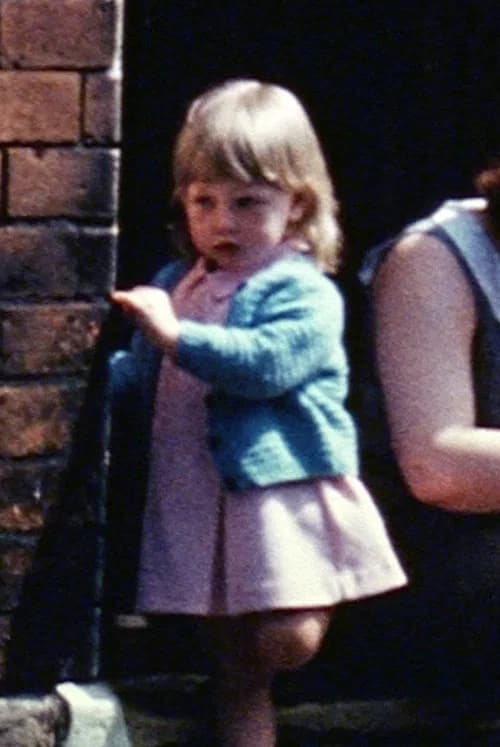
Between 1968 and 1970, J M Goodger, a lecturer at the University of Salford, made a film record of the living conditions in the slums of Ordsall, Salford, which were then in the process of being demolished. Under the title 'The Changing face of Salford', the film was in two parts: 'Life in the slums' and 'Bloody slums'.