Loading titles…
No cast information available.

Bilkuin, Shima and Didi are three youths living on Omadal Island, situated off the coast of Sabah in Borneo, where a majority of the population consists of the stateless Bajau Laut (Sea Gypsies). After joining and excelling in a filmmaking workshop, they are selected to be junior directors or apprentices to be mentored by a professional film crew. 'Jom Kita Ke Laut' tells the specific story of their three lives as they try to document it on their own, which eventually gives us a view of how life is on the island for the Bajau Laut and the challenges they face by being stateless in their own land and not having access to basic human rights like education and healthcare.

A German diving instructor, Tom Broder, falls in love with the natural beauty of Malaysia - and with a courageous Malaysian biologist and environmentalist, Sarifah Bt. Ismail, fighting with her to prevent an unscrupulous hotel owner from constructing a holiday resort on a nature reserve where turtles are preserved from extinction. Then, when his elder brother, Kai, and his family turn up unexpectedly, the diving instructor is confronted with his past... because the woman his brother married was once the love of his life, until she chose the other brother. Since then the two of them haven't said a single word to each other. Now the older brother announces that he wants them to be reconciled. Nobody realises at this stage that he is up to his neck in debt and plans to fake his death in Malaysia, so he can begin a new life.

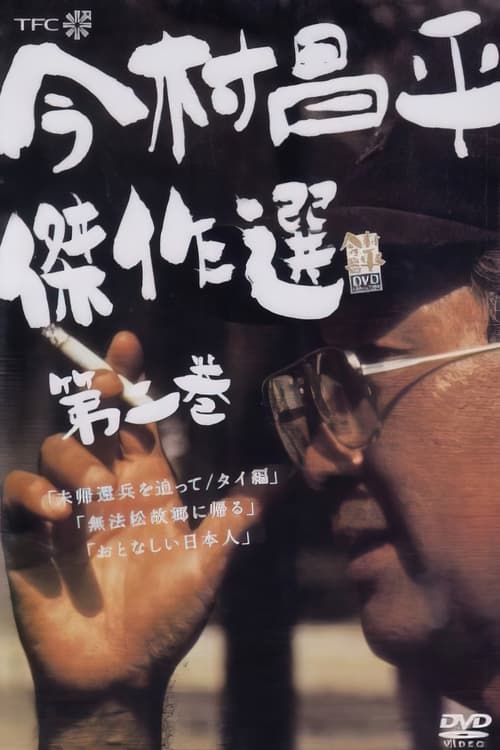
“In Search of Unreturned Soldiers was about former soldiers of the Japanese army who chose not to return to Japan after the war. I found several of them who had remained in Thailand. Two years later, I invited one of them to make his first return visit to Japan and documented it in Outlaw-Matsu Returns Home. During the filming, my subject Fujita asked me to buy him a cleaver so that he could kill his ‘vicious brother.’ I was shocked, and asked him to wait a day so that I could plan how to film the scene. By the next morning, to my relief, Fujita had calmed down and changed his mind about killing his brother. But I couldn’t have had a sharper insight into the ethical questions provoked by this kind of documentary filmmaking.” —Shôhei Imamura

Karayuki-san, the Making of a Prostitute is a 1975 Japanese film by director Shohei Imamura. It is a documentary on one of the Japanese "karayuki-san," who were women that were taken from their homes in Japan and used as prostitutes in the post-war period. Many of these women were told that they were doing this to support their families because of the extreme poverty that the war left much of Japan to live in. Imamura focuses on a particular such woman who was sent to Malaysia and never returned to Japan. Joan Mellen, in The Waves at Genji's Door, called this film, "Perhaps the most brilliant and feeling of Imamura's fine documentaries."


Over the years Malaysia as a country has invested millions into promoting tech startups, in an attempt to replicate Silicon Valley in the West. This documentary looks at a 10year journey of e-Sentral, an e-book tech company that began as a startup, and its journey going through the different phases of growth. The film interviews startup industry players in Malaysia; leaders, executives, and entrepreneurs sharing their perspectives and experiences on how it actually is, and not as how it has been typically portrayed. A must watch if you like the tech space as the film portrays a genuine feel for perseverance and grit.




The documentary retraces the steps of Bruno Manser, a man from Switzerland who went to live with the indigenous tribe of the Penan in the Jungle of Borneo and endef up helping their struggle to defend their rainforest against greedy logging companies. The movie features original film, photo and voice recordings by Bruno Manser made in the 1980s, as well as new recordings showing how the life of the Penan has changed in just a few decades.