Loading titles…
Documentary
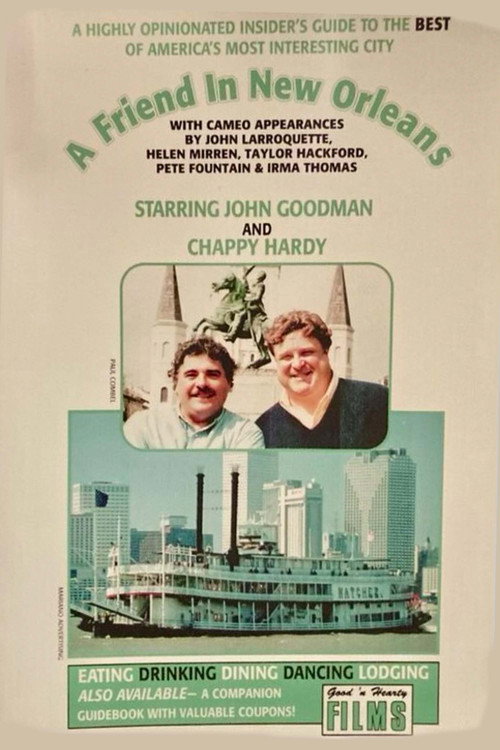
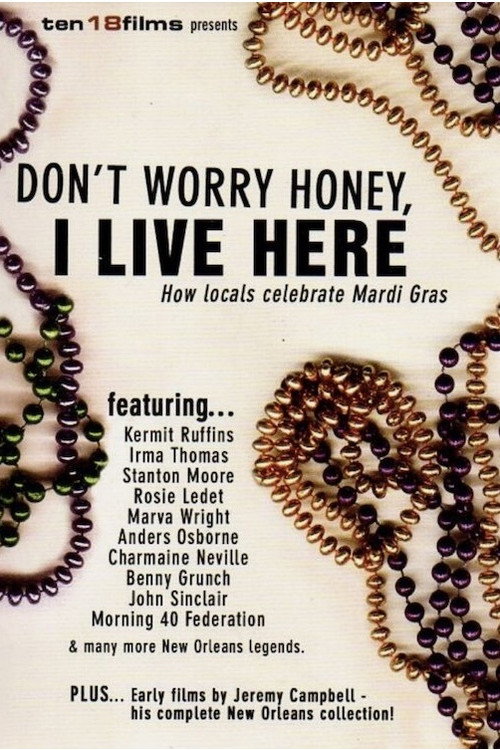
This highly-opinionated guide to eating, drinking, dancing, shopping and lodging in New Orleans was compiled by Chappy Hardy, John Goodman and their "friends" , seasoned New Orleans insiders- without the support of advertisers. Whether bound for Mardi Gras, the Jazz Festival or…

Herself

Himself

Himself

Himself

Himself

Herself

Louisiana filmmaker, Pat Mire, teams up with veteran filmmaker and cinematographer, Charles Bush, to capture the natural drama of handfishing in this award-winning documentary. Highly visual, the film examines the thrilling regional phenomenon of Cajuns who wade in murky bayou waters to catch huge catfish and turtles by reaching into hollow logs and stumps with their bare hands. Friends and family accompany the handfisherman to the bayou banks for Cajun music, festive cooking, and storytelling, and to witness this increasingly rare tradition. Told from the inside with multiple voices, Mire and Bush explore the chain of events set off by man's attempt to "improve" his environment by dredging bayous in this remarkable study of the relationship between cultural and natural resources.
In King Crawfish, we watch the Cajun spirit being poured out on a communal table even as the wild harvest is diminishing. At the Breaux Bridge Crawfish Festival we see everthing Cajuns value take to the stage: their language, music, food, and crawfish. As the film traces the thousands of pounds of crawfish served up at the festival to their natural habitat, the Atchafalaya Basin, fishermen from Catahoula tel stories of their fight to retain their way of life. It is an old story in Louisiana: the pople and land suffer from the exploitation of the oil companies. What is at stake is the loss of the most productive swamp in the world and the people's connection to that land.

The feature-length documentary, TOOTIE’S LAST SUIT explores the complex relationships, rituals, history, and music of New Orleans’ vibrant Mardi Gras Indian culture while telling the story of Allison “Tootie” Montana, former Chief of Yellow Pocahontas Hunters. Celebrated throughout the New Orleans as “the prettiest,” for the beauty and inventiveness of his elaborately beaded Mardi Gras costumes, Tootie Montana masked for 52 years, longer than any other Mardi Gras Indian. Yet Tootie Montana’s contributions to Mardi Gras Indian culture far exceed his artistic innovations and dedication. Through the example of his own achievement, he came to be revered for turning Mardi Gras Indians away from gang-style violence toward artistic accomplishment and competition. In the aftermath of Katrina, TOOTIE’S LAST SUIT bears witness to the Mardi Gras Indians who, in picking up the threads of their torn lives and tradition, are the spiritual healers of New Orleans.

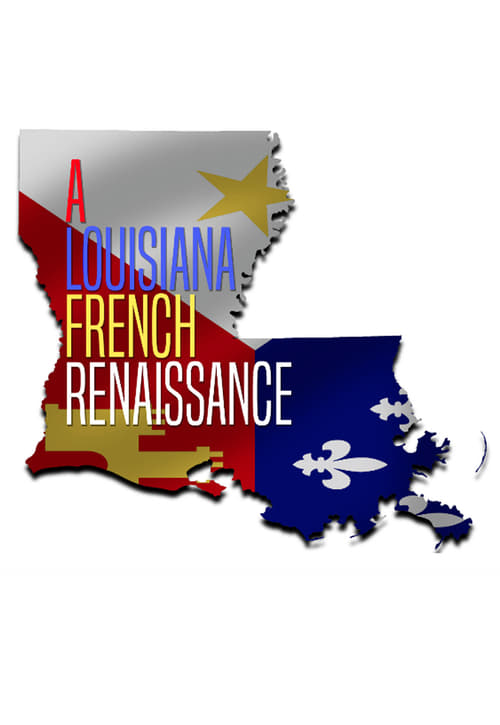
It’s a language and a way of life that reminds us of the past. What was once on the brink of extinction is now in some parts of our state flourishing. CODOFIL, The Council for the Development of French in Louisiana is celebrating its 50th anniversary and through these years has played a major role in the renaissance of Louisiana’s French heritage language and culture.