



Loading titles…
Documentary
Following the highly publicized death of Boeing whistleblower John Barnett, the investigation continues into the once-iconic aviation giant, uncovering startling new revelations and insider accounts in the wake of a deepening corporate crisis..


Self (archive footage)
Self - Attorney for John Barnett
Self - Boeing Quality Investigator
Self - Boeing Quality Investigator (Former)
Self - Boeing Quality Engineer
Self - Boeing Quality Manager (Former)

Self (archive footage)

Self (archive footage)
Self (archive footage)

Self - Author and Journalist, The New York Times
Self - Aerospace Journalist, The Seattle Times
Self - Mother of John Barnett



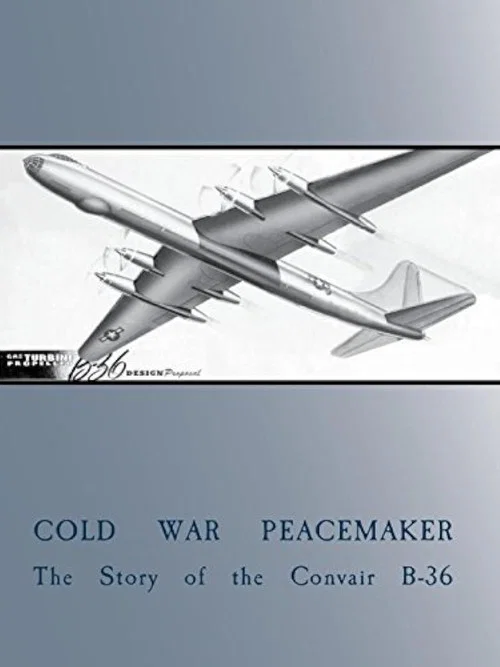
Cold War Peacemaker is the amazing and unique story of the development of the B-36 very-long-long-range nuclear bomber. From its beginnings during WWII, through construction in a former wild-west cattle town and deployment into the Cold War, the story of the Convair B-36 and how it intimidated the Soviet Union is a fascinating study in politics and technology. In Cold War Peacemaker, experience life during the Cold War as your parents and grandparents lived it and discover and understand how the Convair B-36 played a vital role in saving the free world from communist domination.

Adolf Hitler's Nazi megalomania knew no limits. The most daring of his plans World War II involved German fighter planes crashing into Manhattan's skyscrapers as living bombs, like the Japanese kamikazes. Hitler understood the huge symbolic power of Manhattan's skyscrapers. He believed suicide bombing would have a devastating psychological impact on the American people and the U.S. war effort.

The film tells of the beginnings of the Serengeti National Park in Tanzania. At the end of the 1950s, the Tanzanian National Park Administration wanted to fence in the protected area around the Ngorongoro Crater. Bernhard and Michael Grzimek were invited by the national park administration in 1957 to get a precise picture of the animal migrations and to provide the national park administration with the values they needed for their project. Using a new counting method with two airplanes, the Grzimeks found out that the migration of the herds was different than assumed.
Clouds 1969 by the British filmmaker Peter Gidal is a film comprised of ten minutes of looped footage of the sky, shot with a handheld camera using a zoom to achieve close-up images. Aside from the amorphous shapes of the clouds, the only forms to appear in the film are an aeroplane flying overhead and the side of a building, and these only as fleeting glimpses. The formless image of the sky and the repetition of the footage on a loop prevent any clear narrative development within the film. The minimal soundtrack consists of a sustained oscillating sine wave, consistently audible throughout the film without progression or climax. The work is shown as a projection and was not produced in an edition. The subject of the film can be said to be the material qualities of film itself: the grain, the light, the shadow and inconsistencies in the print.

An exhilarating documentary film that celebrates the unsung hero of aviation - the local airport - by tracing the life, history, and struggles of an airport icon: Southern California's Van Nuys Airport. Featuring thrilling aerial photography and a sweeping original score, the film dispels common misconceptions and opposes criticism of General Aviation airports.
