Loading titles…
Documentary
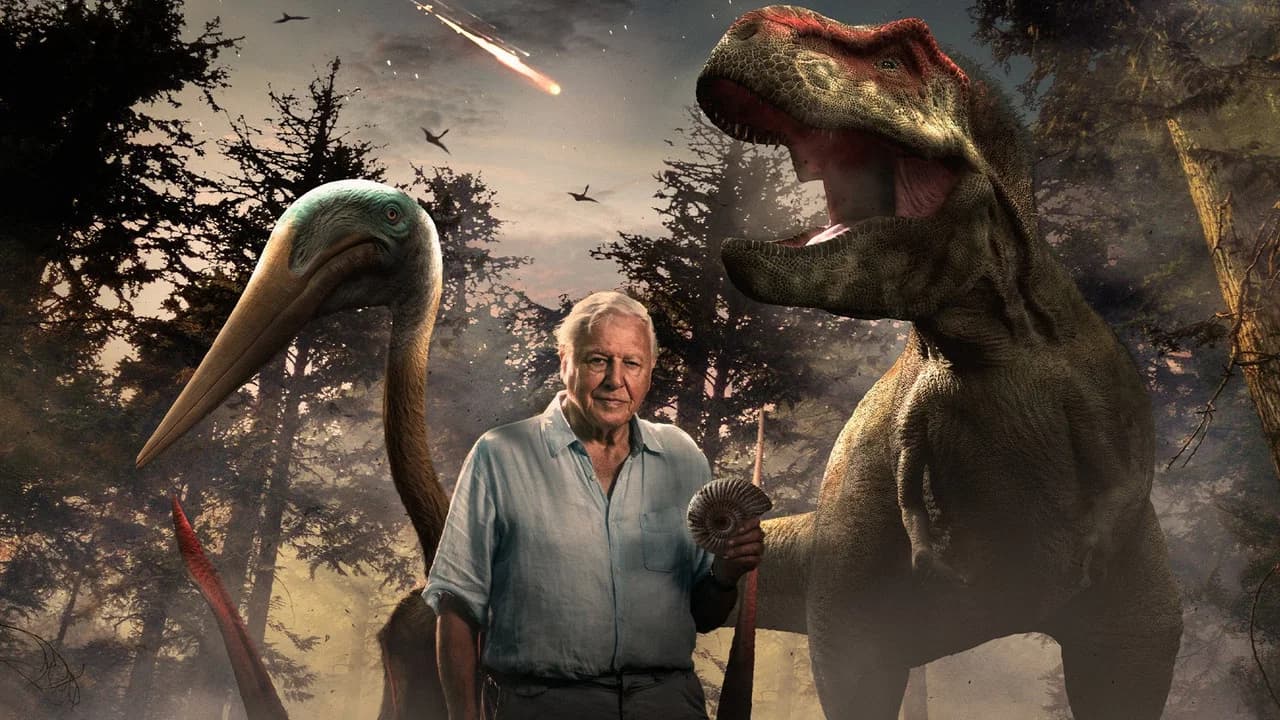
In the Badlands of North Dakota, a team of scientists think they might have found the fossilized remains of animals killed on the day an asteroid struck Earth 66 million years ago. The evidence points to a catastrophic event, with a jumble of rare fossils, including a pterosaur…

Self - Host

The film features amazing scenes of places never before seen gathered by key space missions that culminated with groundbreaking discoveries in 2015. It features a spectacular flight though the great cliffs on comet 67P, a close look at the fascinating bright "lights" on Ceres, and the first ever close ups of dwarf binary planet Pluto/Charon and its moons.
Dinosaurs roamed and ruled earth for more than 150-million years, then suddenly vanished leaving only fossils to fascinate and befuddle us. In a feature-length unique approach to historical analysis of these creatures, we don't focus on the latest technology or the most controversial theory. Instead, we look chronologically at what we've gotten wrong about dinosaurs throughout the short history of scientific study of these magnificent, misunderstood creatures, and see where paleontologists are digging today.

A key piece of the Paluxy Human Track narrative that swept the country's creation-evolution dialogue in the 1970s and 1980s and cemented the claims that dinosaur and human track ways were preserved in the Paluxy River in the public sphere. Originally release in January 1973, the film was considered lost media by the 1980's but a 16mm cut of the film resurfaced in 2023.
Sixty-six million years ago, an asteroid wiped out the dinosaurs in a fiery global catastrophe. But we know little about how their successors, the mammals, recovered and took over the world. Now, hidden inside ordinary-looking rocks, an astonishing trove of fossils reveals a dramatic new picture of how rat-sized creatures ballooned in size and began to evolve into the vast array of species—from cheetahs to bats to whales to humans—that rule our planet today.