Loading titles…
Documentary
With the energy of the dying, those in power apply themselves to reasserting the value of work – with force, if need be. But more and more workers have understood that, to truly value their work, they have to do without it. They also have to get rid of the society of consumption…
Himself
Himself
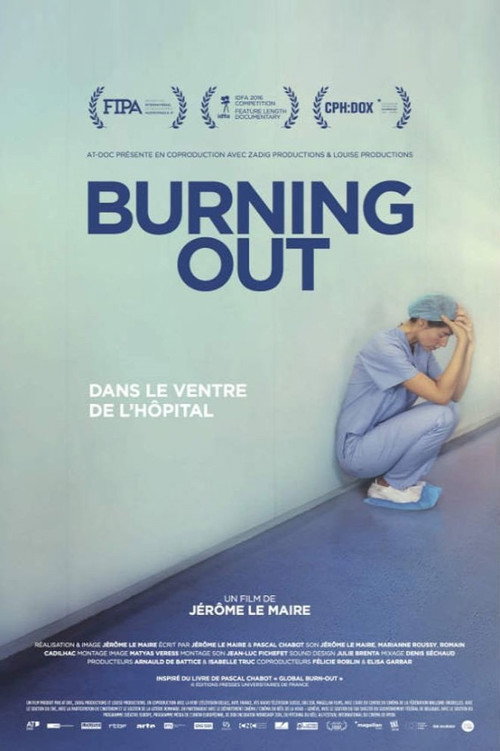
Burning Out is literally a drama about life and death. For two years, the Belgian director Jérôme le Maire followed the members of a surgical unit in one of the biggest hospitals in Paris. Constantly under severe stress, understaffed and subject to severe budget cuts, employees fight each other for resources. Meanwhile the management imposes ever more stringent efficiency and profitability targets. All over Europe burnout has reached epidemic proportions among employees in the public and private sectors. Will we end up killing ourselves? Or will we be able to find meaning and joy at work?
In 1984, eleven miners entrenched themselves underground to protest for better working conditions in the mining village of Almaden in southern Spain. The strike, deep within the toxic mercury mine, lasted for eleven long days, during which the whole village showed its solidarity with the men protesting underground. The mine was the heart of Almaden, around which everything revolved – until it longer existed. The mercury mine was closed for good at the beginning of the 21st century. As a consequence, the area has experienced mass unemployment and slow decline.
The Idle Ones is a profile of contemporary affairs - somewhere on the edge of Europe - in a place where unemployment for some young people is fast becoming a way of life. Covering a period of 18 months, the film follows the activities of a group of young men in their 20s who have finished their schooling and stayed in their home village - they loaf about unemployed since they can´t find any work in the remote district. The main characters are more or less idle young fellows whose stories link together and make up the film. Tinged with humour, The Idle Ones is a story about frustrated but vital young people in a period of transition, waiting for something to happen. For some, the waiting is becoming their life.
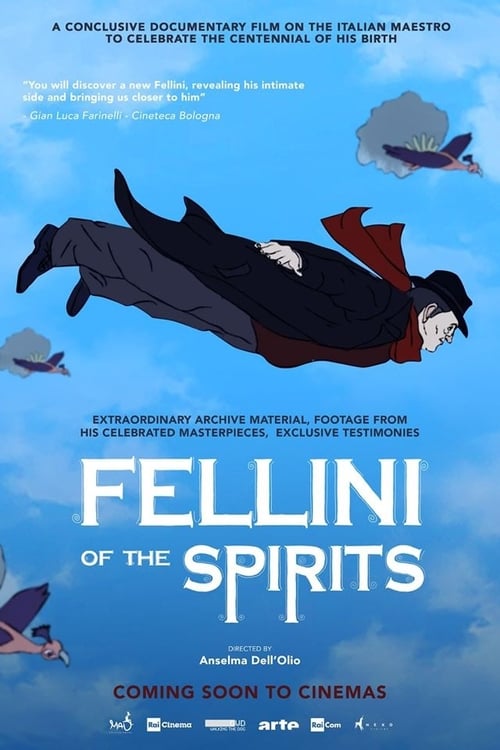
2020 marks 100 years since the birth of Federico Fellini, the most prominent Italian director and one of the symbols of the insuperable cinematic heyday of mid-20th century. Fellini had always been a mysterious director, not only in his cryptic symbolism but also in his idiosyncratic, excessive mixture of psychoanalysis, Catholicism and faith in the mysterious. In this documentary, his relationship with the paranormal, luck and fate, alongside the coexistence of organized discourse and transcendence to the imaginary, is examined via friends, collaborators and distinguished fans (Friedkin, Gilliam, Chazelle). A great testimony to why rationalists and ideologists have a hard time with his work, ‘Fellini and the Spirits’ is an appropriate yet unexpected tribute.


This is the story of a team of 40 agents facing 4,000 job seekers at a job centre in the Parisian suburbs. Samia, Corinne, Thierry, Zuleika must support and monitor, bring in the numbers, obey policy guidelines and communication injunctions, and find job offers while none is to be found. Will their strong sense of humor save them from the Kafkaian world they work in?
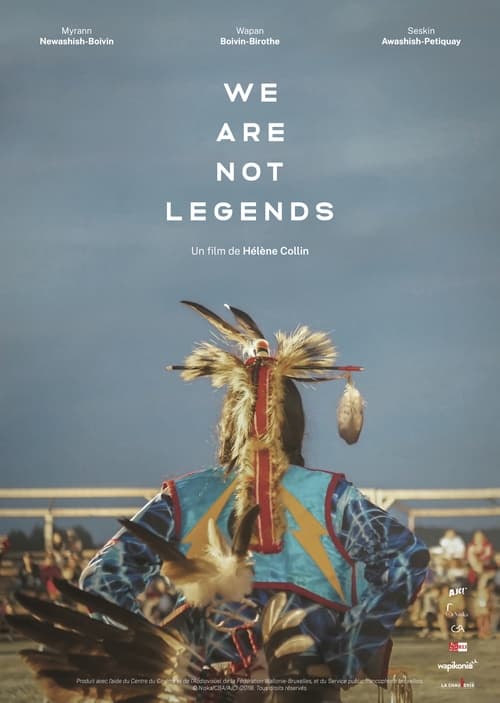
What is it like to be young and grow up on a reserve? Focussing on music lessons, the film reveals the complex relationships that Indigenous youth can have with their “white” teachers. How can two cultures come together? A question the film asks, while inviting us into the private worlds of three Atikamekw teenagers, Myrann, Wapan and Seskin, who are trying to build their future and find a place in this world.