
Chris Bonington
Self
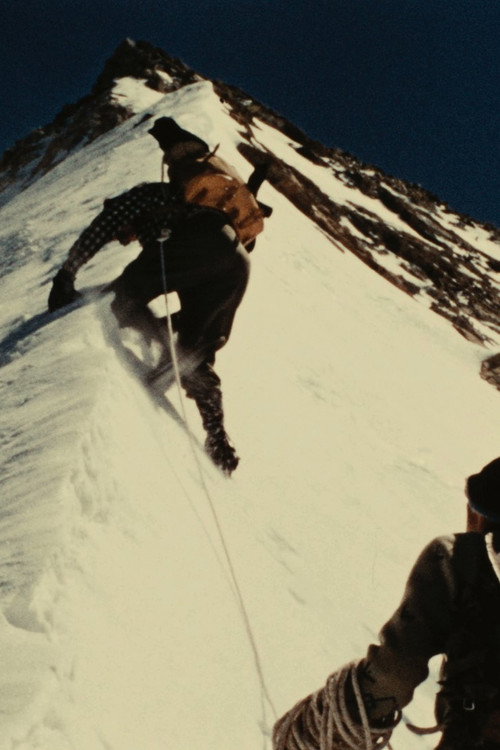
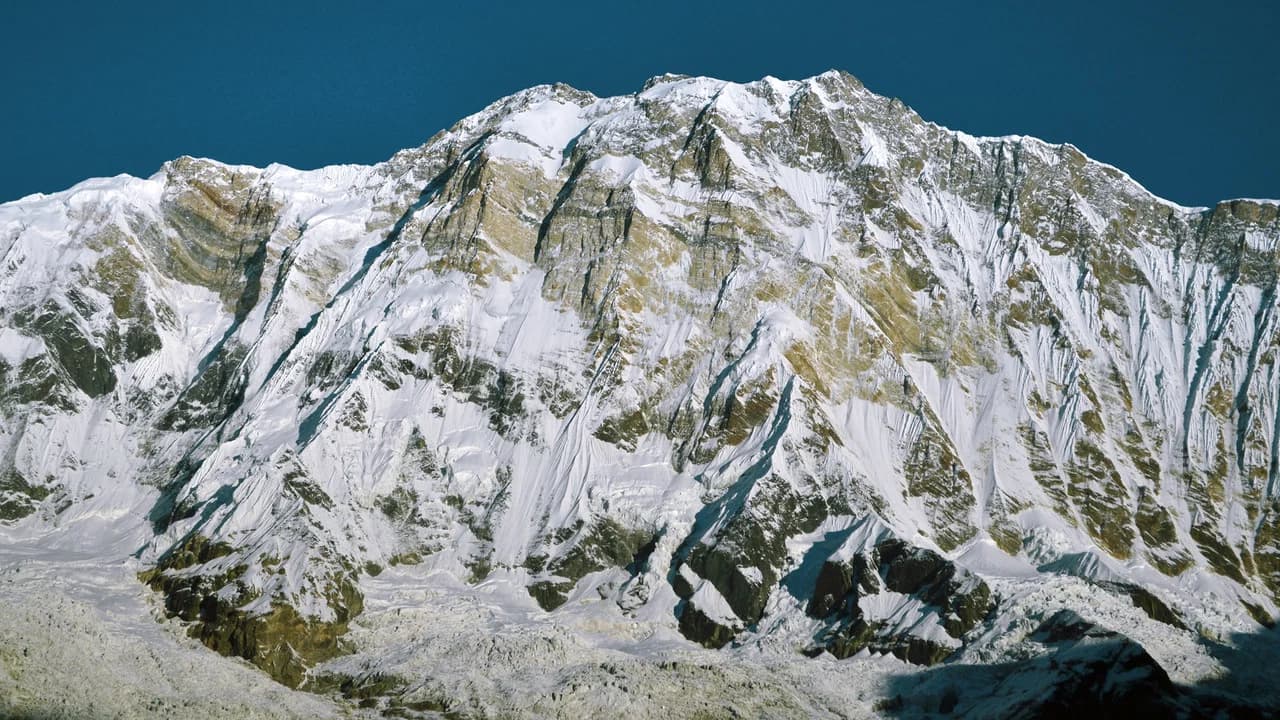
This entertaining film documents the first ascent of the very difficult South Face of Annapurna, a huge Himalayan wall that the right team could achieve the seemingly impossible. The ascent of the South Face of Annapurna in 1970 was one of those breakthrough ascents - both…
Self
Himself
Himself
Himself
Himself
Himself

Himself
Himself
Himself
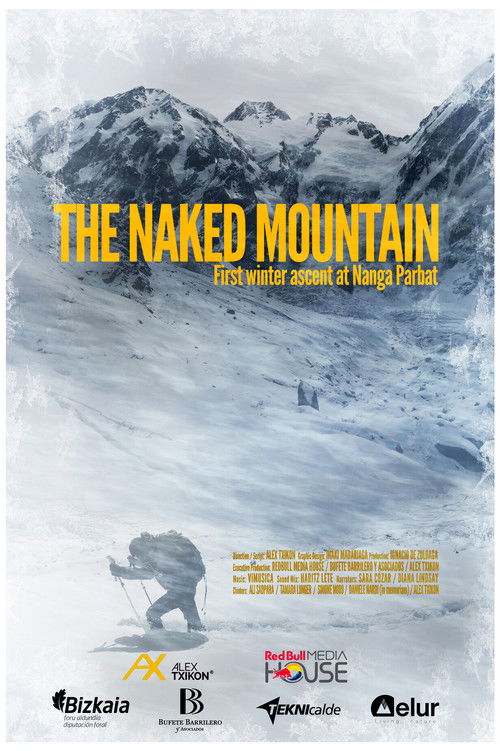
The first winter ascent of Nanga Parbat was achieved in 2016 by Pakistani Muhammad Ali Sadpara and Spaniard Alex Txikón, accompanied by Simone Moro and Tamara Lunger. Alex Txikón made headlines again by attempting K2 in the winter of 2019, then Everest in the winter of 2020 (each time unsuccessfully); but also by participating in the search operations led by Tom Ballard and Daniele Nardi on Nanga Parbat in March 2019, even claiming to have spotted two figures on the face. Confined during the Himalayan season, the Basque climber took the opportunity to work on a film recounting his own adventure on Nanga Parbat four years earlier.

Alex Txikon, internationally renowned mountaineer, is launching a new winter expedition in 2021 to Manaslu (Nepal). It is the first non-polluting ascent, powered by solar panels. With this sustainable system, which reduces the energy footprint in accordance with the Paris Agreements, the EKI Foundation is beginning its work of solidarity. Alex is going to learn about the work developed by the Foundation in Sierra Leone, where they provide solar energy systems that enable energy autonomy in schools and hospitals. Txikon proposes to replicate this idea in a very special school in the Diamer Valley in Pakistan, the Günter Mountain School, uniting two different but at the same time equal cultures.
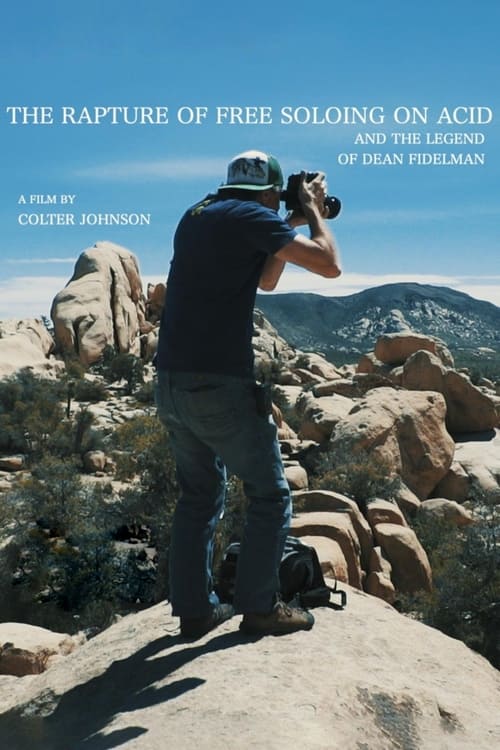
This film follows the legendary climbing photographer and Stone Master, Dean Fidelman. Fidelman was at the forefront of the free climbing revolution in Yosemite Valley and Joshua Tree during the 1970s, making photographs with John Bachar, Lynn Hill, Ron Kauk, John Long, and many other talented climbers. This documentary takes a look at Fidelman's impact and influence as a photographer and climber.
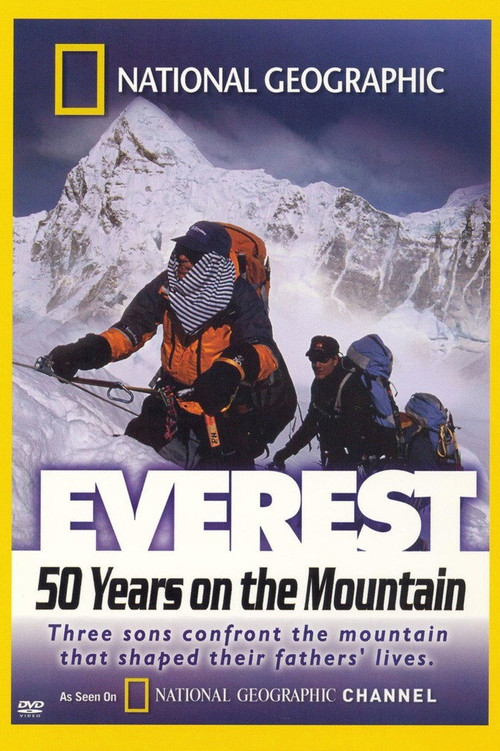
In 1953, Sir Edmund Hillary & Tenzing Norgay made history as the first people to reach the top of Everest. Now, 50 years later, three sons of Everest's most celebrated climbers return to the mountain to challenge it again. Join their journey as they brave the elements and face death to climb 29,000 feet of wind-blasted rock and ice. And, relive the dramatic history of Everest from great triumphs to deadly tragedies, enduring rivalries and the unsung role of the Sherpa people—as National Geographic exposes the untold stories that lurk in the mountain's epic shadow and takes you on the ultimate Everest experience.
Satyajit Ray's poetic documentary was commissioned by the Chogyal (King) of Sikkim at a time when he felt the sovereignty of Sikkim was under threat from both China and India. Ray's documentary is about the sovereignty of Sikkim. The film was banned by the government of India when Sikkim merged with India in 1975. The ban was finally lifted by the Ministry of External Affairs in September 2010. Preserved by the Academy Film Archive in 2007.

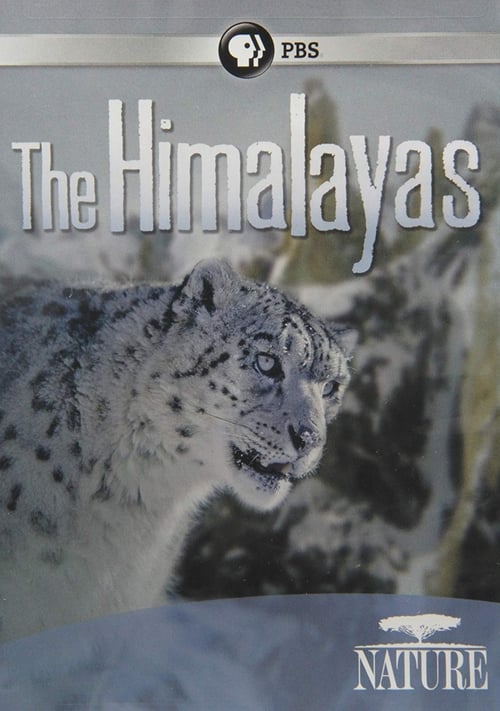
The highest mountain range in the world, the Himalayan range is far reaching, spanning thousands of miles, and holds within it an exceptionally diverse ecology. Coniferous and subtropical forests, wetlands, and montane grasslands are as much a part of this world as the inhospitable, frozen mountaintops that tower above. The word Himalaya is Sanskrit for abode of snow, fitting for a stretch of land that houses the world’s largest non polar ice masses. Extensive glacial networks feed Asia's major rivers including the Ganges, Indus, and Brahmaputra. More than a billion people rely on these glacier-fed water sources for drinking water and agriculture. The Himalayas are not only a remarkable expanse of natural beauty. They're also crucial for our survival.
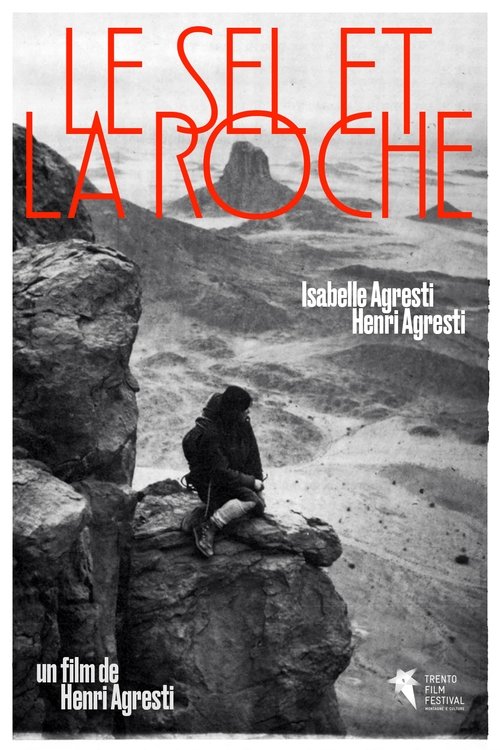
After reading the book "Guide to Hoggar Climbing," guide Pierre Agresti and his wife Isabelle Agresti set off into the Hoggar massif in the Algerian Sahara and tackled the west face of Garet El Djenoun. After a first attempt in 1967, they successfully reached the summit in 1970 and, with an old camera, made a film that remained unused for 25 years. In 1996, they decided to bring the past back to life through the ascent and encounters with the Tuaregs in the rock salt mines of Amadror. The film was shown in competition at the Trento Film Festival in 1997.