


Loading titles…
Documentary
The Paraguayan railroad, created in 1861, fell in the late twentieth century in decline. Operated for decades by foreign companies and later by the Paraguayan State has been in a growing abandonment since the late 90s. Since then there have been projects of recovery, but the…

No cast information available.
The documentary tells the story of Uschi, a farmer living free and recluded in the bavarian alps. Shot in epic black and white pictures, Still follows Uschi's life over a ten year period. From an untroubled summer of making cheese through pregnancy and the uncertain future of the parental farm, Matti Bauer portrays Uschi's struggle to keep alive the dream of a way of life that has become rather untypical in this day and age.


The film is not constructed as a lineal story, instead, each scene works as a painter’s brush freely tracing a distinctive shape; the lifestyle of the Raramuri people, the particular way in which they relate within the family, the community and their surrounding nature. Nararachi’s warm, intimate and profoundly human insight of the indigenous lifestyle and culture is so powerful that it enables the viewer to expand her horizon.

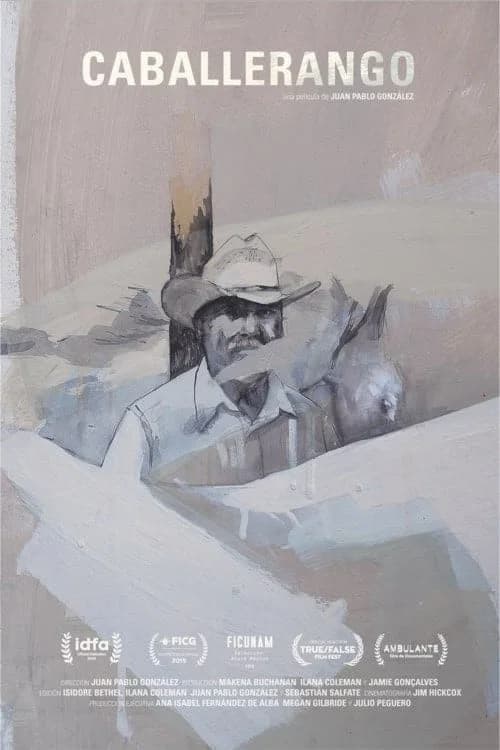
Nando, a young horse wrangler in a rural Mexican village, has taken his own life following a disagreement with his father. Caballerango shows the boy’s family members and townspeople as they reckon with the new realities borne out of this inexplicable tragedy. Each account of Nando’s story reveals a different aspect of this rural town, which is deeply affected by modernization. The confrontation between the centuries-old ways of life and the modern-day world seems to be creating serious identity crises among the younger generation. The story is told in a patient, observational style with methodical shots of the landscape, ranches, and of the two white horses, whom Nando and his father tended to. Those horses, the last to see Nando alive, connect us to an ethereal sensation of almost otherworldly mystical beings.

Eami means ‘forest’ in Ayoreo. It also means ‘world’. The story happens in the Paraguayan Chaco, the territory with the highest deforestation rate in the world. 25,000 hectares of forest are being deforested a month in this territory which would mean an average of 841 hectares a day or 35 hectares per hour. The forest barely lives and this only due to a reserve that the Totobiegosode people achieved in a legal manner. They call Chaidi this place which means ancestral land or the place where we always lived and it is part of the "Ayoreo Totobiegosode Natural and Cultural Heritage". Before this, they had to live through the traumatic situation of leaving the territory behind and surviving a war. It is the story of the Ayoreo Totobiegosode people, told from the point of view of Asoja, a bird-god with the ability to bring an omniscient- temporal gaze, who becomes the narrator of this story developed in a crossing between documentary and fiction.

At the heart of the Moroccan High Atlas mountains, water is a resource in short supply. The village of Tizi N'Oucheg has undergone a transformation thanks to Rachid Mandili, who is well-aware that the development of his village depends on access to clean water and on his strong leadership of this project. Mandili rallies all the villagers together and calls upon the knowledge of French and Moroccan scientists to tap water sources, to purify, and reuse waste water for irrigation. The documentary highlights the Berbers' community ties and ingenuity in their dream of independently managing their village water resources. It equally paints a portrait of a man whose initiative and resourcefulness has opened Tizi N'Oucheg up to modernity while still conserving its cultural heritage. Tizi's example presents some of the problems of water access in semi-arid regions and puts forward concrete solutions to these problems.

Filmmaker Angelo Madsen Minax returns to his rural Michigan hometown following the death of his infant niece and the subsequent arrest of his brother-in-law as the culprit. Using the audio-visual approaches of essay film, first-person cinema vérité, staged actions, and decades of home movies, Madsen navigates a town steeped in opioid addiction, economic depression, and religious fervor, while using the act of filmmaking to rebuild familial bonds and reimagine justice. Posing empathy as a tool for creating a more just world, North By Current does not seek to investigate a crime, but creates a relentless portrait of an enduring pastoral family, poised to reframe and reimagine narratives about incarceration, addiction, trans embodiment, and ruralness.

