


Loading titles…

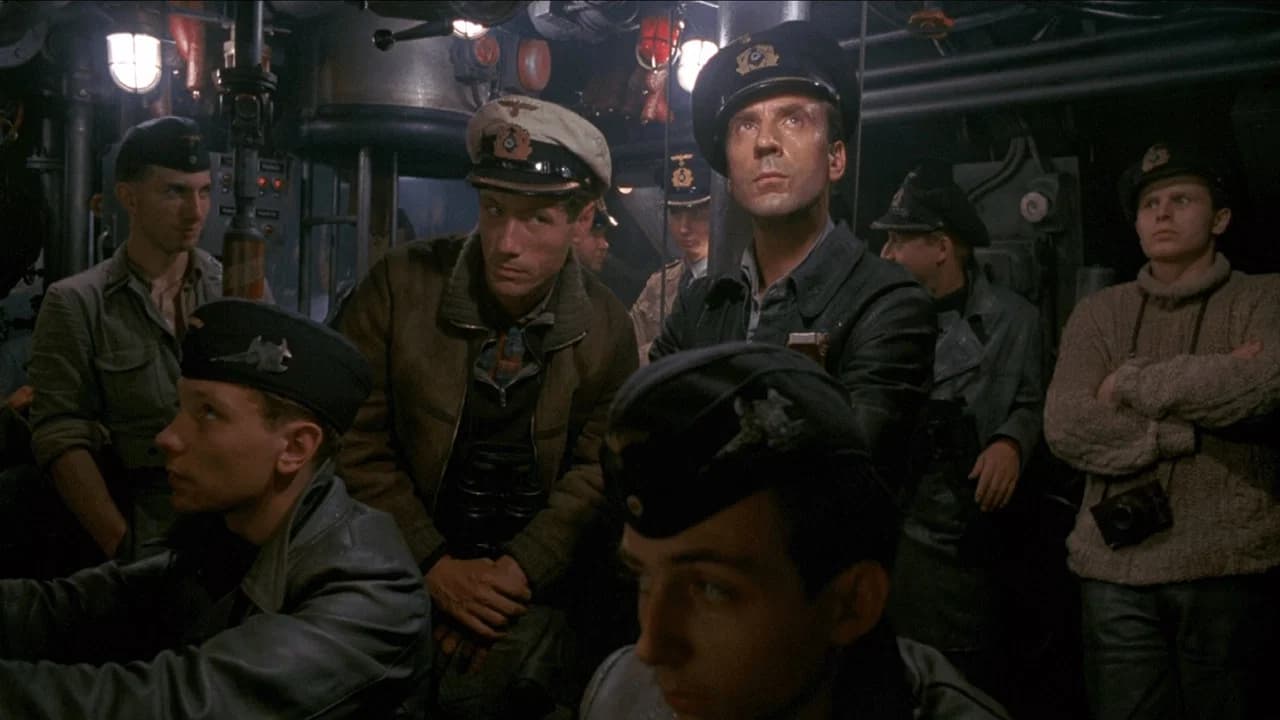
Lieutenant 'Der Alte'

Leutnant Werner

Chef Ingenieur

First Watch Officer

Second Watch Officer

Kriechbaum

Johann 'Das Gespenst'

Ullmann

Hinrich

Chief Bosun

Ario

Pilgrim


Flanders, Hispanic Monarchy, 1616. The inhabitants of the small town of Boom are busy organizing the annual local festivities when the arrival of the Duke of Olivares, who rules the country on behalf of the King Philip III of Spain, is announced. While the male citizens cowardly surrender to panic, the brave female citizens decide to become the best hosts the Spaniards can ever meet. (German version of the French film La Kermesse héroïque, 1935.)

A three-part anthology film. 1) AMSTERDAM: Jovke and his two friends try to make some quick cash before going off to army. At the same time, he tries to establish communication both with his catatonic father and the girl he likes. 2) TIE REQUIRED: While drudging at the docks with two inseparable friends of his, Neša is waiting for a waiter's job at the bar where his mother works. After not being allowed to a birthday party, the trio decides to look for fun somewhere else. 3) ABSOLUTE PITCH: An unemployed paleonthologist spends his nights sewing dresses for his beloved one. When she sets off to countryside for work and doesn't call back, he becomes suspicious and decides to solve this sudden departure on his own. The movie was nominated for a Student Academy Award in 1991.



The 30-minute film centers around a group of high school students who became nurses called Himeyuri and served during the Battle of Okinawa during World War II. The Himeyuri Alumnae Incorporated Foundation, which runs the Himeyuri Peace Museum in Okinawa, produced the film with the aim to convey the experiences of those high school students, many of whom lost their lives during the battle, to children.

Wounded in Africa during World War II, Nazi Col. Claus von Stauffenberg returns to his native Germany and joins the Resistance in a daring plan to create a shadow government and assassinate Adolf Hitler. When events unfold so that he becomes a central player, he finds himself tasked with both leading the coup and personally killing the Führer.

Germany in the autumn of 1957: Lola, a seductive cabaret singer-prostitute exults in her power as a temptress of men, but she wants out—she wants money, property, and love. Pitting a corrupt building contractor against the new straight-arrow building commissioner, Lola launches an outrageous plan to elevate herself in a world where everything, and everyone, is for sale. Shot in childlike candy colors, Fassbinder’s homage to Josef von Sternberg’s classic The Blue Angel stands as a satiric tribute to capitalism.