
Liniers
Self
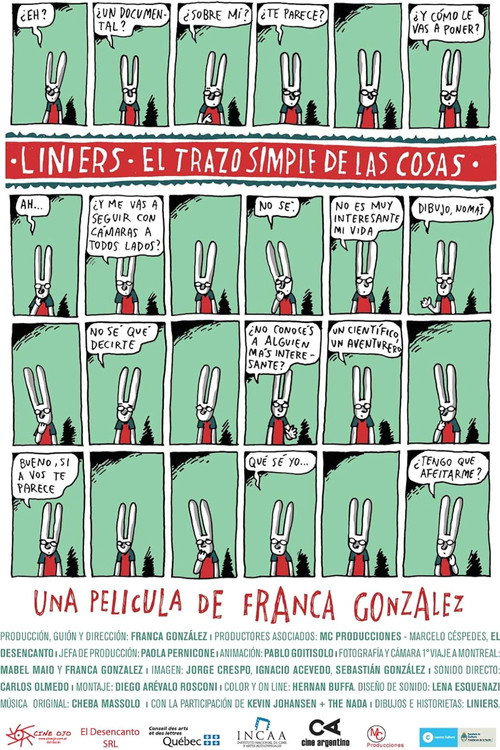
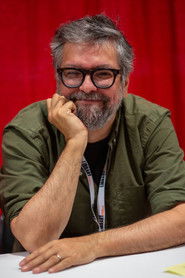
Winter 2007. Two artists from Argentina receive a grant to develop their work in Montreal (Canada). The only catch? They have to share an apartment. In this way filmmaker Franca González and cartoonist Ricardo Siri Liniers come to know each other. From the moment González…
Self

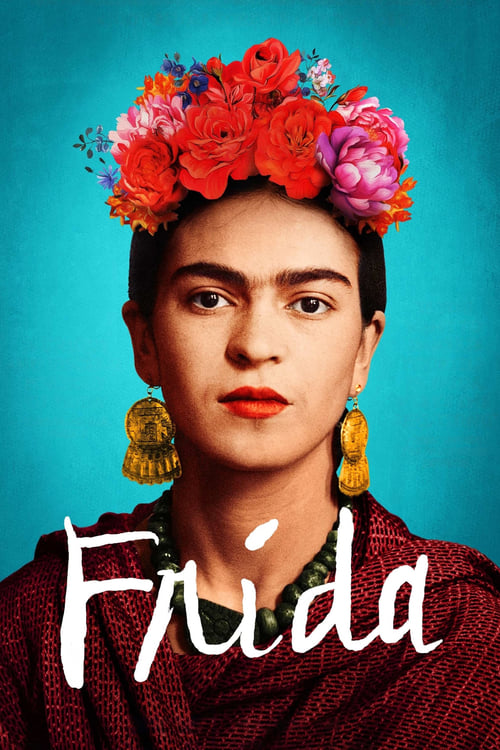
An intimately raw and magical journey through the life, mind, and heart of iconic artist Frida Kahlo. Told through her own words for the very first time — drawn from her diary, revealing letters, essays, and print interviews — and brought vividly to life by lyrical animation inspired by her unforgettable artwork.
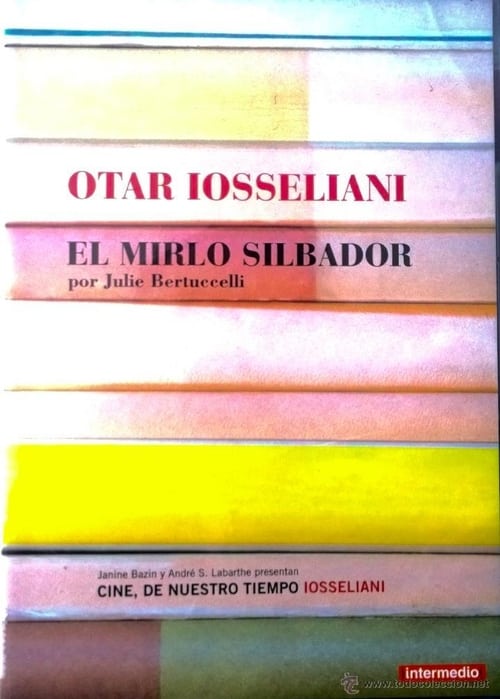
Georgian director Otar Iosseliani prepares his film Jardins en Automne. Nothing is conventional in the filmmaker's system: Julie Bertuccelli portrays the gestation and production of a film that seems to follow the freest and most unpredictable poetic intuitions of its creator. The constant and hilarious arguments with the producer, Martine Marignac, a Michel Piccoli transformed into an old woman, and the director's peculiar filming system, in which he signals his actors to start with a whistle, paint a picture of one of the most unclassifiable cinematic experiences in contemporary cinema.
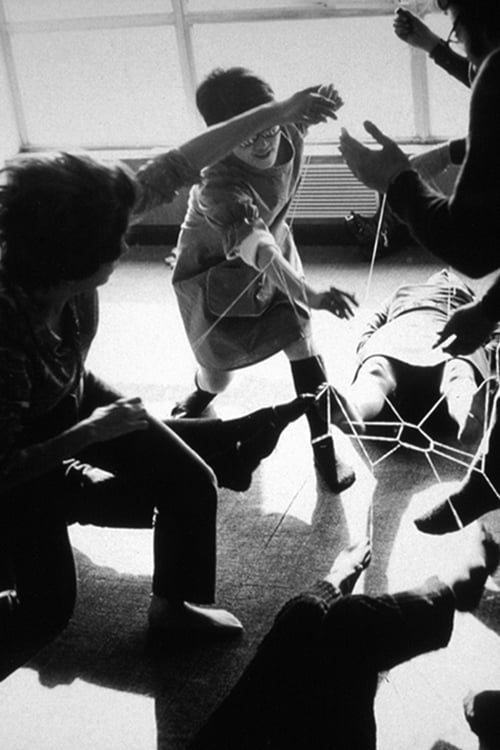
Artistic experimental documentary short that explores the universe of Brazilian artist Lygia Clark. Sensorial experiences, the perception of the body, forms and tactile sensations are mixed and reflect the human race as part of the cosmos, getting lost to find itself. Art, stripped of its virtuous image, as an action of the common human being, the expression of living things, runs from the mechanical repetition of movements and attitudes.
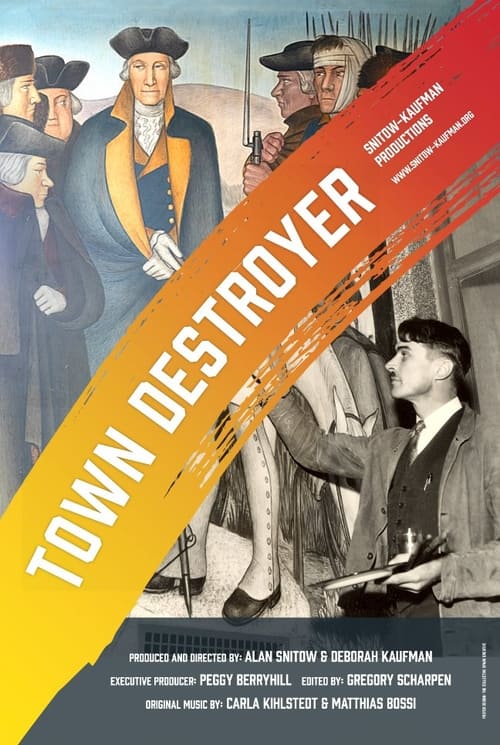
Controversy erupts over a New-Deal-era mural of the namesake of San Francisco’s George Washington High School. The thirteen-panel artwork "The Life of Washington" by Victor Arnautoff offers a view of the Founding Father both celebratory and critical, referencing his involvements in slavery and Native American genocide.

In 2011, Maine State Prison launched a pioneering reform program to scale back its use of solitary confinement. Bafta and Emmy-winning film-maker Dan Edge and his co-director Lauren Mucciolo were given unprecedented access to the solitary unit - and filmed there for more than three years. The result is an extraordinary and harrowing portrait of life in solitary - and a unique document of a radical and risky experiment to reform a prison. The US is the world leader in solitary confinement. More than 80,000 American prisoners live in isolation, some have been there for years, even decades. Solitary is proven to cause mental illness, it is expensive, and it is condemned by many as torture. And yet for decades, it has been one of the central planks of the American criminal justice system.
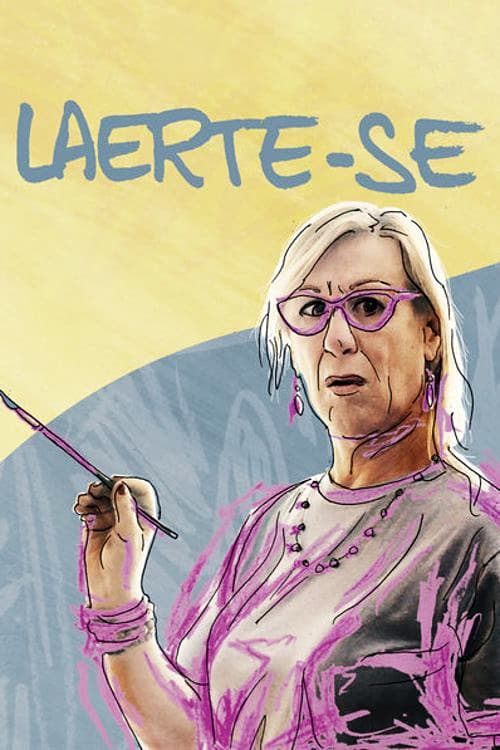
In this film, Laerte conjugates the body in the feminine, and scrutinizes concepts and prejudices. Not in search of an identity, but in search of un-identities. Laerte creates and sends creatures to face reality in the fictional world of comic strips as a vanguard of the self. And, on the streets, the one who becomes the fiction of a real character. Laerte, of all the bodies, and of none, complicates all binaries. In following Laerte, this documentary chooses to clothe the nudity beyond the skin we inhabit.

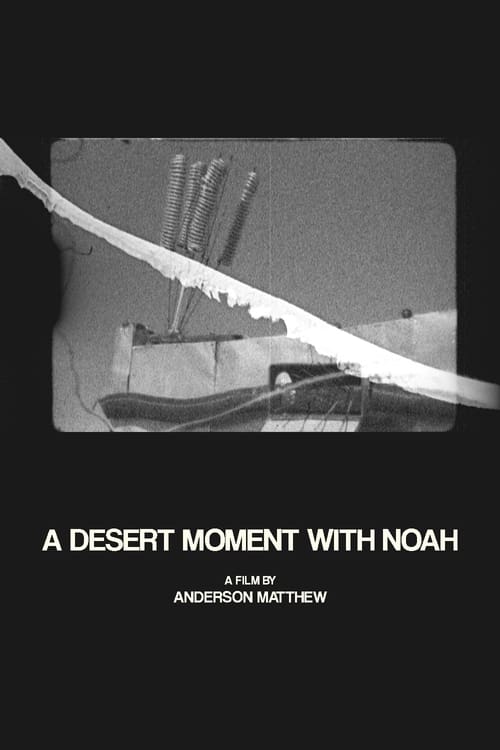
Paying tribute to artist Noah Purifoy and his Outdoor Museum, Matthew’s film ‘A Desert Moment with Noah’ rapidly animates 78 still Super 8mm images like a slideshow gone haywire. Exploring the of elasticity of time, the film manipulates the essence of a moment as it periodically pauses to allow the viewer a space with various objects, surfaces, and textures within Purifoy’s Joshua Tree sculptural environment.
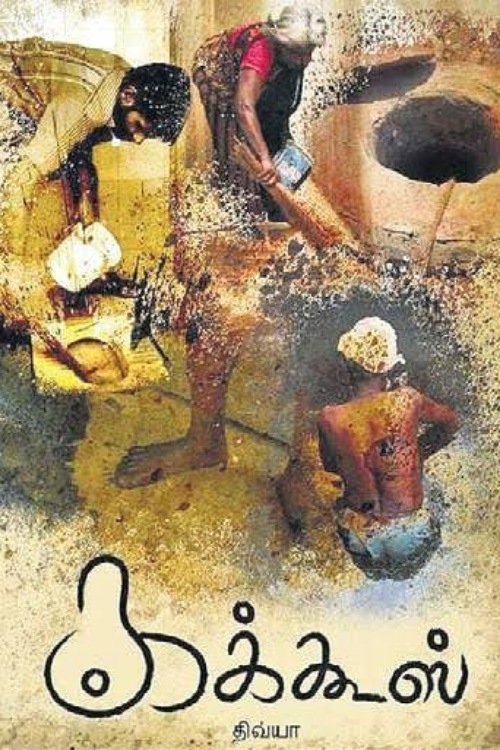
Manual Scavenging is an all India Phenomenon. However, the Government of India is kind enough to enact Prohibition of Employment as Manual Scavengers and their Rehabilitation Act and implementing many schemes. But none of them failed to work as the caste system is paramount in the so called democratic constitutional India. This film Kakkoos elaborates on the deplorable status.
The point of departure for this film is the 1981 composition De Tijd by Dutch composer Louis Andriessen. Van der Keuken leaves the music undisturbed as an autonomous soundtrack and has the images engage in a sort of battle with it. These images are associations, fragments of events, scenes and situations. The film is preceded by a text by Bert Schierbeek.
