
Loading titles…
Documentary / History
Terry Jones' Barbarians is a 4-part TV documentary series first broadcast on BBC 2 in 2006. It was written and presented by Terry Jones, and it challenges the received Roman and Roman Catholic notion of the barbarian. Professor Barry Cunliffe of the University of Oxford acted…


Presenter
Julius Caesar
Attila's Wife


Rome chafes under the rule of the Emperor Domitian and his Egyptian mistress, Artamne. A mysterious champion arises to fight against the Emperor -- a masked man known as the Red Wolf. In fact, the Red Wolf is Valerius Rufus, one of the Emperor's trusted centurions who's aided by none other than the Emperor's court jester, the diminutive Elpidion. Rebels in league with Valerius kidnap Artamne, planning to exchange her for two of their imprisoned colleagues, but Artamne escapes and soon both Valerius, (now exposed as the Red Wolf), and his fiancee, Lucilla, are sentenced to be immersed in a cauldron of molten lead. Valerius's friends, however, rise up to rescue him and to liberate Rome.

For almost two thousand years, the story of Jesus’ final days has been celebrated by Christians the world over. From Jesus’ triumphant entry into Jerusalem, through to his eventual crucifixion six days later, the key moments have been immortalized in countless films, pieces of music, and works of art. But in recent years, some historians have begun to question inconsistencies in the Gospels’ version of events. They believe that the Gospels could hide a very different story; one that casts the historical Jesus in an entirely new light. Based on a new interpretation of contemporary historical events in Rome, "Last Days of Jesus" peels back thousands of years of tradition, to explore a new political context to the events in Jerusalem. "Last Days of Jesus" explores how dramatic political events in Rome could have played a crucial role in shaping Jesus’ destiny, and examines an extraordinary political alliance that altered the course of history.

Epic account of the thief Barabbas, who was pardoned for his crimes and spared crucifixion when Pilate offered the Israelites a choice to pardon Barabbas or Jesus. Struggling with his spirituality, Barabbas goes through many ordeals leading him to the gladiatorial arena, where he tries to win his freedom and confront his inner demons, ultimately becoming a follower of the man who was crucified in his place.

Pompeii 79AD, mere days before the Vesuvian eruption. Glaucus and Jone are in love with each other. Arbaces, the Egyptian High Priest, is determined to conquer Jone. Glaucus purchases Nydia, the blind and long-suffering slave. Nydia falls in love with Glaucus and asks Arbaces for his help. He gives her a potion to make Glaucus fall in love with her-- In fact, a poison which will cause violent insanity.

Documentary released to coincide with the British Museum's exhibition dedicated to the man who ruled the Roman Empire from 117 to 138 AD. The programme explores the life, achievements, passions and legacy of the emperor who was both soldier and poet and responsible for that most famous construction - Hadrian's Wall. The documentary was produced in conjunction with the exhibition Hadrian: Empire and Conflict at the British Museum 24 July - 26 October 2008.

Treacherous Roman senator Lucius Quintilius plans a secret journey into Thrace to recover a legendary treasure. He is accompanied by his daughter Livia posing as a Christian slave girl, his cruel henchman Commodio, and Terenzius, an ex-gladiator and Nero look-alike who fools the local Thracians into believing he is the real Emperor. But Lucius's plans are thwarted by Spartacus and his band of rebels who succeed in capturing the treasure for Thrace. When news arrives from Rome that the real Nero has died, local Roman governor Consul Metellus joins forces with Spartacus to defeat the traitors.


Two thousand years ago, at the dawn of the first century, the ancient world was ruled by Rome. Through the experiences, memories and writings of the people who lived it, this series tells the story of that time - the emperors and slaves, poets and plebeians, who wrested order from chaos, built the most cosmopolitan society the world had ever seen and shaped the Roman empire in the first century A.D.
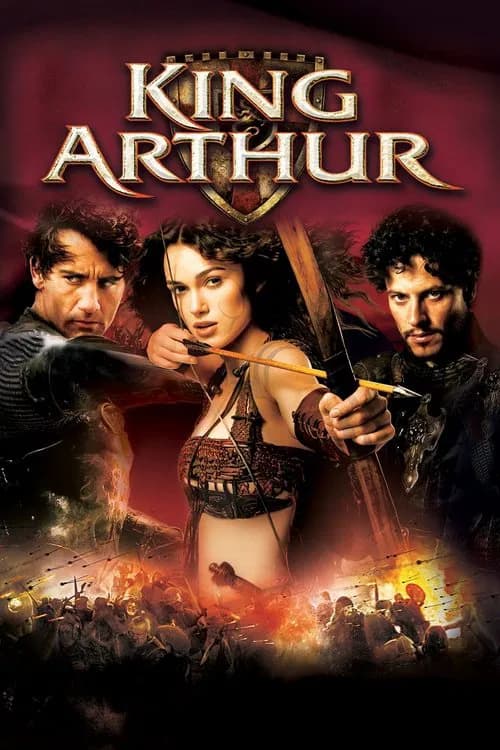
The story of the Arthurian legend, based on the 'Sarmatian hypothesis' which contends that the legend has a historical nucleus in the Sarmatian heavy cavalry troops stationed in Britain, and that the Roman-British military commander, Lucius Artorius Castus is the historical person behind the legend.


