Loading titles…
History / Documentary
Meet Nikola Tesla, the genius engineer and tireless inventor whose technology revolutionized the electrical age of the 20th century. Although eclipsed in fame by Edison and Marconi, it was Tesla's vision that paved the way for today's wireless world. His fertile but…
Narrator (voice)
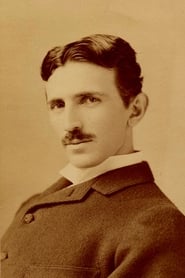
Self (archive footage)
An educational physics film utilizing a fascinating set consisting of a rotating table and furniture occupying surprisingly unpredictable spots within the viewing area, Leacock’s Frames of Reference (1960), features fine cinematography by Abraham Morochnik, and funny narration by University of Toronto professors Donald Ivey and Patterson Hume, in a wonderful example of the fun a creative team of filmmakers can have with a subject other, less imaginative types might find pedestrian.
The Theory of Everything: "Michio Kaku & Steven Hawking have interesting ideas, however, this video veers less to the direction of Darwin & the "extremely" improbable -- more in the direction perhaps of those such as Sir Roger Penrose (a Steven Hawking's mentor), Steven Meyer (ID), Niels Bohr (atomic structure), Sir John Eccles (Nobel Prize for consciousness), Max Planck (father of Quantum Physics), Albert Einstein (Relativity), Thomas Aquinas, Aristotle (teacher of Alexander the Great), Plato (student of Aristotle) -- and (above all) -- Jesus Christ. " ----- a review / quote we liked from a friend at NASA
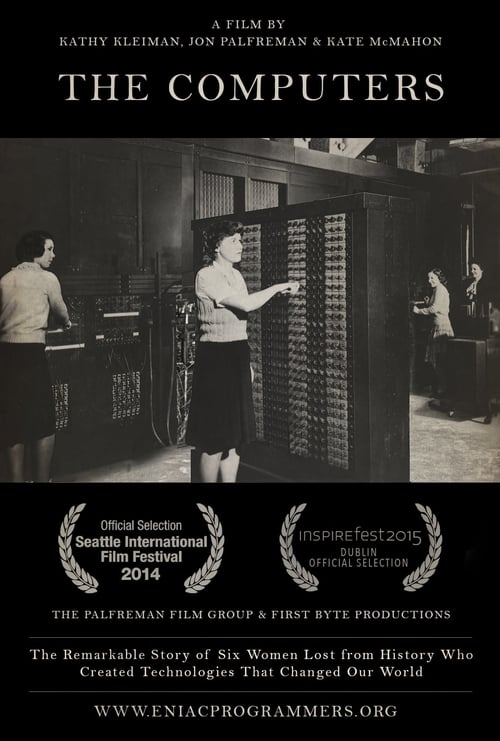
Six young women programmed the world's first all-electronic programmable computer, ENIAC, as part of a secret US WWII project. They changed the world, but were never introduced and never received credit. These pioneers deserve to be known and celebrated: Betty Snyder Holberton, Jean Jennings Barik, Kay McNulty Mauchly Antonelli, Marlyn Wescoff Meltzer, Ruth Lichterman Teitelbaum, and Frances Bilas Spence.
A super laser was a planet-destroying super weapon that often used several separate "super laser beams" combined together as a single beam. This devastating device was designed to destroy planets with one shot at full power. There were also smaller-scale super lasers of lesser power designed for use against capital ships. Yet another small-scale super laser was a type used by the Geonosians in their droid factories to melt iron ore.
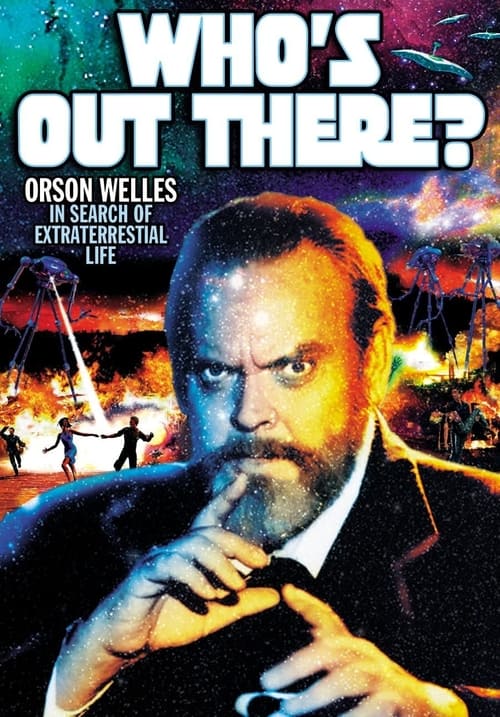
Orson Welles — with contributions from scientists George Wald, Carl Sagan, and others — examines the possibility and implications of extraterrestrial life. In examining our perceptions of alien 'martians' from his "War of the Worlds" broadcast, to then-modern explorations of Mars, this film from NASA provides a unique glimpse at life on earth, and elsewhere in the universe.