
Loading titles…
Music / Documentary
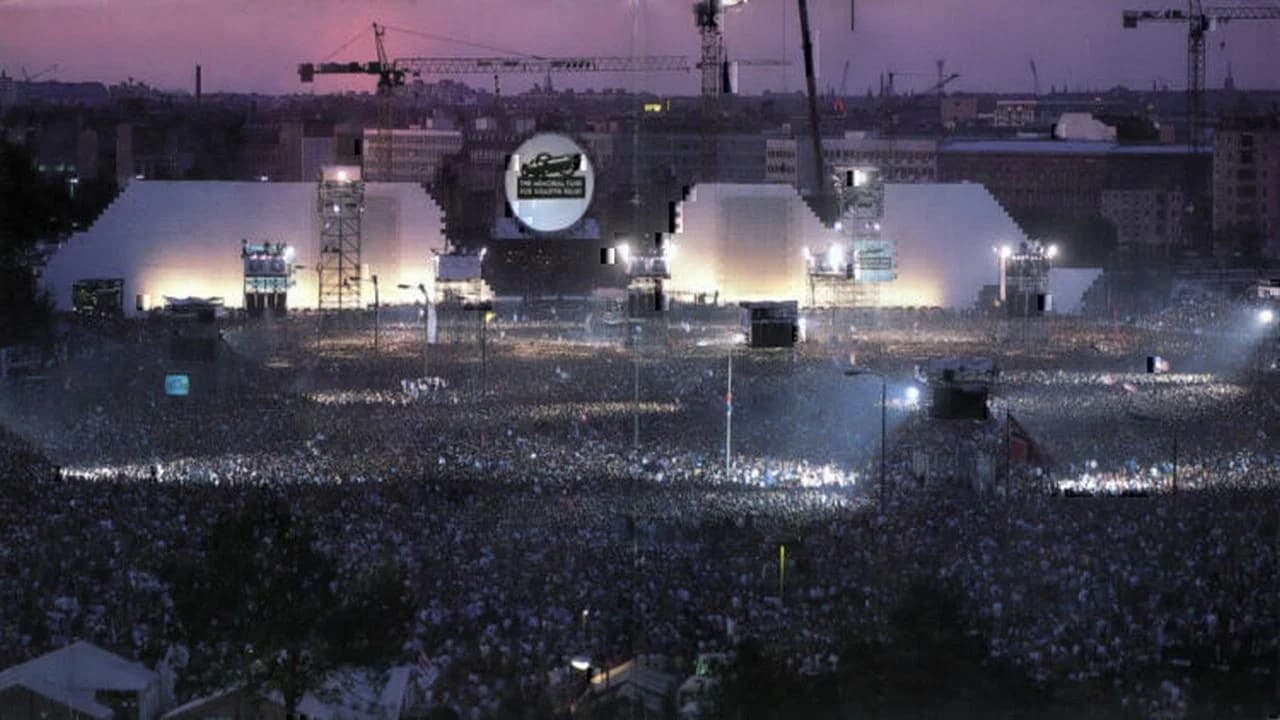
A global television broadcast of the event in which former Pink Floyd leader singer and composer Roger Waters led an all-star cast in a mammoth benefit performance of his acclaimed concept album, The Wall. Set in Berlin, Germany less than a year after the destruction of the…
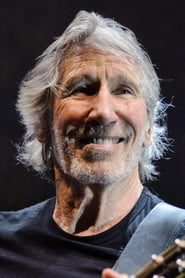
Self / Pink, The Father / The Doctor

Self - Leader, Surrogate Band (as Scorpions)
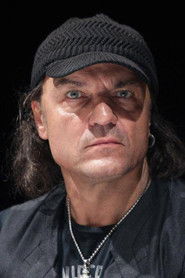
Self - Lead Guitarist, Surrogate Band (as Scorpions)
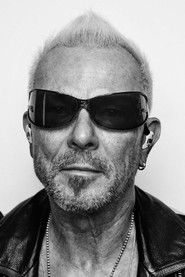
Self - Rhythm Guitarist, Surrogate Band (as Scorpions)

Self - Bassist, Surrogate Band (as Scorpions)

Self - Drummer & Percussionist, Surrogate Band (as Scorpions)

Self - Vocals
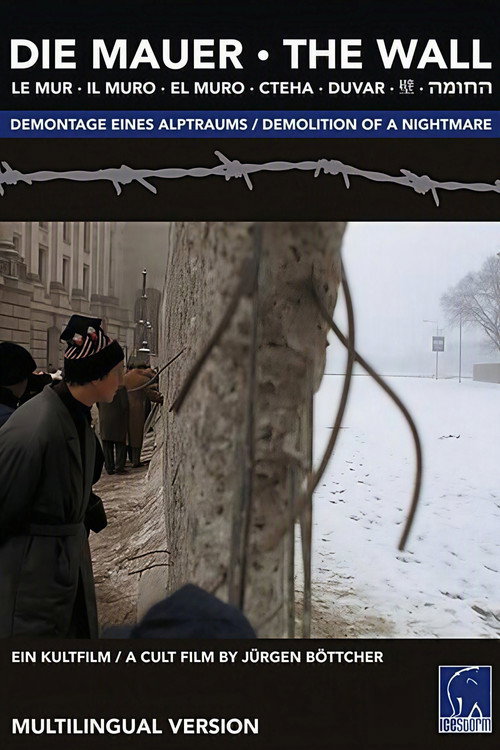
A documentary about the deconstruction of the Berlin Wall which makes no use of vocal commentary but instead focuses on visual elements. From the Potsdamer Platz to the Brandenburg Gate, the camera captures the historic events from all sides and different angles: on the one hand there are news reporters and tourists from all over the world taking pictures, children selling pieces of the wall to passers-by, and people celebrating New Year's Eve, on the other we see abandoned subway stations and officials with blank looks on their faces.
Jonathan Stavleu explores, in a stream-of-consciousness video essay, the relationship people have with water and what happens when access to it is taken away. For this work, he examines anecdotal histories he has heard from Estonians, as well as stories from his own family history in the Netherlands, weaving them together into a journal-like narrative.
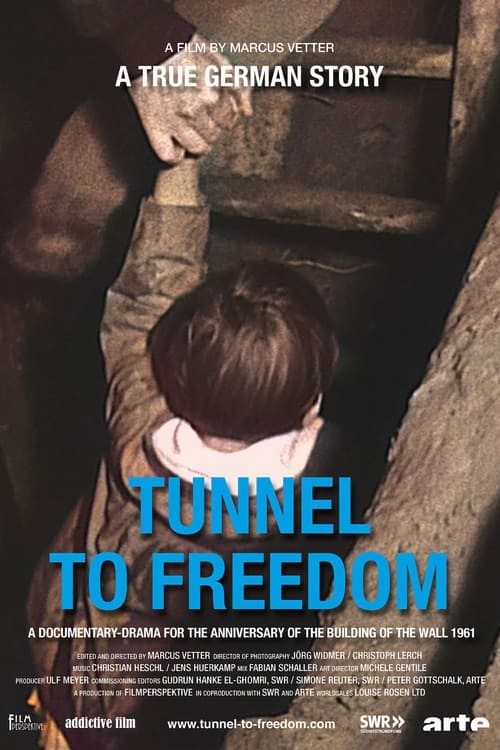
13 August 1961: the GDR closes the sector borders in Berlin. The city is divided overnight. Escape to the West becomes more dangerous every day. But on September 14, 1962, exactly one year, one month and one day after the Wall was built, a group of 29 people from the GDR managed to escape spectacularly through a 135-meter tunnel to the West. For more than 4 months, students from West Berlin, including 2 Italians, dug this tunnel. When the tunnel builders ran out of money after only a few meters of digging, they came up with the idea of marketing the escape tunnel. They sell the film rights to the story exclusively to NBC, an American television station.
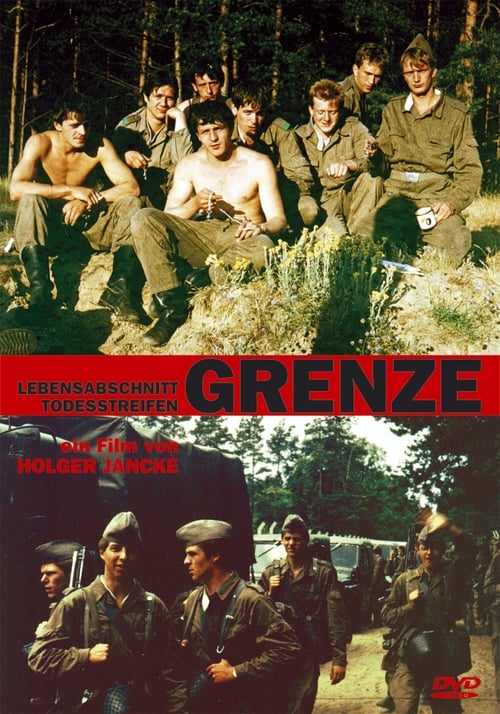
In February 1986 they received the call of a fatherland that no longer exists: four young GDR citizens on the verge of adulthood see themselves forced, like so many others in East and West Germany, to do their one and a half years of military service. What is special: Their service area is the border system, an anti-imperialist protective wall according to their superiors, death strips and prison bars for a population incapacitated in naked reality. Now, seventeen years later, there is a reunion with the comrades and the old post. This feature film, which was the first in reunified Germany to deal with the inner workings of the GDR border troops, tells of life on the fence, the associated contradictions and some hot phases in the Cold War.
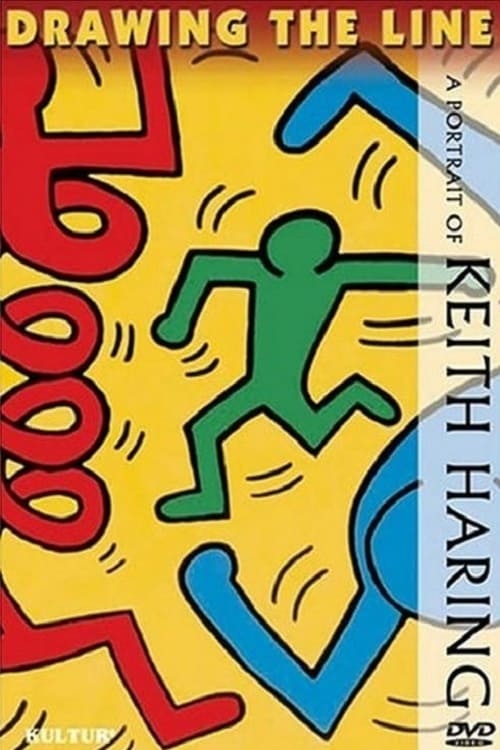
The 5th anniversary of the inner-German wall to West Germany and West Berlin is on the agenda. The necessity of erecting the border is illustrated by comparing the situation in 1939 and the situation in the summer of 1961 with regard to the "threat of intervention" by the Western powers. Berlin people and GDR border guards are interviewed.

Self - Vocals

Self - Synthesizer, vocals

Self - Vocals
Self - Vocals

Self - Vocals