
Nils Brandt
The laughing man
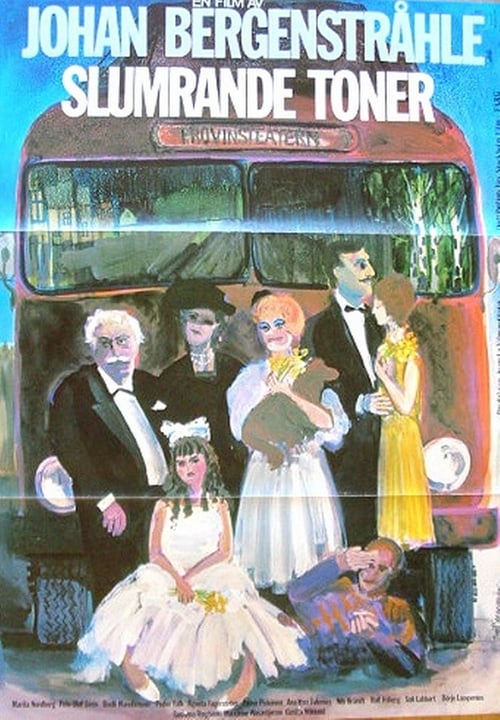
Finland in the late 1950s. A touring theatre company travels the countryside and play English light comedies. But the audience fails.
The laughing man

Angelika
Betty
Sten
Inga
Gustav


A group of dancers congregate on the stage of a Broadway theatre to audition for a new musical production directed by Zach. After the initial eliminations, seventeen hopefuls remain, among them Cassie, who once had a tempestuous romantic relationship with Zach. She is desperate enough for work to humble herself and audition for him; whether he's willing to let professionalism overcome his personal feelings about their past remains to be seen.

An usherette in a theatre, where a distinguished and popular actor performs, gets her big break when the leading actress has an accident. The director decides to take advantage of the heretofore unexploited talent of the girl and asks her to replace the leading actress. This unexpected opportunity transforms her from a humble usherette into a shining star. Later on, she wins the heart of the leading actor with whom she was secretly in love. However, her sudden rise to theatrical-musical stardom creates complications in their love affair, as her companion sinks into disappointment and drowns himself in drink, abandoning his career. Nevertheless, the usherette/leading actress doesn't give up; She looks for him, finds him and supports him, psychologically and morally, until he makes a comeback to the stage and their love nest.


A lesbian couple experiences microaggressions at a workshop upstate. Claire and her fiancée Monica embark from the boisterous streets of New York City to the Berkshires, where Claire has been invited to stage her latest work at a rural theater company. While Claire's actors question her ability to write heterosexual dialogue, Monica encounters her own source of micro-aggression in the form of Mutty, the groundskeeper.


A stage play by John Murrell, adapted by Eric-Emmanuel Schmitt, performed to perfection by Fanny Ardant and Robert Hirsch about the last days of Sarah Bernhardt. The play concentrates on an uneasy relationship between Sarah and her servant to whom she dictates her memoir, as well as a fragile relationship between her memories, actual history and reality.

Corinne d'Alys (Daniels) achieves sudden success on the stage and among her many admirers is noted artist Robert Townsend (Menjou). Robert is married to Elsa (Williams), the sister of John Elliott (Stone), the producer responsible for Corinne's rise to fame. The young woman's head is turned by the praise she receives and, despite John's warning against Robert, she permits the latter to paint her portrait and pay her a good deal of attention. John himself loves Corinne and believes that wisdom will come to her with time.

On a bitterly cold London evening, schoolteacher Kyra Hollis receives an unexpected visit from her former lover, Tom Sergeant, a successful and charismatic restaurateur whose wife has recently died. As the evening progresses, the two attempt to rekindle their once passionate relationship only to find themselves locked in a dangerous battle of opposing ideologies and mutual desires.