Loading titles…
Animation / Family / Fantasy
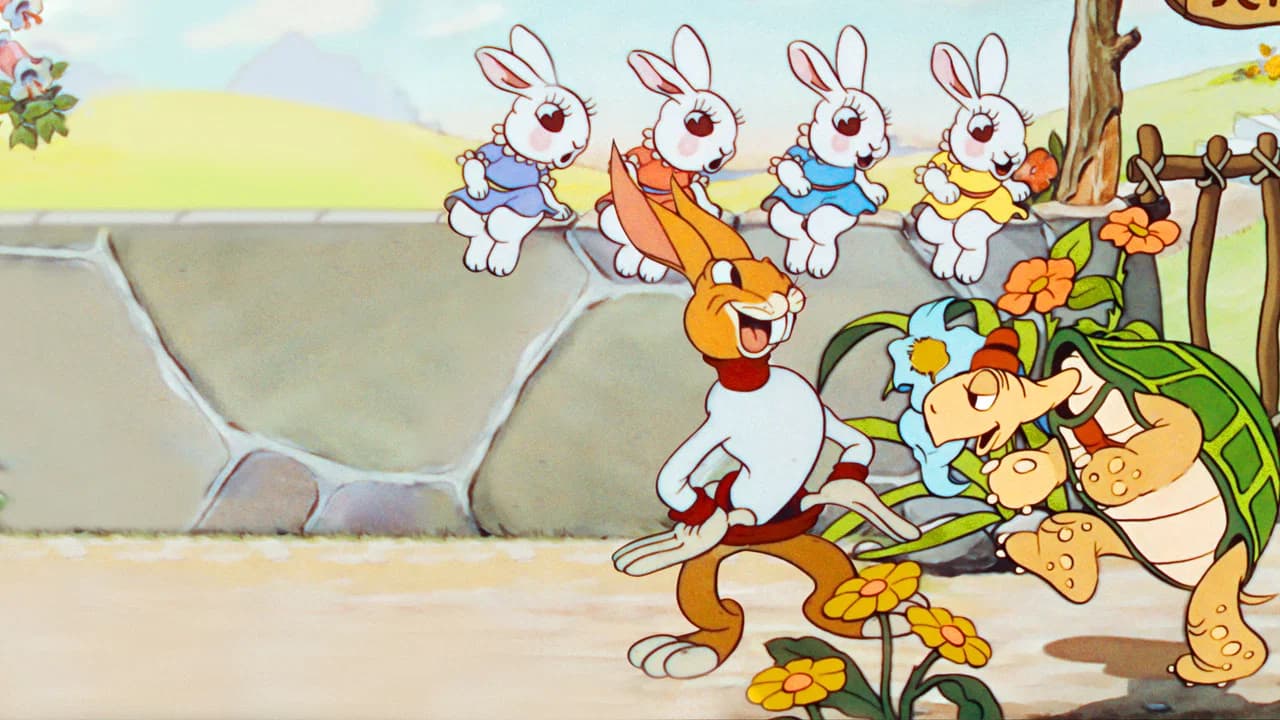
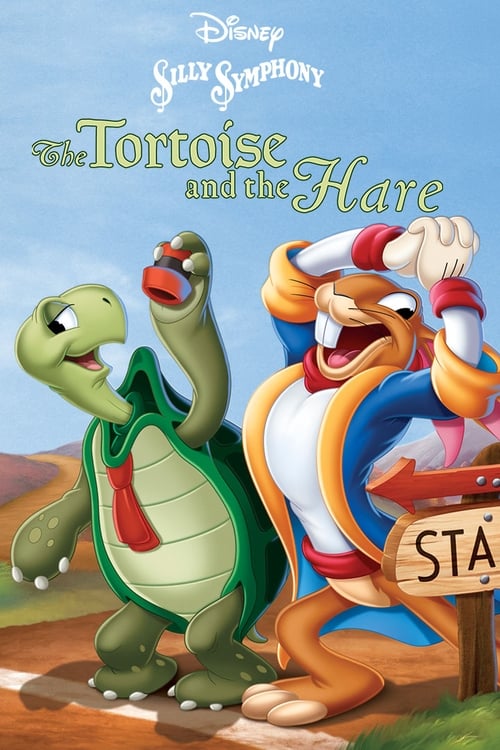
The Tortoise and the Hare is an animated short film released on January 5, 1935 by United Artists, produced by Walt Disney and directed by Wilfred Jackson. Based on an Aesop's fable of the same name, The Tortoise and the Hare won the 1934 Academy Award for Best Short Subject:…
Toby Tortoise (voice) (uncredited)
Max Hare (voice) (uncredited)

Starter (voice) (uncredited)

Miss Cottontail Girl (voice) (uncredited)
Girl Bunny (voice) (uncredited)

Girl Bunny (voice) (uncredited)
Girl Bunny (voice) (uncredited)
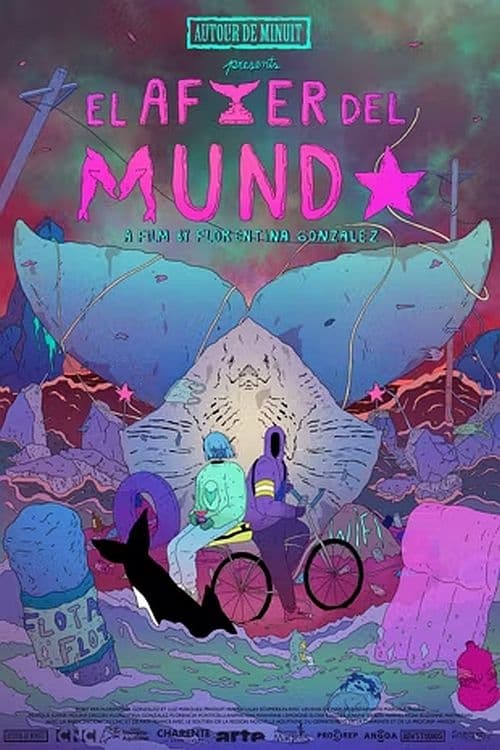
Humanity no longer exists, only Fluor and Carlix, two ghosts in sportswear, remain. They wander among the remains of an extinct civilization, one in search of a Wi-Fi connection, the other in search of the head of a giant cetacean. A story of encounter and friendship, punctuated by an ultimate playlist : that of the end of the world.
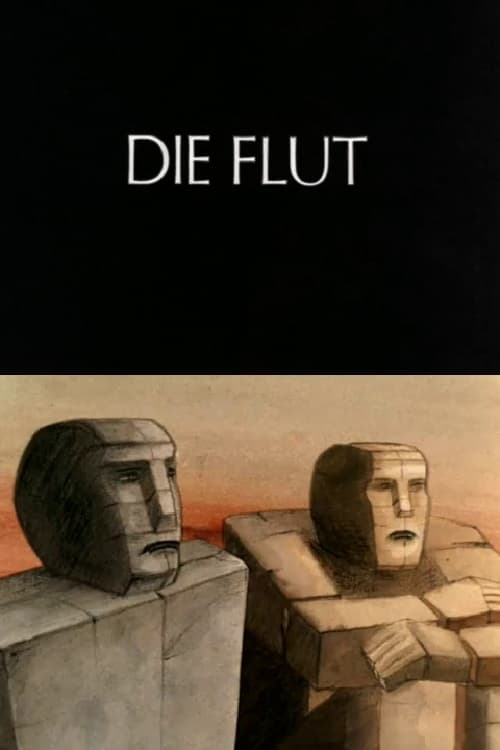
Two men sit on an island watching the sunset. When a storm gathers, they decide to build a boat. While one man is mindful of the coming danger and urges speed, the other wastes his time on decorative details. Dammbeck’s last film made in the GDR before he left for West Germany is based on a Chinese fable, with music by internationally known jazz musician Günter “Baby” Sommer.
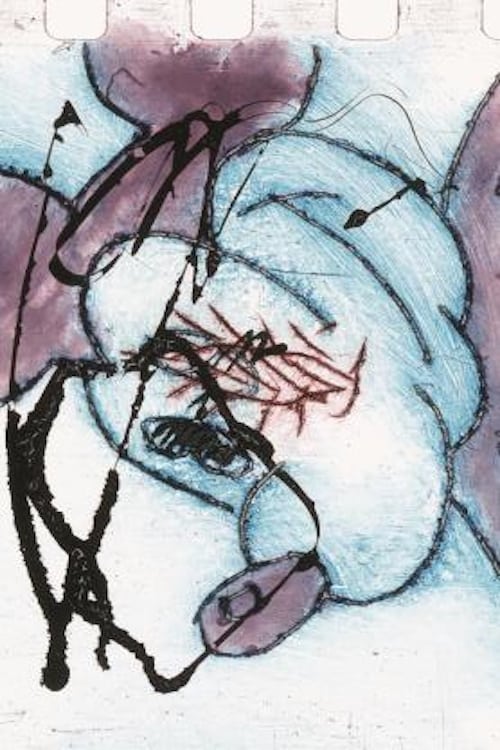
For the multimedia exhibition Tangenten I (Tangents I), Dammbeck and co-organizer, sculptor and painter Frieder Heinze had planned to collaborate on a film that would combine non-camera animation with 35mm footage of a train ride between the two Dresden districts of Radebeul and Pieschen. When the exhibition was banned in 1978, Heinze turned to other projects, but Dammbeck continued working on the film by himself. Metamorphoses I—the first experimental film ever to be shown publicly in East Germany—marks the filmic beginning of Dammbeck’s long-term art project the Herakles-Konzept (Hercules Concept).
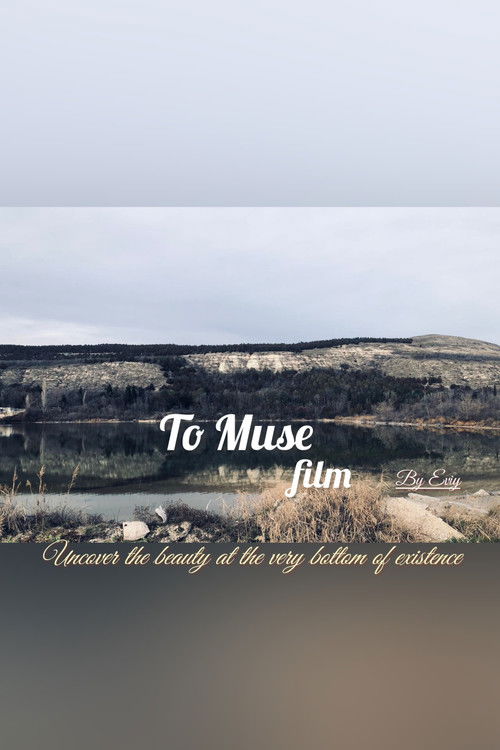
A solitary Frenchman seeks inspiration in a ruined duchy, meeting eccentric figures with their visions of art, madness, and myth. During 15 minutes he wanders across the broken edges of reality and sanity, he questions what form inspiration can still take among fragments of ruins and environment, as the viewer steps into his eyes and ears, discovering beauty within decay.