Loading titles…

Rusalka
The Prince

The Water Spirit

Jezibaba
The Foreign Princess

Wood Nymph

Wood Nymph
Wood Nymph
The Forester

Kitchen Boy
Huntsman (voice)

Prince Abesalom runs into an orphaned Eteri while hunting, falls for her and brings the woman to his palace as his fiancé. The Prince’s aid Murman loses his self-control at Eteri’s beauty and gives her a spelled necklace as a wedding gift. Eteri contracts a mysterious disease that only Murman is capable to heal.
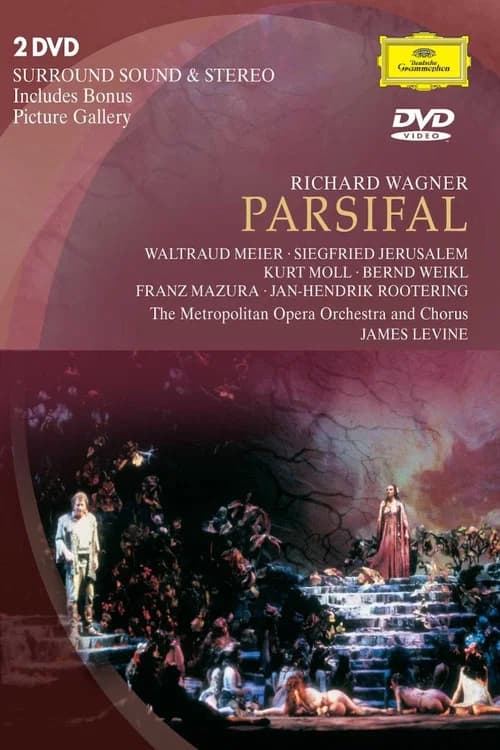
The Met production easily has the most beautiful staging, designed by Otto Schenck, who also produced the fabulous set for the Met's previous Ring cycle. Kurt Moll is a wonderful Gurnemanz, but compared to his studio recording under Karajan a decade earlier it has lost some of its original velvety body and luster. As Parsifal, Jerusalem is starting to show some wear and tear on his voice at the Met in 1992 as opposed to his prime form at Bayreuth in 1981, but is still quite good; only Placido Domingo could compete with him in the role at that time.
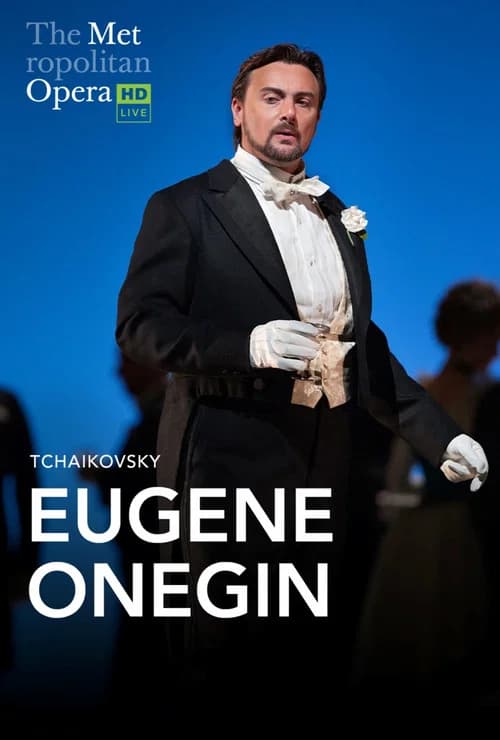
Tchaikovsky’s many moods—tender, grand, melancholy—are all given free rein in Eugene Onegin. The opera is based on Pushkin’s iconic verse novel, which reimagines the Byronic romantic anti-hero as the definitive bored Russian aristocrat caught between convention and ennui; Tchaikovsky, similarly, took Western European operatic forms and transformed them into an authentic and undeniably Russian work. At the core of the opera is the young girl Tatiana, who grows from a sentimental adolescent into a complete woman in one of the operatic stage’s most convincing character developments.


Bohuslav Martinů's Greek Passion, which outlines a serious, very topical problem today, which is the position of refugees in a foreign, often hostile environment, is among the composer's most important works in terms of both ideology and art. The English libretto was based on the novel "Christ Recrucified" (1951) by the Greek writer Nikos Kazantzakis, which takes place in the first decades of the 20th century in the harsh Greek countryside.
Jessye Norman Sings Carmen is a gripping vérité study of the famous dramatic soprano’s approach to mastering Bizet’s heroine in recording sessions with Seiji Ozawa and the Orchestre National de France. Musical segments include performances of three arias and the great duets between Carmen and Don José