

Loading titles…
Documentary
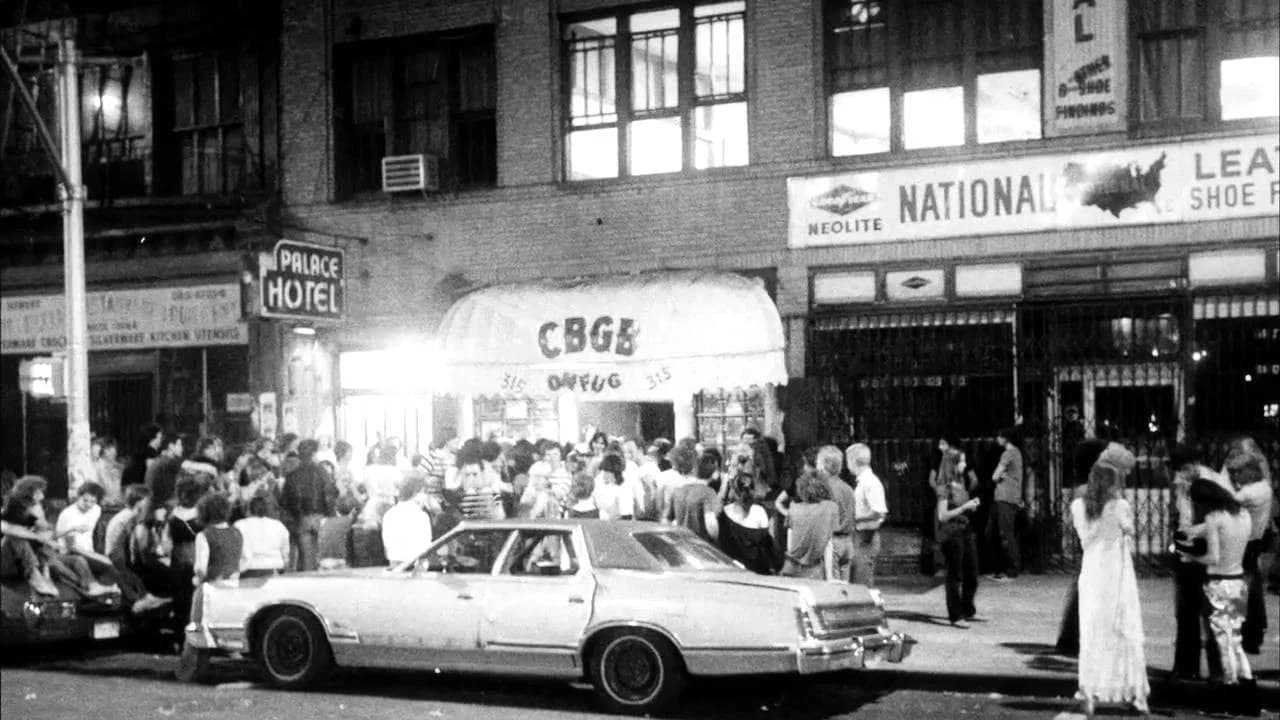
In the years before Ronald Reagan took office, Manhattan was in ruins. But true art has never come from comfort, and it was precisely those dire circumstances that inspired artists like Jim Jarmusch, Lizzy Borden, and Amos Poe to produce some of their best works. Taking their…

Self

Self
Self
Self
Self
Self
Self
Self

This video work was made while Rist was still an art student at the School of Design in Basel, Switzerland. It was produced in an unlimited edition and is intended to be shown on a domestic-style monitor, although it may also be displayed as a projection with special permission from the artist. The video depicts the artist, an attractive young woman dancing manically around the room while repeatedly singing ‘I’m not the girl who misses much’. The phrase is an adaptation of the first line of the Beatles song ‘Happiness is a Warm Gun'. Referring to her childhood Rist has said, ‘In my village in Switzerland I had a small window on the art world through the mass media; through John Lennon/Yoko Ono I moved from pop music to contemporary art. In return, I will always be grateful to popular culture’ (quoted in ‘I rist, you rist, she rists, he rists, we rist, you rist, they rist, tourist: Hans Ulrich Obrist in Conversation with Pipilotti Rist’, Pipilotti Rist, p.16).

Dither: The D.I.Y. Sound is not your conventional punk rock documentary. In this documentary we explore the ideologies created by cornerstones of the early punk community such as Ian Mackaye of Minor Threat, Fugazi and Dischord Records. But beyond that, we explore the communities and people that have adopted these ideologies and created their own version of what it means to be D.I.Y. This is not a documentary about just music, it's a documentary about the communities that surround the music and embrace it as a way of identification and brotherhood. But this documentary doesn't just ask questions about the culture, it asks questions about how it's possible to maintain a culture that is, at it's core, so opposite of the modern economic and social system.

Rafael - the minister of sports of an unrecognized country, and Natasha - a Russian opera singer, try living together in Abkhazia - a war-torn future-less country. Observing their difficult relations, we see life in a place marked by war and nationalism. The film portrays trapped people dreaming of peace, normality and happiness.

In 1957, Ghana was the first African country to become independent of its colonial rulers, in this case the British. Kwame Nkrumah, the first president of what in 1960 became the Republic of Ghana, called on Africans from all over the world to come to Ghana to help build the new nation. The most important aim was to "undo the damage caused by the slave trade" as filmmaker Shirikiana Aina expressed it in her documentary Footprints of Pan Africanism. Several people speak in Aina’s film about the reconstruction of Ghana and Nkrumah, who was deposed in 1966, offering room for their frequently gripping personal stories. These are often marked by racism, the emerging civil rights movement and what it’s like to be black and live elsewhere. For many, returning to Africa was like going home.

Self
Self

Self
Self