
Loading titles…
Documentary
The old world is gone. Our landscape bears scars. Entire cities have been levelled. Is it possible to regenerate the city without covering over the warnings of war’s aggressions? Or can these ruins provide a unique chance to reinvent the city thoroughly? The art historian…

No cast information available.


Documentary on the legendary martial artist Bruce Lee, with a focus on the production of his unfinished film Game of Death. Using interviews and behind-the-scenes footage, Lee aficionado John Little paints a portrait of the world's most famous action hero, concluding with a new cut of Game of Death's action finale, reconstructed from Lee's notes and recently-recovered footage.

In Humberstone (Chile), little was left of the saltpeter's prosperity. Near the old Fordlandia (PA), squatter houses are the last signs of the city built by Henry Ford. Armero (Colombia), had its population wiped out by the eruption of the Nevado del Ruiz volcano in 1985. Twenty-five years after a flood, ruins of Villa Epecuén (Argentina) expose the remains of the old water station.

A Cincinnati public school fights to break the cycle of poverty in its Urban Appalachian neighborhood, where senior Raven Gribbins aims to become the first in her troubled family to graduate and go to college. When Principal Craig Hockenberry's job is threatened, it becomes clear it's a make-or-break year for both of them.

Documentary about the aftermath of the earthquake that shook Juchitán, on the Mexican Pacific coast. It tells the story of Dxani -muxe seamstress- and Jacinto -mason- and how their lives were radically changed by the strongest earthquake that hit this community; and the poor response of the corrupt authorities.

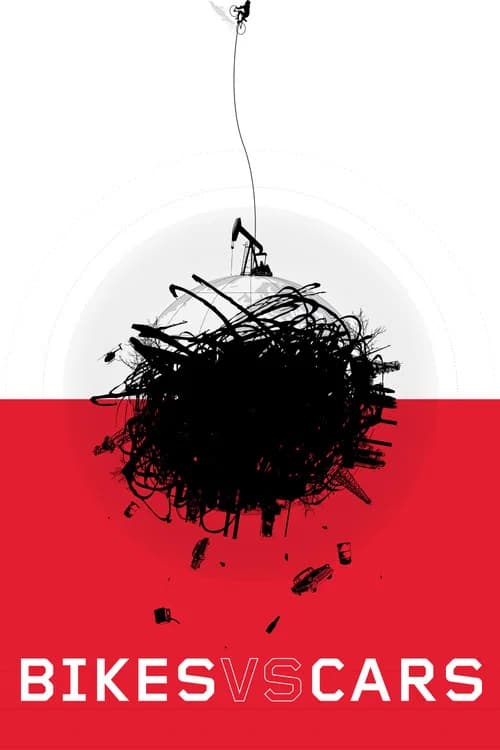
Bikes vs Cars depicts a global crisis that we all deep down know we need to talk about: Climate, earth's resources, cities where the entire surface is consumed by the car. An ever-growing, dirty, noisy traffic chaos. The bike is a great tool for change, but the powerful interests who gain from the private car invest billions each year on lobbying and advertising to protect their business. In the film we meet activists and thinkers who are fighting for better cities, who refuse to stop riding despite the increasing number killed in traffic.

Rotterdam 2040 is a film about the city’s future, departing from the principle of Gyz La Rivière that you can’t look ahead without considering your past (something that hasn’t always been Rotterdam’s strongest feature). At high speed, La Rivière reconstructs the history of Rotterdam from the time before the bombings until now, and expands the developments to the year 2040 (100 years after the bombing and the 700th anniversary of the city). La Rivière made a specific choice to expose his personal vision, which is sometimes radical or a little absurd. So no experts and no talking heads, but an assault of old and new imagery, held together by La Rivière as the narrator of the film. Although Rotterdam 2040 deals with architecture and urban renewal, it is actually a film about people. The subjective experience of the city by its (future) occupants mainly determines the parade of architectural blunders and suggestions for the future. All tongue-in-cheek of course.

