


Loading titles…
Drama / History / Comedy
Witty narration follows the history of Versailles Palace; founded by Louis XIII, enlarged by autocratic Louis XIV, whose personal affairs and amours, and those of his two successors, are pursued in more detail to the start of the Revolution, after which the story is brought…


Louis XIV (older)

Museum guard

Marie-Antoinette / Nicole Legay

Countess de la Motte

D'Artagnan

Louis XV

Marivaux

Fénelon

Mrs. de Sévigné
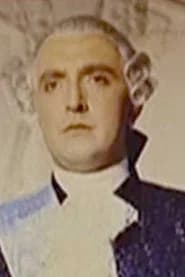
Louis XVI

Jacques Damiens

Cardinal de Rohan

Jeannette Vaubernier, an impulsive shopgirl en route to deliver a hat, dreams of luxury and position as she saunters through the woods, and attracted by a pool of water, she disrobes and plunges in. Cosse de Brissac, a handsome private in the King's Guards, comes to her rescue and they become sweethearts. Meanwhile, Jean Du Barry, a shrewd roué, takes note of her at the millinery shop and tricks her into staying at La Gourda's, where she soon becomes a favorite among the men.

The time is the French Revolution; the place is the village of Travers, ensconsed in neutral Switzerland. Prussian aesthete Herman Beyer is on the verge of divorcing wife Corinna Harfouch. Radical writer Uwe Kokisch, Corinna's lover, hopes to find a way of smoothing out animosities. What follows, however, is a nonstop drinking binge. The film subliminally addresses the then-prevalent issue of a divided Germany. Whether or not it succeeds is unimportant; Treffen in Travers (Reunion in Travers) has proven to be a crowd pleaser wherever it has been shown.

In 1894, French officer Alfred Dreyfus is wrongly convicted for the treasonous acts of another man, Major Esterhazy. When investigations begin into the dubious evidence used in the trial, an institutional coverup begins, aided by fears of army disgrace and anti-Semitic paranoia against Dreyfus. But a determined group, headed by prominent author Émile Zola, leads a mounting public call to reopen the Dreyfus case.

Fourty years ago, in May 1981, with François Mitterrand's election, some people were letting themselves dream about a better life while others were predicting the coming of soviet tanks upon the Champs-Élysées. If we gladly remember the turning point of austerity in 83, there were also the wage rises, the fifth week of paid leave, the abolition of death penalty, the decriminalisation of homosexuality, or the advent of independent radio stations. Rare archives and accounts by those who were at the heart of this story give an overview of it and shed light on lesser-known aspects.


