Loading titles…
Documentary
A tribute to actresses, approaching their presence in and out the screen, humanizing the icons. From the Ukrainian Anna Sten to the French Anna Karina, we can see some close-up faces that marked the history of the cinema, and whose demand is more relevant than ever.

No cast information available.

A collage-style video essay that explores the idea of love through touch. Guided by fragments of films, paintings, photographs, and other visual images, a sensorial and poetic narrative is constructed around the protagonists of Alan Stephens Foster's painting "The Fall." Like a moving moodboard, the work connects different artistic and cultural expressions to portray gestures of affection, desire, care, and presence between diverse bodies. All of this through the hands.


What could have happened – what should have happened – if two giants in film history, like Greta Garbo and Sergei Michajlovič Eisenstein, could have declared their love for each other? The world's most famous actress, an honorary Russian citizen of cinema for her many performances; the world's most radical director, who could have immortalized her face in one of his famous close-ups? Sphinx Garbo did not want to be alone: she just wanted to marry the great Sergei. Perhaps she could have played Trotsky or Pancho Villa in one of his films. Perhaps their friends Charlie Chaplin, Walt Disney and Josef von Sternberg would have approved their love. Maybe they could have had a child together. Maybe all this could still have happened, in a Mark Rappaport film.


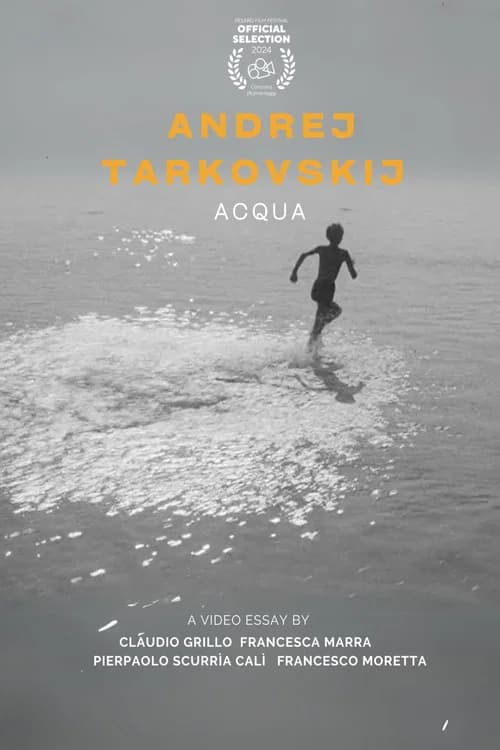
A visual and interpretative journey through the filmography of Andrei Tarkovsky, in search of the hidden meaning behind the recurring presence of water — a central and mysterious element in his work. This video essay analyzes the scenes in which water appears, organizing them by theme: from everyday actions to metaphysical moments. An attempt to understand whether, behind the poetry of natural elements, lies a deeper message from the russian filmmaker.


A desktop documentary that focuses on the Golden Record that NASA sent into space in the late 1970s. The piece reflects on issues such as the power of scientific discourse to produce revisions of the world, the evolution of the concept of the archive and the resignification of borders in the rhetoric of space colonialism.