


Loading titles…
Documentary
In the late 1960s and early 1970s, girls aged 12 to 16 began working at Pyeonghwa Market. Running sewing machines, they also study the Labor Standards Act under the tutelage of Jeon Taeil. On September 9, 1977, they were imprisoned fighting against the government that closed…

Self
Self
Self

In response to the Detroit riots of 1967, where racial tensions in the city reached a breaking point, the city decided that the way to resolve these tensions would be to put more resources into employing Black people. Namely, chronically unemployed Black men who they refer to as "the hardcore." And predominantly, employing them on the line in auto assembly plants. But in the words of Lloyd Love, a young Detroiter interviewed in the film, this PBS documentary poses the question, "Do you think a job is the answer?" The film explores this question in 1968, by speaking with workers, unemployed people, union activists, students, people who implement city-run employment programs, members of DRUM (Dodge Revolutionary Union Movement), and the Detroit Industrial Mission.


Railroad of Hope consists of interviews and footage collected over three days by Ning Ying of migrant agricultural workers traveling from Sichuan in China's interior, to the Xinjiang Autonomous Region, China's northwest frontier.[1] Through informal interviews aboard the cramped rail cars, Ning Ying explores the hopes and dreams of the workers, many of whom have never left their homes before.

The small town locals of Mustjala are the Indians of Estonia - they are ravaged by alcoholism and depression, because they've been ignored by the shiny capitalist dream. But then a German tourist ship boards in Mustjala. Could it be the realization of an old Estonian legend about a white ship coming from another land and bringing joy and prosperity for the local people?

A more experimental aproach to labor protection films. In the line of Săucan's style, the soundtrack is as important as the image, the threatening music, full of shrillness, composed by Ion Dumitrescu potentiating the visual construction that mixes - in a montage reminiscent of the Soviet avant-garde school of the 1920s - all kinds of shooting techniques and frame combinations.

The story of how a group of baristas in Buffalo, New York announce their intention to form a labor union, and how Starbucks responds with an elaborate and illegal anti-union campaign. Featuring on-the-ground footage from workers and organizers, Partners takes us to the front lines of the historic union campaign that catalyzed America’s Gen Z labor revival.

In suburban Buenos Aires, thirty unemployed ceramics workers walk into their idle factory, roll out sleeping mats and refuse to leave. All they want is to re-start the silent machines. But this simple act - the take - has the power to turn the globalization debate on its head. Armed only with slingshots and an abiding faith in shop-floor democracy, the workers face off against the bosses, bankers and a whole system that sees their beloved factories as nothing more than scrap metal for sale.
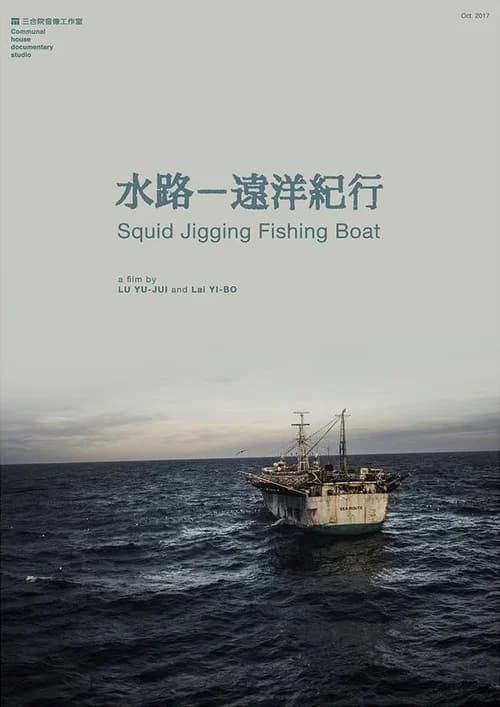
Every December to January, almost a hundred squid fishing boats from Ch'ien-chen Fishing Harbor in Kaohsiung will sail from East 120 to West 60 to work at Falkland Islands in the South West Atlantic. The sailing takes 35-40 days and crew members named it "waterway." January 1st, 2015, a 65 meter long, 11 meter wide fishing boat began its journey to Falkland island. This is a documentary about 60 crew members from south-east Asia to work far away from Taiwan.


This anthology film, whose Chinese title begins with a romantic name for human excrement, premiered internationally at Rotterdam and won Best Screenplay from the Hong Kong Film Critics Society. A variety of Hong Kong people wrestle with nostalgia when facing an uncertain future. Their stories give way to a documentary featuring a young barista turned political candidate.

I have been pretty satisfied with my life before I got on the bus. When I do in June 2011, my whole life turns upside down. I am just a regular passenger at first. Like other people I was sorry, and felt obliged to help and care for other passengers. Then I begin to film these common heroes with my camera. Those who speak about hope, who provide it and get on the bus, Ms. Kim Jin-suk, and other crane laborers who risk their safety while demonstrating for their rights on high. She, while stationed insecurely on high, begins interacting with the world through Twitter and makes friends. Then I realize I really love her. Will we have her back safely?