



Loading titles…

Narrator (German)
Narrator (English)

Marco Polo

In 1375, China was in chaos between Yuan Dynasty and Ming Dynasty. Coryo (an ancient kingdom of Korea then) sent a delegation of many diplomats, soldiers and a silent slave to make peace with the new Chinese government. However, this delegation got charged as spies and sent in exile to a remote desert.

Neil Oliver and Tony Pollard set out to solve one of the biggest puzzles in battlefield archaeology. 700 years ago, Robert the Bruce's overwhelming victory over the English at the Battle of Bannockburn helped seal Scotland's future as an independent kingdom, although the actual location remains a mystery. With the help of leading battlefield archaeologists, stuntmen, computer-generated graphics and some digging, Neil and Tony go in search of both the real and imagined Battle of Bannockburn.
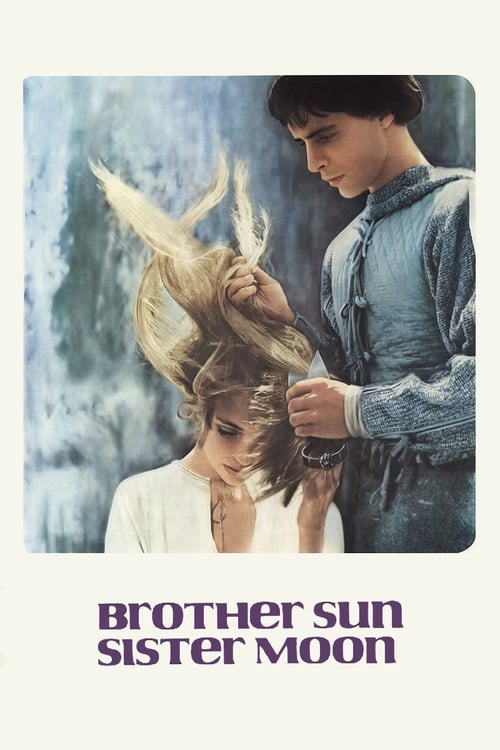
In his delirium from his return from war, Francesco Bernardone goes back in his memories to the days when he lived for parties and carnal pleasures. He slowly recovers, but after the illness he is no longer the Francesco that everybody knew. Instead of spending hours in taverns, he meditates on the beauty of God's creatures, soon renouncing his riches and his family with plans to rebuild an abandoned church and his life.

Mikolás and his brother Adam end up with a young German hostage of noble blood during a robbery. While their clan prepares for the wrath of the German king, Mikolás is sent to pressure his neighbor Lazar into a defense pact. Persuasion fails and he abducts Lazar's daughter Marketa on the eve of her initiation as a nun in an act of vengeance.

Cast out by his father, young Ondrej joins the Order of the Teutonic Knights, where he is raised by strict monk Armin. After years of hardship, Ondrej escapes from the Order when he is wrongly punished, and sets out for his former home. Arriving to discover his father to be dead, Ondrej now not only assumes control of his father's properties, but seeks to marry his former stepmother.

A young Sicilian is swindled twice, but ends up rich; a man poses as a deaf-mute in a convent of curious nuns; a woman must hide her lover when her husband comes home early; a scoundrel fools a priest on his deathbed; three brothers take revenge on their sister's lover; a young girl sleeps on the roof to meet her boyfriend at night; a group of painters wait for inspiration; a crafty priest attempts to seduce his friend's wife; and two friends make a pact to find out what happens after death.

Devout Christians Töre and Märeta send their only daughter, the virginal Karin, and their foster daughter, the unrepentant Ingeri, to deliver candles to a distant church. On their way through the woods, the girls encounter a group of savage goat herders who brutally rape and murder Karin as Ingeri remains hidden. When the killers unwittingly seek refuge in the farmhouse of Töre and Märeta, Töre plots a fitting revenge.

An examination of the artistic and construction techniques, architecture and design of this immense fortress in the south of Spain, built mainly by the Nasrid dynasty in the 13th century. Its outward austerity conceals an explosion of refinement and ornamentation, gardens and marble fountains in the grandest tradition of Moorish style and Islamic art of the period.

In the early 1200s, Dogen brought Chinese Zen philosophy to Japan, and established the Japanese Zen school of Buddhism. He taught that a person was capable of realizing Buddhahood within himself, by way of Zazen. Zazen is extended hours of sitting and meditating to achieve a state of “Mu” (nothingness, or empty existence).