Loading titles…
No cast information available.
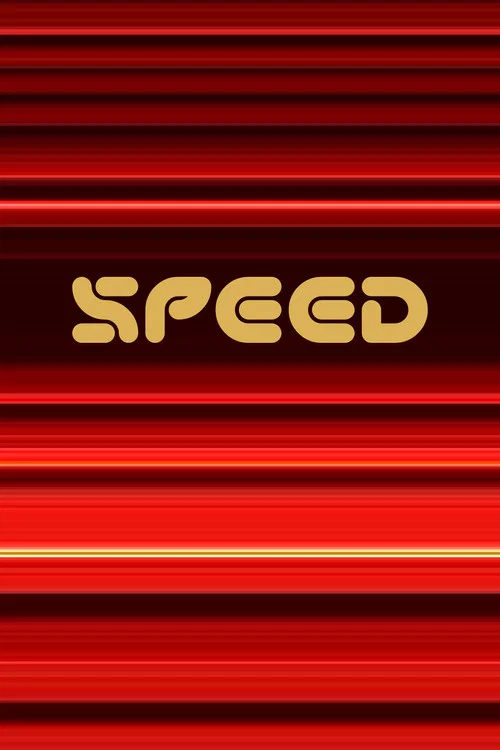
SPEED is the result of an artificial intelligence transforming bin footage into something beautiful in order to free the planet from pixel pollution. By video recycling trash shots into video art using the latest algorithm technology, visual art may help to understand our limited resources on earth and how to use them in a respectful manner. Every day we produce millions of clips sharing them on social media without even noticing anymore how much pixel garbage we create. At the same time, we produce every day millions of tons of plastic waste, polluting our environment without even noticing it anymore. SPEED wants to be a symbol of change as we are running out of time.

A dream where obsession for German as a second language mixes up with an obsession for neatness and cleanliness as a distinctive feature of the national culture in question seen from the perspective of a foreigner. The dream is not a nightmare only because the set it is dreamt into is the seashore of the mare nostrum, where the dreaming subject is perfectly at home. A homeland which she, in turn, in her more secret thus naïf dreams would dream of being cleaner and tidier as in the reality, especially in front of such beauty of nature. As is right and proper.

A kinetic prayer and structuralist intervention. Shot entirely on an iPhone 11 in a desolate Midwest laundromat, 108 spin documents the mechanics of impermanence. The film shifts from heavy turbulence to suspended repetition—not as a path to completion, but as a study of the loop itself. Featuring a layered soundscape, the work asks the viewer to stare into the rotation until the noise becomes a mantra.


Reynivellir is a representation of the transit that is generated when approaching the art work, described with visual games that can well be evoked by the same brain when witnessing the impossible figures of Jose María Yturralde. Reynivellir is also a beach in a country that is a musical sonnet, and this is so because the mental image does not always connect the articulated parts of a sensation, it is systematic, but aleatory, and it is from these notions of the field of observation, that it approaches and moves away from understanding, linking and unlinking forms, movements, sounds, sensations and knowledge.

American cartoons are the starting point for Martin Arnold's new work. Sequences of short films form the basis of a process of fragmentation, deconstruction, dismantling and repetition. Arnold uses fun, family entertainment to create films with open-ended possibilities for association. His pieces, such as Hydra (2013), Charon (2013), Nix (2013) and Self Control (2011), feature characters whose anatomy is no longer recognizable as such, but rather resemble puppets, remotely controlled from the outside. Trembling hands, dancing tongues, blinking eyes and snoring mouths move like ghosts against an abyss-like deep black background, in which bodily elements constantly disappear, only to reappear once more.

American cartoons are the starting point for Martin Arnold's new work. Sequences of short films form the basis of a process of fragmentation, deconstruction, dismantling and repetition. Arnold uses fun, family entertainment to create films with open-ended possibilities for association. His pieces, such as Hydra (2013), Charon (2013), Nix (2013) and Self Control (2011), feature characters whose anatomy is no longer recognizable as such, but rather resemble puppets, remotely controlled from the outside. Trembling hands, dancing tongues, blinking eyes and snoring mouths move like ghosts against an abyss-like deep black background, in which bodily elements constantly disappear, only to reappear once more.

American cartoons are the starting point for Martin Arnold's new work. Sequences of short films form the basis of a process of fragmentation, deconstruction, dismantling and repetition. Arnold uses fun, family entertainment to create films with open-ended possibilities for association. His pieces, such as Hydra (2013), Charon (2013), Nix (2013) and Self Control (2011), feature characters whose anatomy is no longer recognizable as such, but rather resemble puppets, remotely controlled from the outside. Trembling hands, dancing tongues, blinking eyes and snoring mouths move like ghosts against an abyss-like deep black background, in which bodily elements constantly disappear, only to reappear once more.