


Loading titles…
Documentary
The Other Side of Fear signifies the actions which incite religious violence and broaden the divide of cultural and moral beliefs in society. The film shadows two clashing perspectives both of which are searching for safety in their own communities and these perspectives blend…

No cast information available.


A documentary in which retired industrial workers reflect on the promises and anxieties of retirement. Beginning with the Budd Company’s “Retirement Ceremony” in Philadelphia, the film explores how leaving work can mean the loss of routine, identity, and a sense of accomplishment, even as it marks a long-anticipated milestone.

Single mother Anna and her four children live in the front-line war zone of Donbas, Ukraine. While the outside world is made up of bombings and chaos, the family is managing to keep their home a safe haven, full of life and full of light. Every member of the family has a passion for cinema, motivating them to shoot a film inspired by their own life during a time of war. The creative process raises the question of what kind of power the magical world of cinema could have during times of disaster. How to picture war through fiction? For Anna and the children, transforming trauma into a work of art is the ultimate way to stay human.

Christian Garcia, a fiercely dedicated Latino political organizer, leads a team of young people mobilizing their community for a soda tax. Tested during their fight for the right to vote, the young recruits dare to beat back the goliath soda industry and ignite a youth-powered movement for health equity and justice.

On April 14, 2014, the sleepy agrarian town of Chibok, in the North East zone of Nigeria, was thrust into the global spotlight when the terrorist group Boko Haram stormed the community at night and abducted 276 teenage schoolgirls from their dormitories. Daughters of Chibok deals with the aftermath of the kidnappings, and explores topical global issues of gender rights and the right to education.


In this documentary mosaic of a continued social disintegration, seven filmmakers bring to the screen protagonists and stories that live in an abyss of despair, in the chasm between those who have and those who do not. An old man rummaging for food in bins; a father who cannot give water to his infant daughter because he’s been cut off; an overcrowded ER that cannot cope under the pressure; a man who nearly buys an expensive Lexus and may yet decide to buy a Mercedes; a realtor in a well-fenced villa; and a mother sitting in a small crowded house with a hungry baby in one arm and a canister of gas in the other.
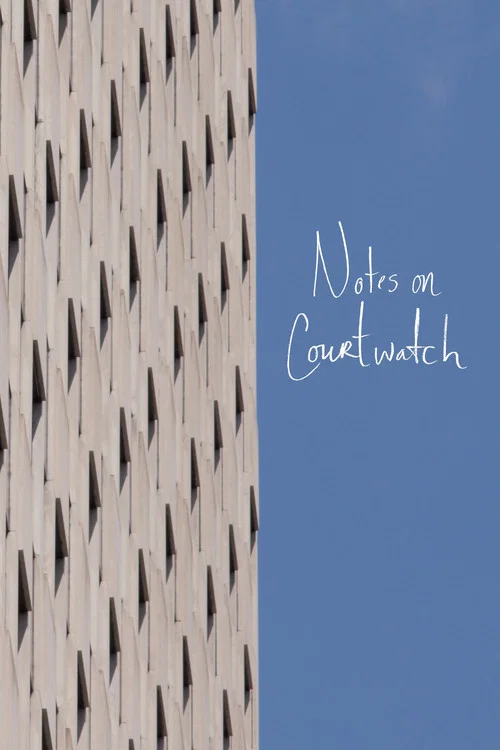
In early summer of 2025, when Immigration and Customs Enforcement (ICE) officials began detaining migrants at their asylum hearings, an ad-hoc network of New Yorkers began showing up to the Kafkaesque court houses. They came to bear witness, share information and express solidarity with immigrants, by accompanying them into their hearings. Through the testimonies and ruminations of courtwatchers, the film asks: What does it mean to witness atrocity? Can the act alone be a form of resistance? What are the psychological impacts of one's inability to help, and the isolation one feels when they witness something most others do not? How do people support their neighbors in an increasingly repressive political landscape?

The phrase "Born Sexy Yesterday" is derived from the 1950 film "Born Yesterday." However beneath this superficial portrayal of some women lies a more complex understanding , revealing deeper narratives that resonate with many. October 1, 1985. The chilling emptiness in Michele Avila's eyes. Her murder, a savage ballet of teenage fury, ripped through the town, festering wounds exposing the venomous underbelly of a seemingly innocent friendship. Jealousy, a serpent coiled in the heart of adolescence, struck with the force of a viper, revealing the terrifying depths of envy's reach. These weren't just girls; they were predators. Women are born with many layers, a mix between good and evil. Ironically of all the positive tropes that can validate the existence of women, why is it that "Born Sexy Yesterday" is a trope that resonates with our male counterparts the most?