Loading titles…
No cast information available.
The Hopperstad stave church is a marvelous, iconic architectural statement from the fjords of Norway. Replicating the "stavkirke's" spiritual power and beauty became a quest for G.D. "Guy" Paulson of Fargo, ND. His Hopperstad Stave Church Replica is a jewel for the city of Moorhead, MN. Paulson's dream captured the imaginations of the experts, craftsmen, artists, and volunteers who helped him. It is a tribute to those who have gone before and an inspiration to those yet to come.
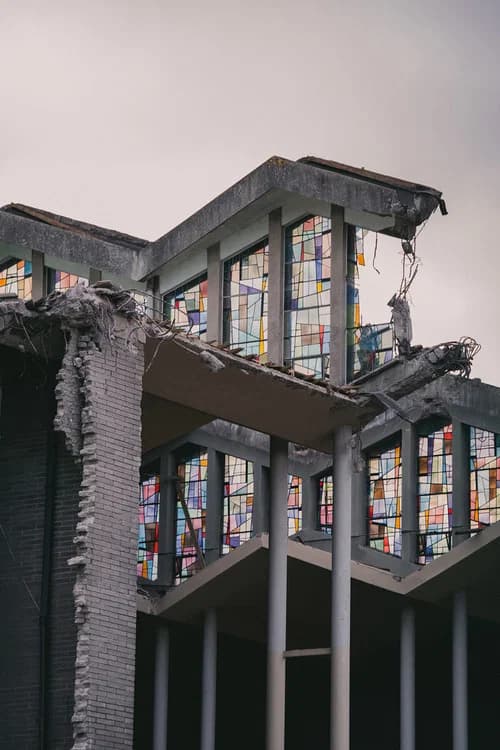
Making Dust is an essay film, a portrait of the demolition of Ireland's second largest Catholic Church, the Church of the Annunciation in Finglas West, Dublin. Understanding this moment as a 'rupture', the film maps an essay by architectural historian Ellen Rowley on to documentation of the building's dismantling. Featuring oral interviews recorded at the site of the demolition and in a nearby hairdressers, the film invites viewers to pause and reflect on this ending alongside the community of the building. The film is informed by Ultimology, and invites its audience to think about the life cycles of buildings and materials, how we mourn, what is sacred, how we gather, what we value and issues of sustainability in architecture.
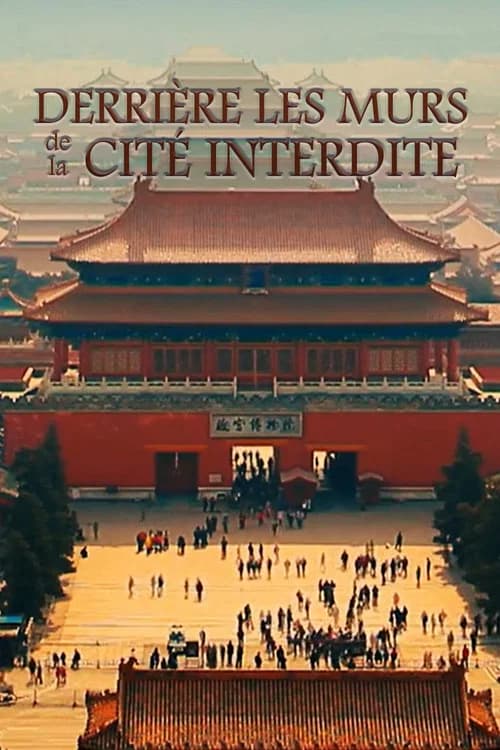
Secluded from view by nine-meter-high walls and composed of 980 buildings, the Forbidden City in Beijing is the largest imperial palace ever built in the world. Three majestic structures form its center and host the city's ceremonies, each of which is considered an architectural masterpiece. In 1406, construction of the Forbidden City was launched at the initiative of one of China's most powerful sovereigns and founder of the Ming dynasty: Yongle. Endowed with divine power, the construction has already resisted more than 200 earthquakes.
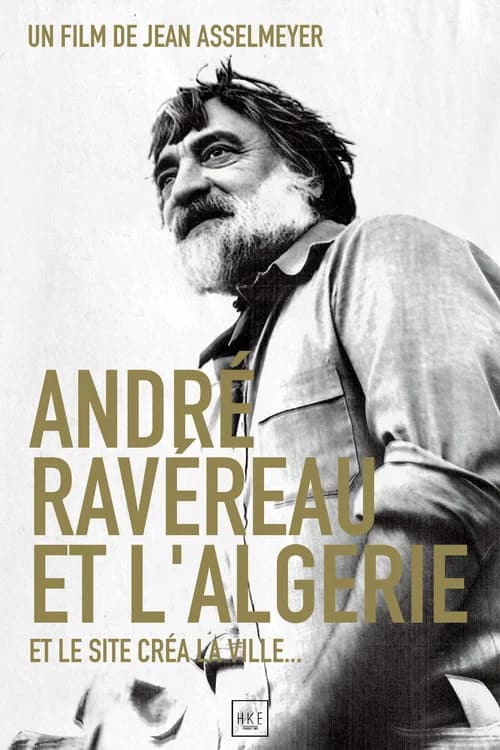
The architect André Ravéreau spent a large part of his life in Algeria, he is today an essential reference for Algerian builders of several generations. His daughter Maya, an architect herself, accompanies us to the places of his creations and his research, in the Mzab first where he lived, created, trained other architects in the "desert workshop" and had the oases of the Mzab classified as a UNESCO World Heritage Site. Inspired by tradition to better innovate as in the construction of the Ghardaïa post office, or in that of a very surprising villa... Then in Algiers where he worked to preserve the ancestral heritage of the Casbah, faithfully describing the principles of his construction in line with current concerns, such as the choice of environmentally friendly materials and avoiding energy waste, as testified by the architect Yasmine Terki, a great specialist in earth materials.

Amongst the contemplative static shots of decaying architecture weaves an abstract narrative unveiling the life-cycle of a higher perception, too large to perceive. Shot at various sites across south-east England, INFRASTRATA is a study on the concept of super-organisms, and the relationship between structure and nature.

Rachel Whiteread’s cast of a Victorian terraced house in London’s East End was hailed as one of the greatest public sculptures by an English artist in the twentieth century. Completed in autumn of 1993 and demolished in January 1994, House attracted tens of thousands of visitors and generated impassioned debate, in the local streets, the national press and in the House of Commons.
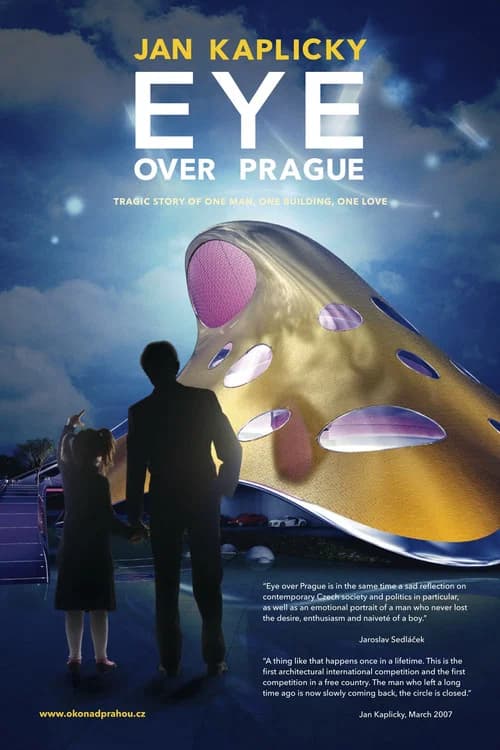
A personal and political biography of the Octopus, or the Prague National Library project, but also a biography of the last years of the life of the author of this design, Jan Kaplický, who wrote in his diary in 1998: to win the competition and have one love. With this entry, read by Eliška Kaplicky at the beginning of the film, it is as if the world-class Czech architect wrote not only the "script" for the final decade of his life, but also for a film that follows the dramatic social story of creative imagination and the intimate relationship between a man and a woman.
The geometry of circles and ellipses is explored using the Roman Colosseum as an example. Using the Pantheon as another practical example, this program explores the concepts of central and intercepted angles, arc segments and chords. The Etude du Cinéma de l’Ecole de Barcelona (a short-lived group that appeared in Spain in the 1960s) offers the opportunity to consider the distrust of the avant-gardes with regard to narrative. The lacunar narration whose principle the School of Barcelona adopts goes against the traditional narrative and its quest for coherence and continuity. She invites the viewer to make the disconcerting experience of unbinding and emptiness. Such an approach involves an ethical posture. The Barcelona School follows in the footsteps of a modernity that intends to move away from an alienating authoritarian discourse and claims to make the spectator a partner in creation.
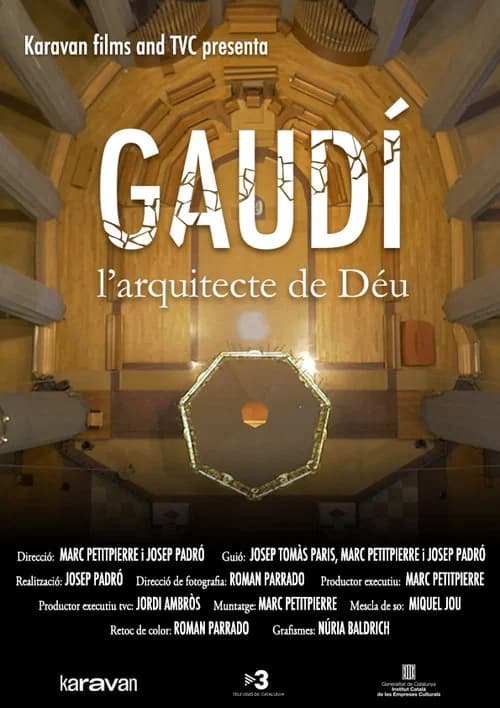
“Gaudí, l’arquitecte de Déu” is a story of faith, of overcoming, about five lay that decided to create an assossiation to demonstrate that Gaudí deserves one of most valuable titles of the Church: beatification. The Pro-Beatification Association of Antoni Gaudí has been working more than 25 years to manage to beatify the architect of Reus, picking up all witnesses and proofs that demonstrate that Gaudi lived like a beatus and, the most difficult part, wiaiting for a miracle to happen attributed do Gaudí himself, an essential condition for his beatification. The documentary will follow this case, showing Gaudi’s life and work from a new outlook, more intimate and linked to spirituality and beliefs of the architect.