


Loading titles…

Marcello Clerici

Giulia
Manganiello

Anna Quadri

Professor Quadri

The Colonel

Italo Montanari

Giulia's Mother
Marcello's Mother
Confessor

Drunk Blind Man

Blind Blond
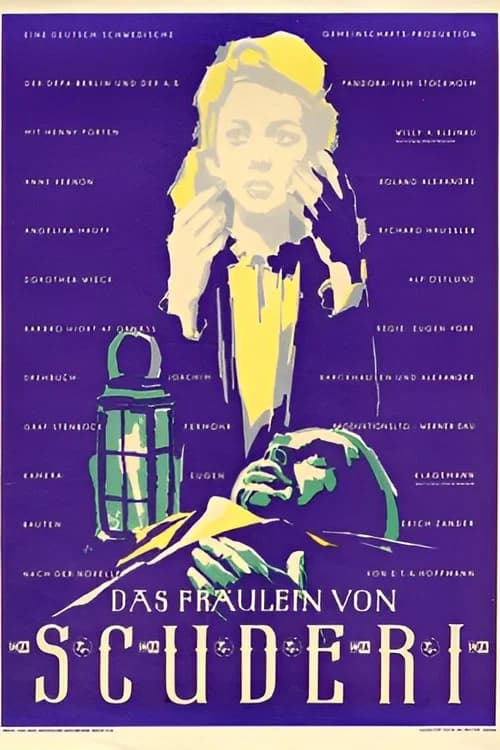
Several men have been murdered lately, mostly rich lovers on their way to meet their mistresses with gifts of fine jewelry. To fight this scourge, King Louis XIV decides to create a special court named "La chambre ardente", designed to find and punish the perpetrators of such heinous crimes. An unexpected person, Mademoiselle de Scudéry, the famous poetess, will find herself entangled in the web of a criminal intrigue linked with the jewel murders, along with a a goldsmith, his daughter and her fiancé...


When married British women Rose Arbuthnot and Lottie Wilkins decide to take a break from their respective spouses, they stay at a castle in Italy for a quiet holiday. Joining the ladies is Caroline Dester, a young socialite, and Mrs. Fisher, an older aristocrat. Liberated from their daily routines, the four women ease into life in rural Italy, and each finds herself transformed by the experience.


Three childhood friends, Martha, Walter and Sam, share a terrible secret. Over time, the ambitious Martha and the pusillanimous Walter have married. She is a cold businesswoman; he is the district attorney: a perfect combination to dominate the corrupt city of Iverstown at will. But the unexpected return of Sam, after years of absence, deeply disturbs the life of the odd couple.

Gudrun has modeled her amateur German terrorist group after the 1970s Red Army Faction (Baader-Meinhof Gang). She attempts to imitate her heroes by kidnapping the son of a wealthy industrialist and hopes to negotiate leftist demands from the father. When Gudrun’s not spouting leftist verses (including during a hilariously brilliant fuck session), she’s trying to convince her all-male gang to abandon their heterosexuality, which she believes is the result of mass delusion.

Through the experiences of two women in Paris and London, Ghost Dance offers an analysis of the complexity of our conceptions of ghosts, memory and the past. The film focuses on the French philosopher Jacques Derrida, who observes, 'I think cinema, when it's not boring, is the art of letting ghosts come back.' He also says that 'memory is the past that has never had the form of the present.'

