

Johnny Gioeli
Self - Crush 40 Vocals
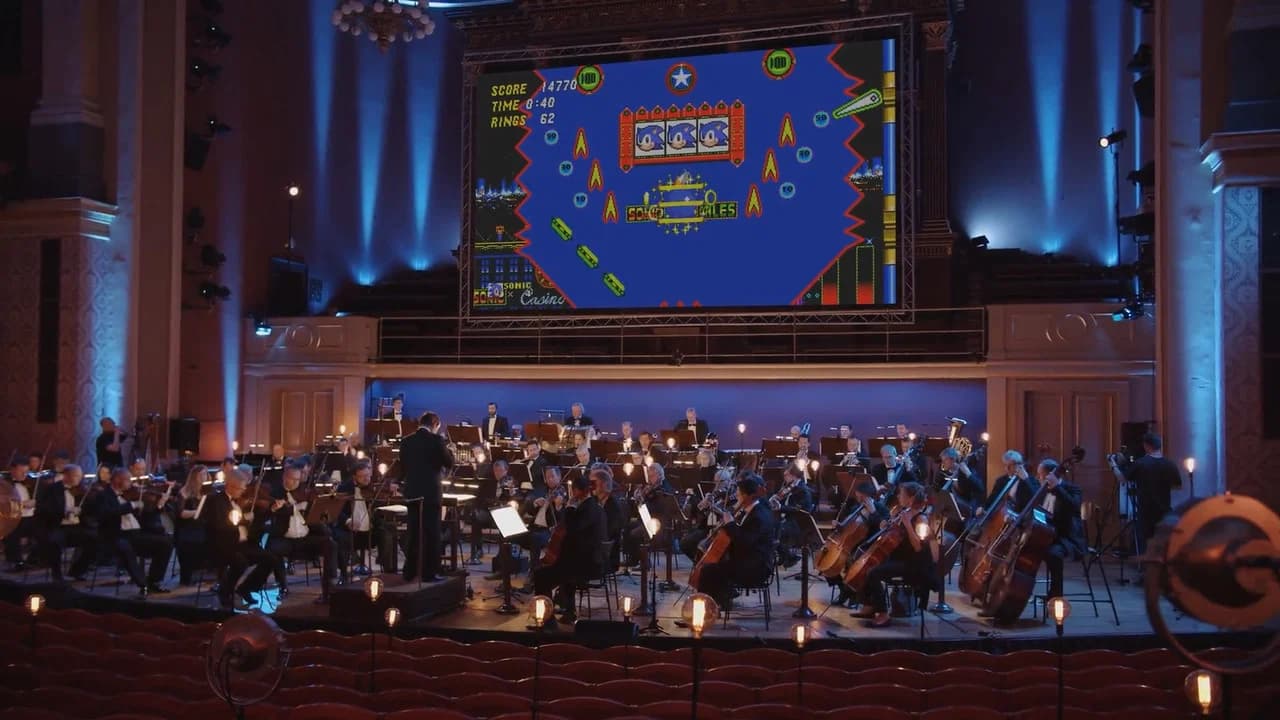
30 years ago, on June 23rd, 1991, Sonic the Hedgehog was released on the SEGA Genesis, beginning a new era of gaming. Since then, Sonic has been running through countless zones, beating badniks, and saving the world with the help of his friends. This performance is to thank…
Self - Crush 40 Vocals
Self - Crush 40 Guitar
Self - Crush 40 Bass
Self - Crush 40 Drums
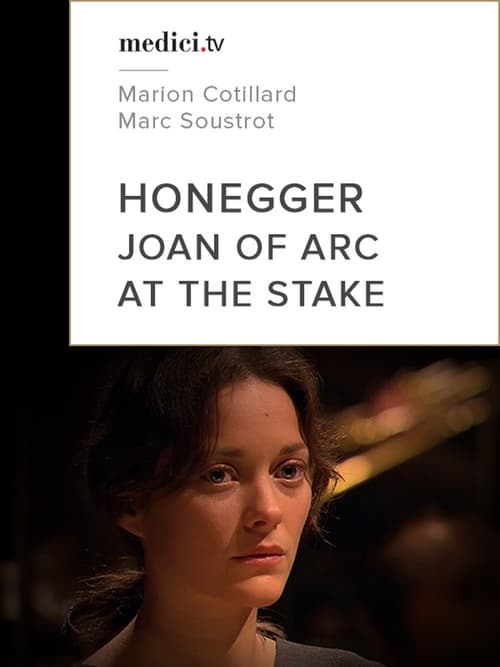
On November 17, 2012, Oscar-winning French actress Marion Cotillard joined the Barcelona Symphony and Catalonia National Orchestra for a performance of Arthur Honegger’s oratorio Joan of Arc at the Stake (Jeanne d'Arc au Bûcher) at the L'Auditori de Barcelona in Spain, broadcast live on Medici.tv. By Swiss composer Arthur Honegger, Jeanne d'Arc au Bûcher (1938) is an imposing oratorio. The libretto is a highly original creation by French poet and playwright Paul Claudel, who dramatises the last moments of the martyr's life. Originally written for actress Ida Rubinstein, the oratorio is written as a flashback in which Joan recalls her life, just before she dies. Honegger creates visually evocative ambiances and fills the orchestra with new sounds (saxophones, ondes Martenot). The initial prologue to the piece was added in 1944 as a symbol of the resistance during the Nazi occupation of France: again, Joan goes beyond her own story.
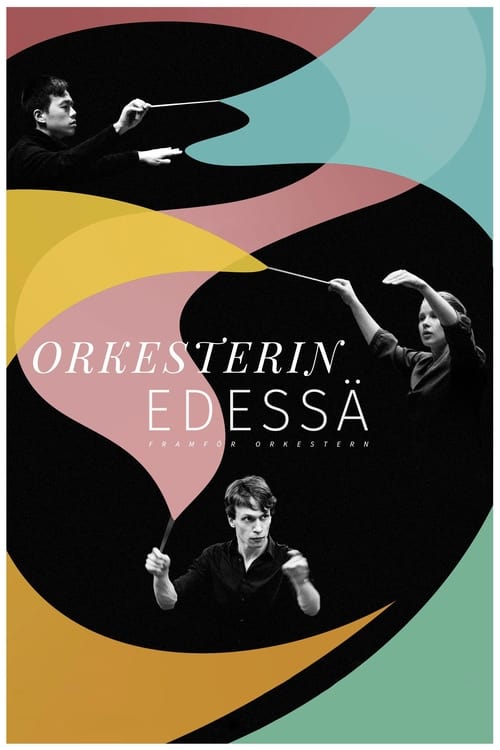
Conductivity is a film about creative leadership told through the story of three young conductors at the prestigious Sibelius Academy in Helsinki, Finland; I-Han Fu (Taiwan), Emilia Hoving (Finland) and James Kahane (France). When stepping on the podium, they are put under a magnifying glass. Conductor training, in essence, is leadership training. The film gives a unique viewpoint to follow the students, as this is the first film about conductor training at the Sibelius Academy.

Packed with intricate melodies, harmonies, and instrumentation, Johannes Vogel conducts the Synchron Stage Orchestra to perform Brahms’ Symphony No. 4 in E Minor Op.98 in this enthralling live concert stream. Captured in Vienna’s state-of-the-art Synchron Stage recording facility, experience the thrills and swells of a 60-piece ensemble – 40 string, 9 woodwind, 9 brass, and 2 percussion – comprised of talented musicians from renowned Viennese orchestras. With origins that date back to 1884 in Mürzzuschlag and the Austro-Hungarian Empire, Symphony No. 4 was introduced to the public on 25 October 1885 in Meiningen, Germany. In this modern-day performance, Brahms' fourth and final symphony continues to pulse with positive energy and swirls with trance-like melodies that’ll please classical fans far and wide.

Packed with intricate melodies, harmonies, and instrumentation, Johannes Vogel conducts the Synchron Stage Orchestra to perform Mozart’s Symphony No. 41 in C Major K. 551 in this elegant live concert stream. Captured in Vienna’s state-of-the-art Synchron Stage recording facility, experience the thrills and swells of a 40-piece ensemble - 30 string, 5 woodwind, 4 brass, and 1 percussion - comprised of talented musicians from renowned Viennese orchestras. Mozart completed Symphony No. 41 in C Major on 10 August 1788 – the final of three masterpieces he wrote that summer. Labelled ‘Jupiter Symphony’ by music critics, Symphony No. 41 is an example of divine perfection, brimming with the beautiful complexity, emotion, and excitement that represents the possibilities of humankind.

Packed with intricate melodies, harmonies, and instrumentation, Johannes Vogel conducts the Synchron Stage Orchestra to perform Antonin Dvořák's Symphony No. 9 in E Minor Op.95 (also known as ‘New World Symphony’) in this joyful live concert stream. Captured in Vienna’s state-of-the-art Synchron Stage recording facility, experience the thrills and swells of a 60-piece ensemble – 40 string, 9 woodwind, 9 brass, and 2 percussion – comprised of talented musicians from renowned Viennese orchestras. While serving as the director of the National Conservatory of Music of America, Antonín Dvořák composed New World Symphony (a title inspired by his travels in the United States) and debuted the masterpiece in New York City on 16 December 1893. The symphony has since become one of the most famous works in classical music, filled with hope and happiness as well as uplifting instrumentals that makes it a pleasure to listen to come rain or shine.

Originally aired as part of Beethoven’s 250th anniversary celebration, Johannes Vogel conducts the Synchron Stage Orchestra to perform Gustav Mahler's Orchestration of Symphony No. 9 in D Minor Op. 125 in this dramatic live concert stream. Recorded at the historical Synchron Stage in Vienna, experience the thrills and swells of the Synchron Stage Orchestra - 48 string, 17 woodwind, 14 brass, 4 percussion - comprised of Austria’s finest instrumentalists, alongside a choir of 39 sopranos, altos, tenors, and basses. Composed between 1822 and 1824 in Vienna, Symphony No. 9 in D Minor was Beethoven’s final completed symphony. The use of solo singers and a chorus in the final movement was revolutionary, and the emotional journey from the doubt and struggle to the glorious vision of a world of love and tolerance is regarded as one of the greatest and most heartfelt pieces in classical music.
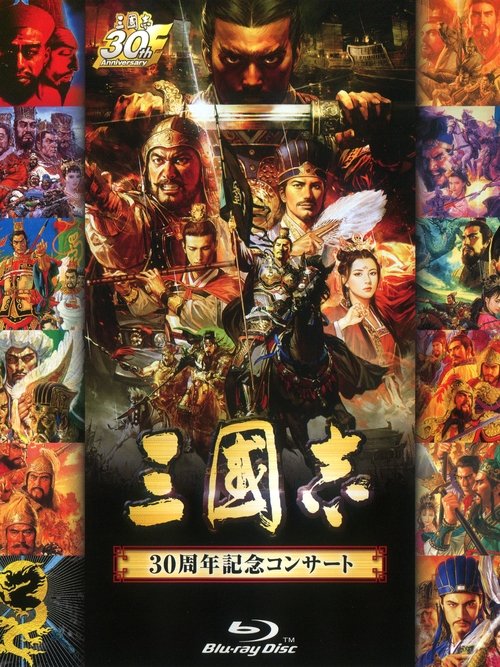
To celebrate the 30th anniversary of the "Sangokushi" series, a concert was held at MUZA Kawasaki Symphony Hall on Saturday, April 16, 2016. The Kanagawa Philharmonic Orchestra, under the baton of conductor Kosuke Yamashita, presented the first full orchestra concert of the "Sangokushi" series, allowing the audience to enjoy the masterpieces of the series.