Loading titles…
Animation / Documentary
Furio’s Furious Fragments & Friends - Furio Jesi (1941 Turin -1980 Genoa), enfant prodige moving between a plethora of disciplines – egyptology, history of religions, German philology, literary criticism - passed away prematurely, not without leaving bright fragments which throw…


Spirit
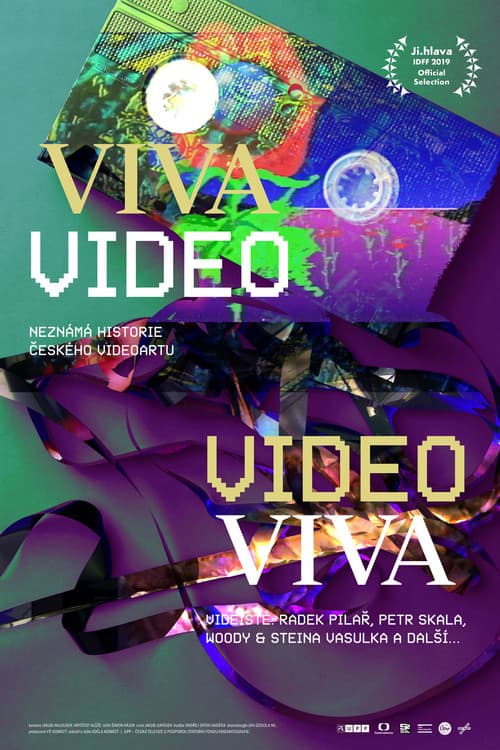
Today, analogue video is attractive primarily thanks to the distinctive aesthetic quality of its pixelated image and raster errors. But for Czech artists who first explored the possibilities offered by video art in the late 1980s, this medium represented a path towards freedom. Through a portrait of her grandfather Radek Pilař, one of the pioneers of Czech video art, the director explores her own legacy of imperative creative fascination. Her film’s main story, i.e., the process of reconstructing the 1989 exhibition Video Day, contrasts this enchantment with life in the final days of the totalitarian regime, which different sharply with the adventures of those who decided to emigrate – whom the filmmaker also visits in order to discover forgotten works, get to know their creators, and re-establish broken ties.

IDFA and Canadian filmmaker Peter Wintonick had a close relationship for decades. He was a hard worker and often far from home, visiting festivals around the world. In 2013, he died after a short illness. His daughter Mira was left behind with a whole lot of questions, and a box full of videotapes that Wintonick shot for his Utopia project. She resolved to investigate what sort of film he envisaged, and to complete it for him.


This is a didactic film in disguise. A progression of brilliant geometric shapes bombard the screen to the insistent beat of drums. The filmmaker programmed a computer to coordinate a highly complex operation involving an electronic beam of light, colour filters and a camera. This animation film, without words, is designed to expose the power of the cinematic medium, and to illustrate the abstract nature of time.

A kinetic prayer and structuralist intervention. Shot entirely on an iPhone 11 in a desolate Midwest laundromat, 108 spin documents the mechanics of impermanence. The film shifts from heavy turbulence to suspended repetition—not as a path to completion, but as a study of the loop itself. Featuring a layered soundscape, the work asks the viewer to stare into the rotation until the noise becomes a mantra.