Loading titles…
Documentary
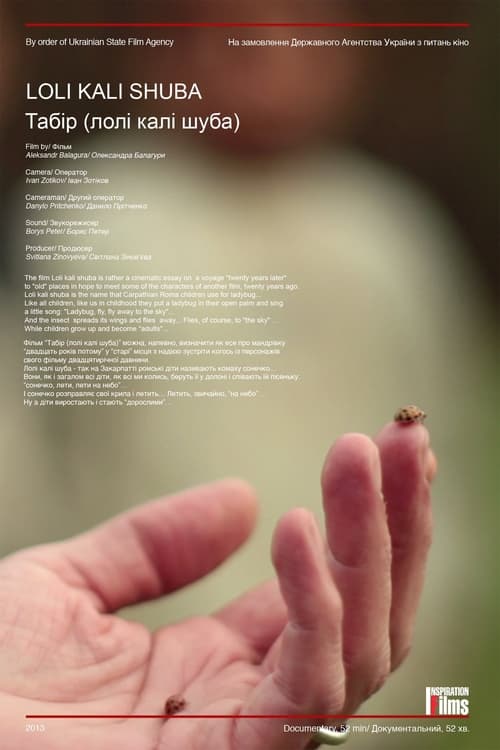
Prominent Ukrainian/Italian documentary film director Oleksandr Balahura (most known for link) visits Roma neighborhoods and social events in Zakarpattia (Western Ukraine) and re-visits his earlier work, "Widow-Street", shot on same locations in 1991. He also screens…
No cast information available.
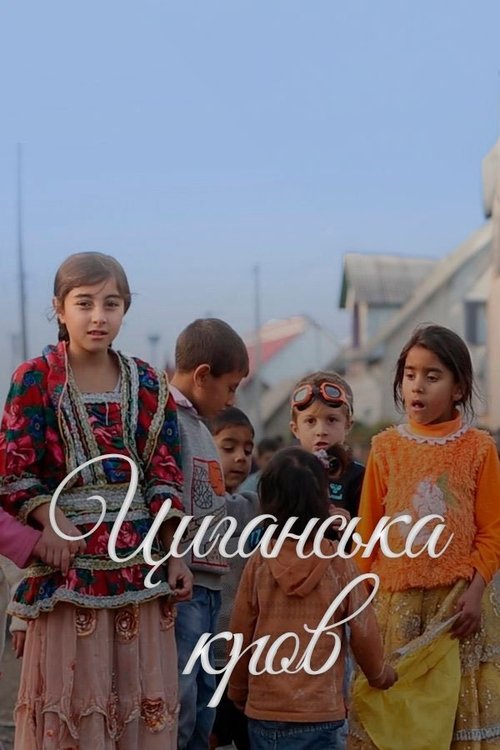
Roma are an important part of Ukraine's population. There are quite a large number of them living in the country—between fifty and one hundred thousand. This documentary shows the peculiarities of the Gypsy people's life in modern society. You will see the stories of five Gypsy barons who will talk about the traditions of their people and reveal some secrets that were previously known only to the Roma.

Welcome to the picturesque world of the Kaldarash Roma – a closed community of no more than 1 million people all over the world. 'Concrete Pharaohs' take us on a journey into the lifestyle and traditions of the most hidden and intriguing Roma communities. A charismatic Gypsy baron will walk us through his stories and his new house. We will learn the hot trends in Roma tombstone design. We will go down into the underground homes of African granite, furnished with beds, wardrobes, stereos and a charged cell phone – a direct line to the other world. A celebration of life and afterlife in all of their manifestations.
Moving away from the conventions of traditional documentary filmmaking, Gitani presents itself as a vibrant "emotional vision" of Romani life. Rather than a rigid factual account, the film immerses the audience in an atmosphere of pure euphoria and shared joy. Music serves as the essential thread that weaves the entire work together, while the visual narrative mirrors the fluidity of dance—constantly assembling and dissolving to the beat of the performers' movements. It is a rhythmic and sensory experience that prioritizes feeling and atmosphere, capturing the spirit of a culture through the harmony of sound and motion.
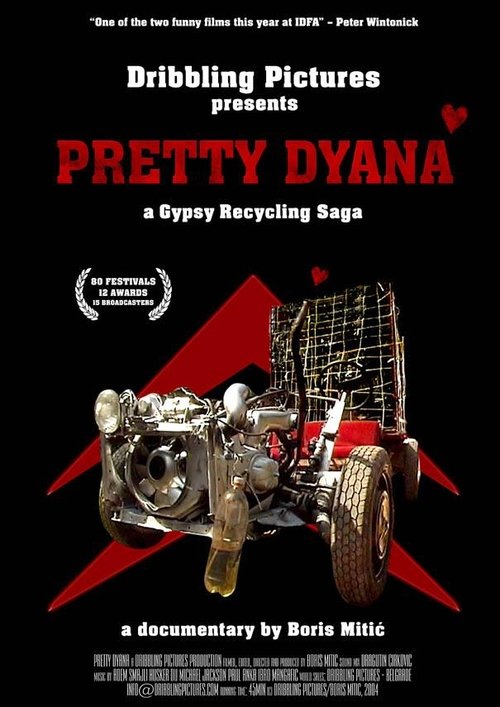
An intimate look at Gypsy refugees in a Belgrade suburb who make a living by transforming Citroen´s classic 2cv and Dyana cars into Mad Max-like recycling vehicles, which they use to collect card-board, bottles and scrap metal. These modern horses are much more efficent than the cart-pushing competition, but even more important, they also mean freedom, hope and style for their crafty owners. Even the car batteries are used as power generators in order to get some light, watch TV and recharge mobiles ! Almost an alchemist´s dream come true ! But police doesn´t always find these strange vehicles funny... Pretty Dyana is a very funny documentary, but sad in a way... " If Mitic had focused only on the terrible misery these people live in, the film would have been unbearable. Instead, you never know whether you should cry after you laugh, or the other way around " Sara Hultmanm, Goteborg Film Festival
A 2005 és 2011 között készült Ammen című dokumentumfilm egy kis szatmári falu cigány-sorának életébe nyújt betekintést. Az utca lakói egy ameriaki pásztor vezetésével hat évvel ezelőtt "bemerítkeztek" és felvették a baptista vallást. Hozott-e változást életükbe a hit? Segített-e a boldogulásban? Mennyire kitartó, mély az Istenhitük? Miért fontos a karizmatikusság? Lehet-e a vallás közösség-összetartó erő? A film - többek között - ezekre a kérdésekre keresi a választ.
Ever since the first Roma people arrived in Sweden five hundred years ago, they have been discriminated against and persecuted. The lack of knowledge, invisibility and denial of the historical abuses that Roma have been exposed to is one of the many contributing causes of continued marginalization and vulnerability of Roma today. Here, the Roma tell of the abuses and persecutions they experienced during the 20th century. How it felt like as a child being constantly expelled from the camp, not infrequently in the middle of the night, with violence and under gunfire. Soraya Post from the traveling group tells how her mother, as a pregnant 23-year-old, was forced to abort her child in the seventh month. The reason: She was a "gypsy".