

Loading titles…
Documentary
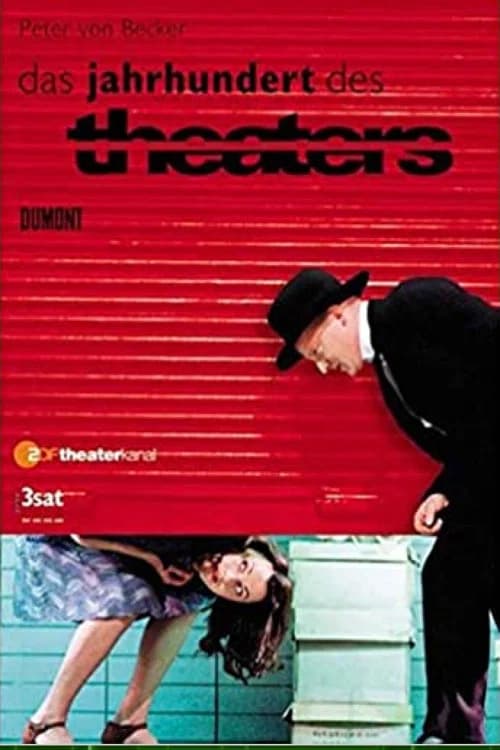
"The Century of the Theater" - From the "birth of the director" to the "heroes of modernity" - an overview of the world of theater - illuminates the interaction with the history of the past hundred years is also shown.

The dawn of the 20th century is changing the performing arts more than ever in its more than two thousand year history. Arthur Schnitzler continues what Ibsen and Strindberg have prepared for the realistic drama under the impression of Freud and psychoanalysis: the human psyche is interpreted for the first time - also on stage. The theater develops from embodied declamation to multi-layered staging. The director was born, it was Max Reinhardt's great theatrical years in Germany and Konstantin Stanislawski in Russia, whose drama theories are still the basis of all stage training to this day.
Under the pressure of the totalitarian regimes of Stalinism and Fascism, theater artists in Spain, Russia and Germany increasingly came into conflict between resistance and adaptation. Numerous playwrights and directors went into exile. However, most of them stayed in their homeland and began to come to terms with the Nazis, since they were unable to speak any language other than their mother tongue. From then on, no Jewish or "left" authors were allowed to be played, only classics and apolitical entertainment were still allowed. Gustaf Gründgens, stage star of the century, became general director of the Berlin State Theater despite his connections to "leftist" artists and staged - not only on stage - a clever double play. In the meantime, the system used itself theatrical means and made the state a monumental and cruel "state theater"

Germany is in ruins, but theater was played again in May 1945. People are looking for entertainment and moral edification. Under the impression of the Cold War, the theater tumbles between the worlds: between renewal and restoration, between taking a breath and protesting outcry. Gustaf Gründgen's “Faust” together with his film version becomes a legend. Brecht's work on the Berlin ensemble has shaped the GDR theater for decades. The returning emigrant Fritz Kortner is particularly fascinating and provocative in West German theater. From the mid-1960s, his productions shaped a new generation of directors. In Italy, a former young partisan, Giorgio Strehler, founded the Piccolo Teatro in the former quarter of the fascist secret police. The new human theater in the former torture house aims to combine political awareness with the most artistic and aesthetic ambitions.

Bertolt Brecht and Samuel Beckett were the antipodes of the theater after 1945. As the last great poet of the Enlightenment, Brecht updated his play "The Life of Galileo Galilei", which was premiered in American exile, after the shock of the atomic bomb on Hiroshima and Nagasaki. Back in Germany, he founded his own theater in East Berlin: the Berlin Ensemble, which set new standards for the international scene. During this time Beckett's rise also began, in 1953 "Waiting for Godot" was premiered. Beckett embodied the radical counter-proposal to the politically committed theater of Brecht: he transformed the aesthetic and historical experiences of the century into pure, existential play. With their productions, Brecht and Beckett became icons of their time. Only the new director's theater emerged from the shadows of the two artists, as the directors themselves became more and more “authors” of the scene.

The Cuban Missile Crisis, the Vietnam War, the revolts in Paris and Prague are creating new political awareness, leading to demonstrations and also to artistic provocations. Performance groups such as "Living Theater" and "Bread and Puppet" from New York open up new spaces and playgrounds for the theater - including the street. In Paris, Ariane Mnouchkine and her “Théâtre du Soleil” magnificently put the revolution on stage with “1793” and later on the screen. This is also the beginning of a renewal of the popular political theater, which is particularly evident in Dario Fo's theater. In Germany, the theater in Bremen becomes a source of renewal: the directors Peter Zadek, Peter Stein and Klaus Michael Grüber make classics like Goethe and Schiller contemporary. Peter Weiss proclaims "No revolution without general copulation" in his "Marat / Sade" play, which is a worldwide success on stage and in Peter Brooks film adaptation. With the foundation of the Schaubühne in Berlin by Peter Stein, the “revolteurs” then took over the power in the theater.

The theater at the end of the 20th century marginalized contemporary drama. But there are also exceptions: Thomas Bernhard's plays, especially in Claus Peymann's productions with Bernhard Minetti, Marianne Hoppe, Kirsten Dene and Gert Voss, become actor festivals. Botho Strauß develops brilliant forms of intellectual social comedy. Franz-Xaver Kroetz renews the dialect-critical folk play. The stage serves less and less as a tribunal for enlightenment, the new media are too fast for the theater and hardly allow current time pieces. Peter Stein contrasts his own wild beginnings with a new fidelity to the work. In addition, the theater of deconstructing given texts flourishes with Frank Castorf and his disciples. Directors such as Robert Wilson and Christoph Marthaler are even more decisive in delimiting the literary-dramatic theater and opening the stage for music, dance and video. This brings the theater closer to its oldest dream: the dream of a total work of art.

Narrator

Narrator
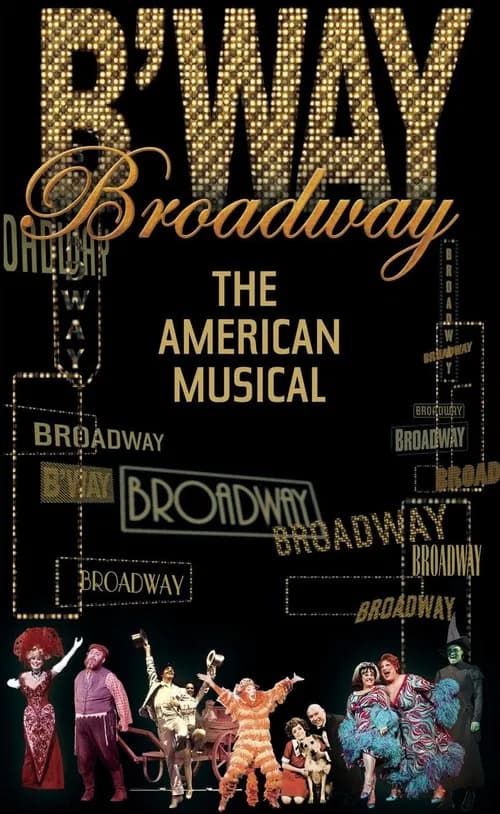
This six part documentary miniseries presents the evolution of the Broadway musical from its inception in 1893 to current day 2004. It presents those influential players both on stage and behind the scenes, as well as a variety of influential Broadway shows, a handful which are known to have transformed the musical into what the audience knows it to be today.



Spring in the first year of high school. Kumiko, a member of the brass band in junior high school, visits the high school brass band club with classmates Hazuki and Sapphire. There, she comes across Reina, her former classmate from junior high. Hazuki and Sapphire decide to join the club, but Kumiko can’t make up her mind. She recollects her experience with Reina at a competition in junior high school.

In 1374, amid the turmoil of the Northern and Southern Courts' long running conflict, a boy named Oniyasha is born into a family of sarugaku theater performers. He spends his days in a kind of quiet gloom, haunted by a simple but persistent question: Why do people dance? Then, one day, he witnesses a dance that he feels to be “good”—and everything begins to change. This is the story of the beautiful young boy who would one day shape the art of Noh and be remembered as Zeami.


