Loading titles…
Documentary / War & Politics
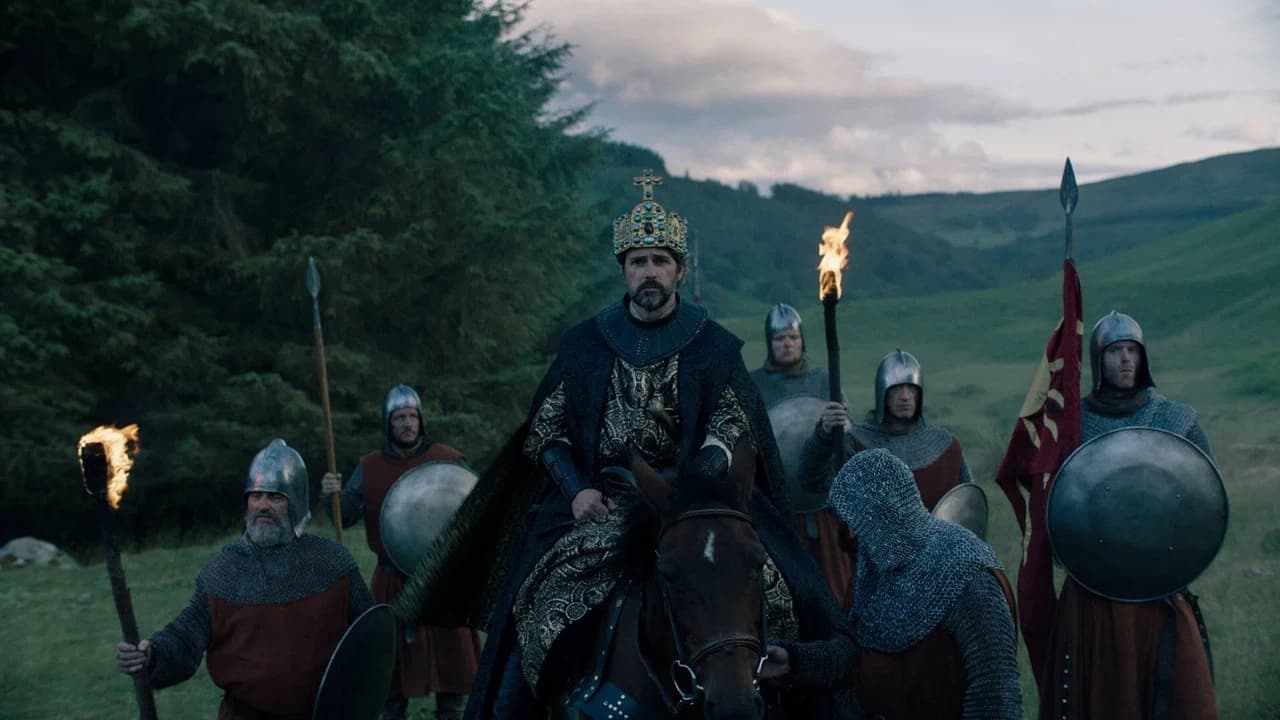
Nearly 1,000 years ago, the Vikings left Scandinavia and settled across Europe - giving their name to Normandy along the way - before their Norman descendants seized the English throne at the Battle of Hastings in 1066. But what do we really know about them? By combining expert…


Most people regard the Vikings as violent robbers, but they were much more than that. Get an insight into the changes in their environment and society that forced them to leave Scandinavia.

In the French Empire, the Vikings come face to face with new defenses and Charlemagne refuses to hand over Christian land to pagans and pirates. The defense continues but then changes.

In the second half of the 900s, the Vikings return to France, but this time they choose unification over robbery. With a political connection, this paves the way for the Duchy of Normandy.
The Vikings have turned from monastic robbery, to a power struggle for the crown. The battle of Hastings 1066 marks the end of the Viking Age, but with the victorious Vilhjálmur, a new era begins.
Queen Matilda
The Main Women
Edith the Fair

Halvdan
William The Conqueror

Myths die hard, and the history of the 20th century is no exception to this rule. Even today, we hold popular beliefs that we take for Evangelical truths. Thus, we believe that Hiroshima caused Japan to surrender, that the Marshall Plan saved Europe, that Adolf Hitler was a military genius, or that Mao Zedong was a necessary evil for China’s modernization. Of course, these judgements contain some truth; but, too broad-stroked to be accurate, they contradict the historical reality by denying its complexity. What if the truth was slightly different? Through an exploration of great national or international myths, this full archive documentary collection revisits the key moments of the 20th century with a new perspective in order to provide a new, smarter and more subtle interpretation, bringing elements to light that have been forgotten or sometimes overshadowed.

For centuries, explorers have searched for the Bible’s most sacred religious artefacts. One of the most mysterious of these objects is the famed Ark of the Covenant. The gold-plated wooden chest – one of the most instrumental symbols of faith and God's presence – was believed to house the two tablets bearing the Ten Commandments. The Ark’s exact whereabouts has long puzzled scholars. Where did it go? And why has it remained such a mystery?

One of the most important historical investigations carried out by Rai, signed by the great Sergio Zavoli with the collaboration of Luciano Onder and Edek Osser and the scientific consultancy of Alberto Aquarone, Gaetano Arfé, Renzo De Felice, Gabriele De Rosa, Gastone Manacorda and Salvatore Valitutti. The six-part series, broadcast for the first time in the autumn of 1972, represented, half a century after the "March on Rome", a significant assessment of the years of the advent of the Mussolini regime, recalled with the rigor of the best television journalism (Saint-Vincent Award 1973) and through the direct testimonies of over fifty protagonists of the time, both fascists and anti-fascists.
This gripping documentary miniseries investigates the mystery of two 1300-year-old burial ships from the Viking Age. With dramatic reconstructions and unearthed evidence, follow key archaeologists as they investigate the remains, and reveal how they fundamentally alter our understanding of Viking Europe.

Tutankhamun, Ramses the Great, Cleopatra, Khufu…these legendary pharaohs built the wonders of Karnak, Luxor and the pyramids of Giza before their civilization faded into obscurity. But in 1798, Napoleon Bonaparte’s expedition to Egypt reopened the doors to a forgotten world and ignited a fascination with Ancient Egypt that continues to this day. Bold explorers, such as Jean-François Champollion and Giovanni Battista Belzoni, risked everything to unearth these wonders. Archaeology became a conquest, and Egypt’s heritage was plundered by tomb raiders - until Auguste Mariette laid the foundations of modern Egyptology. This immersive series reveals the splendor of the pharaohs and the feats of the explorers.

After Nazi Germany invades Poland in September 1939, Russia attacks Finland two months later. Finnish reservists leave home and go to war. Brothers Martti and Paavo Hakala, farmers from the municipality of Kauhava in the province of Pohjanmaa/Ostrobothnia, serve in a Finnish platoon. A five-part television miniseries extension of Pekka Parikka's 1989 film of the same name.