Loading titles…
Documentary
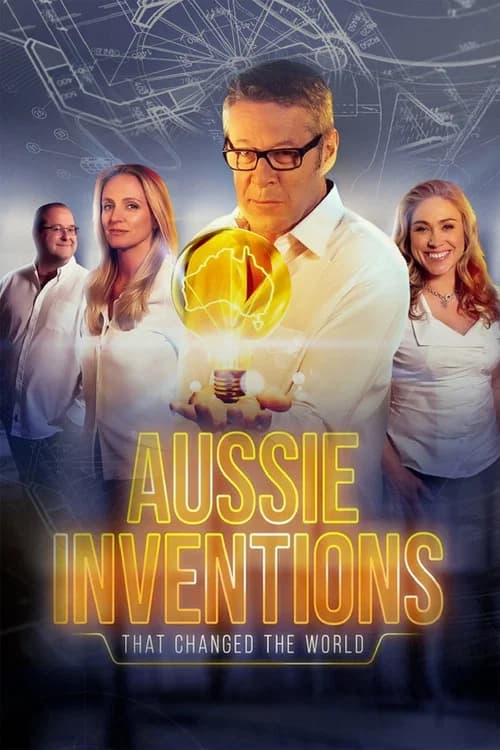
The 8 part series reveals a raft of great Australian inventors who turned game-changing ideas into a reality and forever changed how we live.
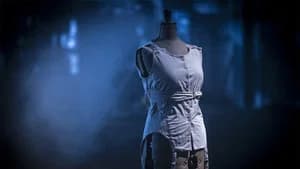
The surprising stories behind four helpful household inventions to improve home life: Gilbert Toyne created an Aussie backyard icon - the rotary clothes hoist - only to have it made famous by someone else. Myra Taylor improved women's lives with her boneless corset leaving a legacy of freedom we still enjoy today. Mervyn Richardson forever changed the suburban landscape with his Victa lawnmower, while Dr Steve Cummings and Bruce Thompson achieved huge water savings around the world with the dual-flush toilet.

Australian inventors have boldly re-imagined communication across the spectrum of technologies: Graeme Clark's extraordinary bionic ear delivered deaf patients the sound of speech; John O'Sullivan and his CSIRO team created the world's first high-speed wi-fi that dramatically changed the communication landscape worldwide; Henry Sutton's visionary Telephane was designed in Ballarat decades before the television; and post-master James Raymond established the world's first pre-paid postage system in Sydney in 1838 with his delightfully simple pre-paid envelope.
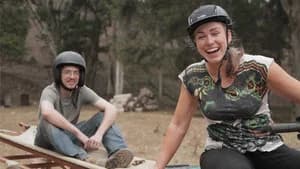
The fires of war become the forges of Australian invention. William Scurry invented a decoy drip rifle to help Anzacs safely evacuate from Gallipoli. Alexander Worsfold built his all-terrain transporter to hurry injured soldiers to field hospitals on the Western Front. Adelaide-born Howard Florey and his team developed the wonder drug penicillin that was first deployed amongst infected allied soldiers during World War II. And from Wollongong, Evelyn Owen's submachine gun out-performed its competitors and become known as 'the diggers' darling'.
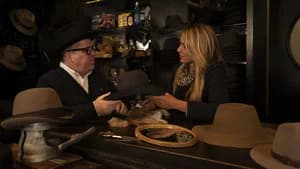
The push for smarter farming is at the core of Australia's tough agricultural history. Richard and Clarence Smith quarrelled over who was the true inventor, but their stump-jump plough improved the economic prospects of farmers working difficult terrain. Frederic Wolseley's mechanical shears eventually won over the shearers and transformed the wool industry. Lew Bandt designed the ute for farmers needing a comfortable working vehicle, and Benjamin Dunkerley invented a fur-cutting machine that led to the iconic Akubra.

Four great medicos and mavericks risked their careers testing these ground-breaking medical inventions. Psychiatrist Dr Joh Cade discovered the psychological effects of Lithium on his bipolar patients after first testing its toxicity on himself. Dr Mark Lidwill worked in secrecy on the world's first pacemaker following his experiments on the hearts of recently deceased patients. Professor Fiona Wood developed a process to help severe burns victims recover quickly with spray-on skin, and the Ansells helped fight infection with their disposable medical gloves.
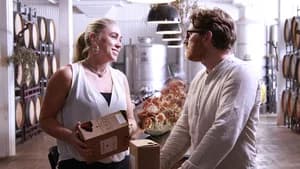
Food preservation has been a major challenge throughout Australia's history. In Victoria James Harrison invented a process of refrigeration that could make artificial ice on a commercial scale. In New South Wales, Thomas Mort and Eugene Nicolle, adapted and improved on Harrison's technology to build the world's first freezer works to produce artificially frozen food. In Western Australian Arthur McCormick came up with the Coolgardie food safe that ran on evaporative cooling, and in South Australia Tom Angove invented the wine cask.
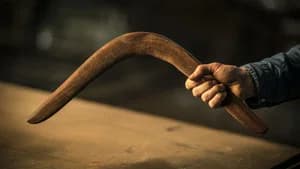
The Inventors who got us airborne typify tenacity and perseverance. Lawrence Hargrave, who was ridiculed for his box kites, laid the foundation for all modern aviation. David Warren's black box helped make flying the safest form of transport, but he faced staunch resistance getting it off the ground. Jack Grant persisted for 10 years to get his lifesaving slide-raft into planes. While it took 60,000 years for the inventors of the returnable boomerang to receive recognition for their aeronautical achievements.

Four Australian inventions that transformed how we see the world around us, and what we know about it. William and Lawrence Bragg invented X-ray crystallography to reveal the atomic structure of crystals. Milutin Stoilovic and colleagues at the Australian National University worked with Federal Police to create a forensic lamp, the Polilight, which could detect latent finger prints. Charles Tait created the world's first feature film with the help of his family, and William Beech invented the periscope rifle in the trenches of Gallipoli.

Self - Presenter

Self - Presenter

Self - Presenter
Self - Presenter


Driven was a motoring television programme launched by Channel 4 in 1998 as a rival to the successful and long-running BBC series Top Gear. The style was similar to its rival, but with additional features such as the "Driven 100", a road test of three cars in the same class, where each car would be given marks for qualities such as practicality, desirability and cost of ownership. The car with the highest total score would be the winner. The programme launched with the concept that the presenters should interact with each other rather than present items on their own, as was then the case on Top Gear. The first series also featured a "headquarters", a racing team truck, set on a former air force base at which cars were put through their paces. These concepts resurfaced in the reborn Top Gear soon after.

At Your Service is an Irish makeover television programme, the first series of which was broadcast on RTÉ One in 2008. It is a creation of Waddell Media, who are behind How Long Will You Live? and Looking For Love. Presented by expert hotelier brothers Francis and John Brennan of the five-star Park Hotel in Kenmare, County Kerry, the premise of the show is that business makeovers are given by the duo to B&Bs, guesthouses and small hotels across Ireland. The advice given covers various aspects of management, including staffing, catering arrangements, menus, room inspections and indoor and outdoor redecoration. Francis is responsible for the main inspection, whilst John investigates financial issues, searches for new marketing opportunities and advises on how to develop in the future. Francis is particularly known for his meticulous attention to detail.


The preeminent pop culture series that goes behind the myths, icons, heroes and artists that make comic books box office hits. Takes a stylized look at comics through themes like Death and Resurrection, Villains, Heroes, Social Relevance, Politics, Gender and Relationships. Features interviews with a who’s who of comic book legends – including Stan Lee, Frank Miller, Todd McFarlane & other famous comic book artists.


The series reports on mysterious criminal cases based on true events. The cases presented are mainly cases that happened in the United States or Canada. However, there are also occasional cases presented by German criminologists. Autopsy - Mysterious Deaths is based on the US television series Autopsy.