Loading titles…
Documentary
Explore monumental changes in the workplace and the long-term impact on workers, employers, educators and communities. Employment is part of the American Dream. Will the future provide opportunities for jobs that sustain families and the nation?
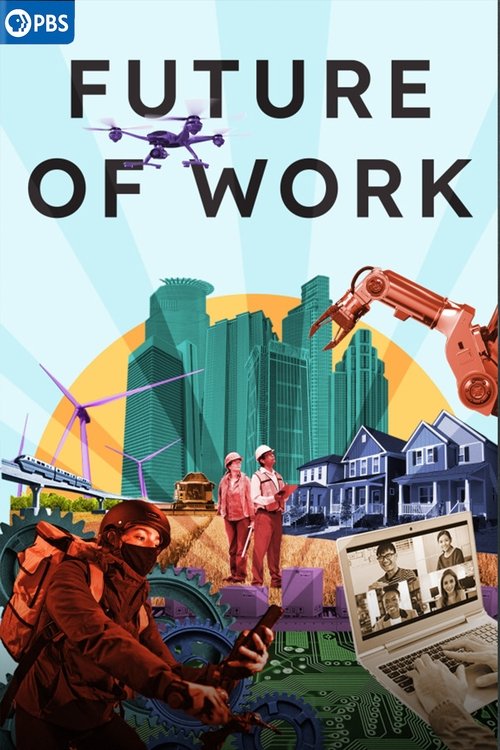
In addition to illuminating the ongoing drivers for disruptions to the world of work – AI, robotics, platform technology, globalization, labor practices -- the pandemic has been a driver of change. Unemployment flipped from lowest in 50 years to highest in a century.
Frontline and service workers have borne the health consequences of the pandemic, increasing racial and economic disparities. Certain robotic and AI applications are accelerating as the value of human workers is further questioned. Determining the likely areas of job growth and training needs is difficult. Post-secondary education has become more virtual and its costs, more controversial.
Companies rethink the need to even have offices, or how to redesign places of work. The traditional work shift - 9-5, 5 days a week – is losing relevance. Many companies are adopting the remote work models, spawned by the pandemic, as their new normal. The sense of precariousness and fear increases for many. Workers are demoralized, lonely, frightened and don’t know how to prepare for the future. Does the nation need new policies of Guaranteed Basic Income, (UBI) or a drastic rethinking of the social safety nets? Are we facing a post-work era, or an increased inequity in how we make our livings?
Narrator

Night Shift was a late-twentieth-century television series that portrayed people who work the night shift. Night Shift was made by a small independent production company called Addictive TV for the ITV network in the United Kingdom. Each episode of Night Shift lasted only five to ten minutes. The show's original run was from 1992 to 1994, while an additional series was produced in 1998. Several of Night Shift's episodes were filmed at the same location, most notably Gatwick Airport and Victoria Station. The original series featured a highly effective model shot, in which a camera moves across a Monopoly-style map of a city into the title, Night Shift, written as a street name. The shot was produced for a pilot in mid-1992, but utilized in the final shows too. The model was constructed by model-maker Peter Poole, and filmed by Dave Hicks. Despite the slick look, there was no professional film studio involved: just a Brighton garage. A mini-mist smoke machine was used to add depth to the backlit model, which was about 6 by 4 feet in size. A photo appeared in the design magazine, Creative Review, in the What's New In Design? section. The show, filmed entirely hand-held in a style very common now but not at the time, was presented in a lighthearted and informal fashion by the writer and actor, Colin Bennett. Bennett is also known for his appearance on the BBC children's television show, Take Hart, which was presented by Tony Hart.

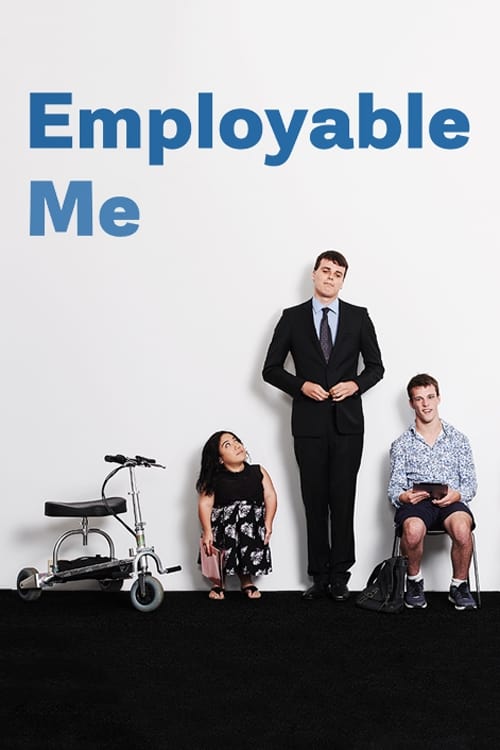
This docu-reality show takes viewers into the usually confidential world of the interview room, where real employers conduct real job interviews with real candidates. In each episode, an employer interviews three candidates, and at the end of the process, which alternates between trick questions, surprise tests, and situational scenarios, decides on which one gets the job. And it’s all done on camera!
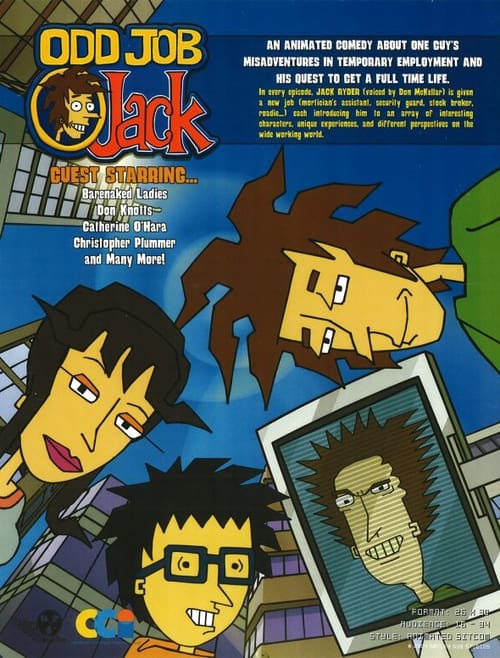
Odd Job Jack was a Canadian animated comedy television show featuring Don McKellar, about one man's misadventures in temporary employment. Seen on and produced for the The Comedy Network, a cable specialty channel, and shown on Adult Swim in Latin America, the show has currently finished its production run as of its fourth season. The second season has been released to DVD, and seasons two through four can currently be seen on the on demand streaming video service Hulu.