


Loading titles…
Documentary
Film lovers examine the cinematic moments that thrilled, perplexed, challenged and forever changed them in this collection of visual essays.


For Sasha Stone, summer 1975 evokes endless days, first kisses, "Jaws" on repeat — and the start of a long love affair with the movies.

Forever changed after seeing Park Chan-wook's "Lady Vengeance," Tony Zhou breaks down the uneasy perils and pleasures of revenge.

Love "Lawrence of Arabia," but can't embrace its protagonist? Drew McWeeny examines likability and the monsters we're drawn to in the dark.

For animators like Glen Keane, appeal means harmony in design. It's also led to narrow beauty standards for female characters — and new challenges.

How has film's challenging storytelling held up against the small screen's welcoming character arcs? Digital changed it all, says Taylor Ramos.

For young Walter Chaw, "48 Hrs." kicked off a crucial conversation about race in America — not to mention a host of interracial buddy movies.
No cast information available.
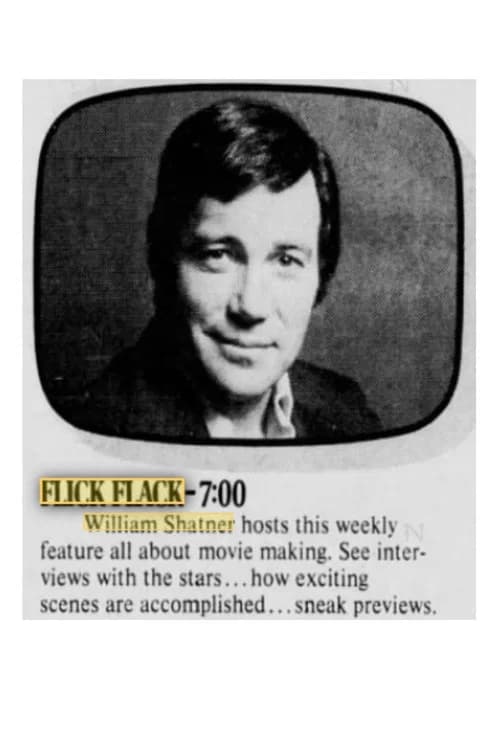
Flick Flack was a Canadian television series broadcast by Global Television Network in 1974. The series featured interviews with motion picture industry personalities combined with excerpts from films. William Shatner was the regular series host. "It was a TV show produced for Canadian TV. A handful of shows that aired every fortnight for a few months in the 70’s." @WilliamShatner · Sep 15, 2020


Acclaimed profiles of eight great American film directors. Produced and directed by Richard Schickel and narrated by Cliff Robertson, with solid interviews and film clips, the series reviews the careers of Raoul Walsh, Frank Capra, Howard Hawks, King Vidor, George Cukor, William A. Wellman, Alfred Hitchcock and Vincente Minnelli.


Documentary series dealing with every aspect of special effects in movies, from low-budget make-up to multi-million-dollar computer-generated graphics. The clear presentation includes descriptions of the creation and technical problems of the effects, and interviews with effects technicians, directors, stars and other crew. Each episode deals with one topic, effect or technician (eg theme park rides, CGI, Stan Winston), concentrating on one or more current or recent films.

An eight-part series on the history of French cinema from the postwar era to New Wave and beyond. Unearths the stories behind the films’ creation through live and archival interviews with the producers of the films in the series, as well as colleagues, family members, and experts on French cinema. Interlaced throughout is footage from a wealth of classic French films.


"La Course destination monde" is a Canadian reality television series, which aired on Télévision de Radio-Canada from 1988 to 1999. The series was a filmmaking competition which sent young, emerging filmmakers from Quebec around the world to make short films about their destinations, with prizes awarded at the conclusion of each season to the best films coming out of the competition. The show premiered in 1988 as "La Course des Amériques", sending filmmakers to destinations in North and South America. The second season, "La Course Amérique-Afrique", continued to highlight destinations in the Americas as well as opening to destinations in Africa, while the third season, "La Course Europe-Asie", centred on destinations in Europe and Asia. From the fourth season onward, the show was titled "La Course destination monde", and permitted filmmakers to travel to anywhere in the world.

