


Loading titles…
Documentary
Chris Packham meets the animals using devious tactics and sneaky tricks to survive. Meet the cross-dressing love cheat cuttlefish, the two-faced topi, the devious freshwater mussel and other utterly remarkable devious animals.

Chris Packham meets the animals using devious tactics and sneaky tricks to survive. New, groundbreaking science reveals astonishing visual trickery, from illusionist zebras to vanishing geckos and shape-shifting cuttlefish. Meet the mischievous mimics, from snakes to baby birds disguised as caterpillars, and a lioness who looks like a male lion. The world's ultimate con artists rely on sneaky strategies, even against their own kind - meet the monkey that cheats its own family and the lizard that fakes its own death. These animals really will do everything it takes to stay alive.
Chris Packham meets a host of animals that use deceptive tactics to find food. New science reveals that some trick their prey, like the manipulative mantis that looks like a flower, and killer whales that set traps using sound. Others cheat each other - sea otters demand ransoms after kidnapping each other's pups. And in our parks, grey squirrels are at war - stealing raids can only be foiled by a devious sleight of hand. Some fool other species for food - meet the drongo, an African bird running a false protection racket, and monkeys who steal valuables from humans and then barter for their return. These animal liars, cheats and hustlers really will stop at nothing to get a meal.
Chris Packham meets a host of animals using devious tactics to win a mate and raise a family. New science reveals bower birds and fiddler crabs using optical illusions to impress a female, whilst a male topi antelope fakes danger to give him an edge. Meet cross-dressing cuttlefish and marsh harriers as they sneak past dominant males to mate incognito. Animal family life is no more honest, with chicks blackmailing their own parents and the honeyguide bird duping another species into raising its chick. It is sex, lies and families faking it in the world of sneaky animals - they really will stop at nothing to succeed.

Presenter

The astounding story of the Chinese province of Guangdong – and the local people protecting its extraordinary wildlife from the modern world. Lying on the Tropic of Cancer, what should be desert is a wonderland of mountain forests, river deltas and coastal ecosystems, with over 1,000 species of animals. But with a booming economy, Guangdong is also the most densely populated province in China, home to over 126 million people. This beautiful, dramatic and epic natural history documentary celebrates not only the wildlife of Guangdong, but also reveals how its people cherish and protect it from the modern world.

Few countries in South America can boast to have such contrast and variety as Argentina. Diverse habitats such as Patagonia's bleak steppe, soaring Andean snowcaps, vast salt pans, lush rainforest around Iguazu Falls, steamy marshlands of Ibera, and grasslands of the Pampas support an astonishing range of wildlife - from penguins, whales and seals to condors, armadillos and guanacos.

A thrilling expedition across Bolivia in search of the most venomous snakes in this remote country. The main goal is to discover a new species unknown to science: a large pitviper that has not been classified yet. It will be tracked down and filmed alive for the first time. Spanish herpetologists Juan Timms and Jairo Cuevas embark on a perilous expedition across remote Bolivia, determined to capture the country's most venomous snakes. Their ultimate prize? Discovering a new, unclassified species of massive pitviper, known only from a single photograph.
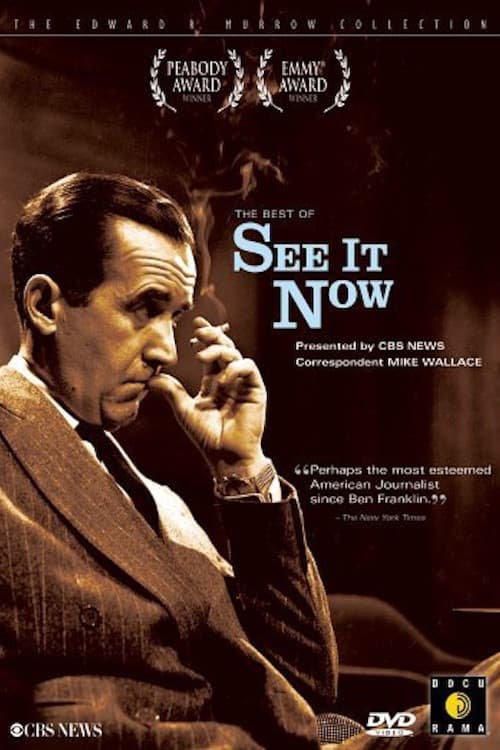
See It Now is an American newsmagazine and documentary series broadcast by CBS from 1951 to 1958. It was created by Edward R. Murrow and Fred W. Friendly, Murrow being the host of the show. From 1952 to 1957, See It Now won four Emmy Awards and was nominated three other times. It also won a 1952 Peabody Award, which cited its

Australian host Steve Irwin and his wife Terri run a wildlife refuge. Their shared passion is educating the world about wildlife, including the much feared crocodile and numerous venomous snakes. Steve's specialty is the capture and relocation of crocodiles. No animal appears too threatening to Steve, his true respect for animals is the foundation for everything he does.

Islands can be home to the most extreme examples of life and the some of the most dramatic landscapes. Natural selection fuels evolution in the most extraordinary way. Isolated for hundreds of thousands of years, pockets of individuals survive, thrive and adapt to fill all available niches fuelling a rapid development of new species. Wildest Islands, a stunning five-part series featuring the world’s most spectacular island locations. Dive into the crystal clear waters of the Caribbean; journey through the lush forests of Zanzibar; discover the unspoilt environs of the Hebrides; and uncover the enduring wonders of the Galapagos Islands as Wildest Islands investigates the rich history of these pristine paradises.

Viewers go deep into an Alaskan winter to meet six tough and resilient residents as they try to stay one step ahead of storms and man-eating beasts to make it through to spring. The closest neighbor to Sue Aikens is more than 300 miles away. Eric Salitan subsists solely on what he hunts and forages. Chip and Agnes Hailstone catch fish for currency in bartering for supplies, and Andy and Kate Bassich use their pack of sled dogs for transportation.

Meerkat Manor is a British television programme produced by Oxford Scientific Films for Animal Planet International that premiered in September 2005 and ran for four series until its cancellation in August 2008. Blending more traditional animal documentary style footage with dramatic narration, the series told the story of the Whiskers, one of more than a dozen families of meerkats in the Kalahari Desert being studied as part of the Kalahari Meerkat Project, a long-term field study into the ecological causes and evolutionary consequences of the cooperative nature of meerkats. The original programme was narrated by Bill Nighy, with the narration redubbed by Mike Goldman for the Australian airings and Sean Astin for the American broadcasts. The fourth series, subtitled The Next Generation, saw Stockard Channing replacing Astin as the narrator in the American dubbing.

