



Loading titles…
Documentary
Life After People is a television series on which scientists, structural engineers, and other experts speculate about what might become of Earth should humanity instantly disappear. The featured experts also talk about the impact of human extinction on the environment, and the…


What if every human being on earth disappeared? This isn't the story of how we might vanish--it is the story of what happens to the world we leave behind. In this episode, we'll see what happens to some of the bodies left behind. Most embalmed and buried, some mummified, others cryogenically frozen. Will any of them truly achieve immortality? Or will they be outlived by other memorials to mankind, like the Statue of Liberty or the Sistine Chapel. This is just part of a journey that will take us to the future of cities of Boston and Houston--as well as haunting sites already devoid of man. CC HD [TVPG]

An examination of what will become of the flora and fauna after the human demise, and how they may someday dominate the planet.

An examination of Washington, DC and all it's monuments. Plus, a look at the fate of Los Angeles.

A look at how long the nation's buildings and bridges will stand before the elements consume the steel and concrete, from New York City's skyscrapers to the Gateway Arch in St. Louis, and how once domesticated animals, like horses, will return to wild herds that roam America's grasslands. The episode also examines the ghost town of Rhyolite, Nevada, which was abandoned by people 90 years ago.

Things begin to spread and take on area such as plants and animals. Includes alligators being eaten alive by pythons in the Florida Everglades, and lakes and rivers could be choked off by oxygen-robbing plants. Also, Shanghai disappears from the weight of their skyscrapers, and the ocean takes over Miami Beach.
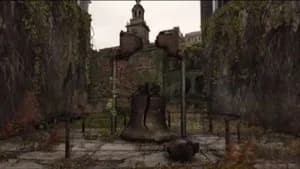
What will become of the encased treasures of the world, including the Mona Lisa painting or the Declaration of Independence, the Liberty Bell in Philadelphia, and the bridges and cable cars within San Fransisco?
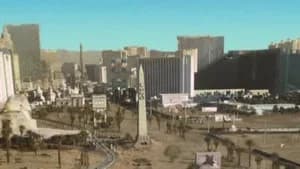
The subject for this episode features the fate of gambling centers in Las Vegas, which has become overrun by rats, celebrities wax figures will melt, and world famous hotels will become mere ruins. On the east coast, the oceans will destroy Atlantic City's casinos.

The fate of mankind's machinery of war: a sunken nuclear missile explodes, Pearl Harbor comes under renewed attacks, snow causes urban avalanches, and dairy cows are threatened. Featuring Denver, Hawaii, and a mysterious abandoned island near New York City.

A look at the world of transportation and what will become of them after man disappears, including cars and trains, roadways, oil refineries, and Detroit. Also, the Alamo would be threatened, dogs would become wild again and long-horn cattle population will rise quickly.
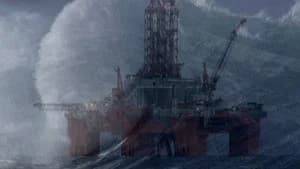
Massive waves of destruction threaten everything left behind by mankind in a post-apocalyptic world; U.S. cities face flooding as levees fail; famous paintings meet a tragic fate; a unique roof feature of the Sydney Opera House leads to its collapse

Self - Narrator

Self - Astrophysicist/Author

Self - TV Host/Historian
Self - Historian

Self - Evolutionary Biologist


Sky One introduces the start of a new ongoing documentary series that highlights the potential extinction of some of the world's most famous species. Working with Tiger Aspect Productions, the series follows a team of experts assisted by a wellknown personality. Each documentary will highlight the plight of the world's most endangered animals including the tigers of India, Aye-Ayes and Gorillas. Presenters include Sanjeev Bhaskar, Bill Bailey, Miranda Richardson and Joe Simpson. Each of the presenters will draw on the expertise of local teams campaigning to save the endangered species and work with conservationists to develop and implement strategies to help in their fight for survival.


Geologist Iain Stewart explain in three stages of natural history the crucial interaction of our very planet's physiology and its unique wildlife. Biological evolution is largely driven bu adaptation to conditions such as climate, soil and irrigation, but biotopes were also shaped by wildlife changing earth's surface and climate significantly, even disregarding human activity.


All In Earth's 4 billion year history, nature has solved all of lifes problems, from the highest mountain to the deepest ocean. Evolution is the ultimate inventor and many of mans most clever engineering solutions have exact counterparts in nature. In three amazing episodes, NatureTech views our world with fresh eyes, where nature and technology stand hand in hand.


The tropical islands that lie between Asia and Australia are among the biologically richest on earth, and home to a vast number of plants and animals. From tree kangaroos to tarsiers, manta rays to mudskippers, the region abounds with life. But why? The answer lies deep in time, due to the many millions of years these islands have existed - and the power of the earth, the sun and the moon.

