


Loading titles…
Documentary / Action & Adventure / Family
Australian host Steve Irwin and his wife Terri run a wildlife refuge. Their shared passion is educating the world about wildlife, including the much feared crocodile and numerous venomous snakes. Steve's specialty is the capture and relocation of crocodiles. No animal appears…

Steve follows Terri to her home state of Oregon, and to New York, to watch beavers and raccoons. Steve also helps Terri to relocate her pet cougar, Malina. Animals are alligator snapping turtle, American alligator, grey kangaroo, freshwater crocodile and red-belly black snake.
Steve and Terri trace the history of Australia's dinosaurs.
Steve takes viewers behind the scenes at the Queensland Reptile and Fauna Park (now Australia Zoo) in Australia. The work at the park includes relocation of giant boas and healthcare for alligators.
Not all dangerous creatures live out in the wilderness of the forests, the jungles and the Outback. Some of them live in the homes of suburbanites in Australia. Steve examines some of the venomous snakes and spiders that can make unwelcome appearances in suburbia.
Steve and Terri venture across the United States of America, seeking out deadly scorpions, venomous snakes and toxic spiders.
The Dingo Fence in southern Queensland, is part of the world's longest fence (over 3300 miles long), built to keep dingoes out of southern Queensland and away from the sheep flocks. Steve observes boars, snakes and dingoes in the Outback. Note: This episode originally aired as a two-hour special, but in later reruns, it was divided into two separate episodes.
Steve attempts to rescue a turtle in a river despite the presence of crocodiles.
Steve encounters orangutans and elephants in Sumatra.
Poisonous snakes and spiders infest suburban homes in Australia.
Steve dives into a crocodile-infested river to catch a turtle.
No synopsis available.
No synopsis available.
Steve comes face to face with a Komodo Dragon, the world's largest lizard, on a remote Indonesian island.

Self

Self

Self


The astounding story of the Chinese province of Guangdong – and the local people protecting its extraordinary wildlife from the modern world. Lying on the Tropic of Cancer, what should be desert is a wonderland of mountain forests, river deltas and coastal ecosystems, with over 1,000 species of animals. But with a booming economy, Guangdong is also the most densely populated province in China, home to over 126 million people. This beautiful, dramatic and epic natural history documentary celebrates not only the wildlife of Guangdong, but also reveals how its people cherish and protect it from the modern world.

Few countries in South America can boast to have such contrast and variety as Argentina. Diverse habitats such as Patagonia's bleak steppe, soaring Andean snowcaps, vast salt pans, lush rainforest around Iguazu Falls, steamy marshlands of Ibera, and grasslands of the Pampas support an astonishing range of wildlife - from penguins, whales and seals to condors, armadillos and guanacos.

A thrilling expedition across Bolivia in search of the most venomous snakes in this remote country. The main goal is to discover a new species unknown to science: a large pitviper that has not been classified yet. It will be tracked down and filmed alive for the first time. Spanish herpetologists Juan Timms and Jairo Cuevas embark on a perilous expedition across remote Bolivia, determined to capture the country's most venomous snakes. Their ultimate prize? Discovering a new, unclassified species of massive pitviper, known only from a single photograph.
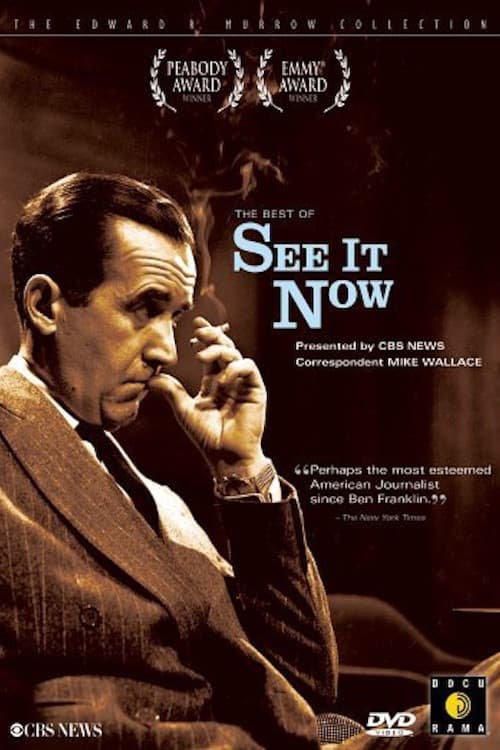
See It Now is an American newsmagazine and documentary series broadcast by CBS from 1951 to 1958. It was created by Edward R. Murrow and Fred W. Friendly, Murrow being the host of the show. From 1952 to 1957, See It Now won four Emmy Awards and was nominated three other times. It also won a 1952 Peabody Award, which cited its


Filmed in Sweden and Norway, this documentary series follows adventure-traveler and BBC journalist, Simon Parker, as he embarks upon a 2,000 mile / 3,500 KM cycling adventure from the North Cape to Smygehuk – the full length of the Scandinavian Peninsula. On his journey, Simon charts the seasonal cycles of the natural world, as summer is transitioning into autumn.

Islands can be home to the most extreme examples of life and the some of the most dramatic landscapes. Natural selection fuels evolution in the most extraordinary way. Isolated for hundreds of thousands of years, pockets of individuals survive, thrive and adapt to fill all available niches fuelling a rapid development of new species. Wildest Islands, a stunning five-part series featuring the world’s most spectacular island locations. Dive into the crystal clear waters of the Caribbean; journey through the lush forests of Zanzibar; discover the unspoilt environs of the Hebrides; and uncover the enduring wonders of the Galapagos Islands as Wildest Islands investigates the rich history of these pristine paradises.
