


Loading titles…
Documentary
The Human Animal: A Personal View of the Human Species is a BBC nature documentary series written and presented by Desmond Morris, which focuses on the behaviour of homo sapiens, examining areas such as love and sex, baby rearing, the importance of urban habitat and the roots of…

The BBC's Natural History Unit focuses on the planet's most advanced animal, beginning with a look at how man communicated before the evolution of language. Some gestures and expressions are so ingrained that we have not been able to erase them from our vocabulary.
This episode looks at our most fundamental activity - finding food, examining how humans exploit even the most inhospitable environments, and analysing how our origins as hunter-gatherers manifest themselves in the fast-food culture of the modern world.
In evolutionary terms, the human animal has gone from mud hut to skyscraper in the mere twinkling of an eye. The cameras of the Natural History Unit capture the subtleties of human hierarchy in an English pub, the urge to set up and defend territory in a Tokyo park, and tribal behaviour as displayed by gangs in Los Angeles.
In this program, Desmond Morris analyzes the biological nature of love, with its attendant patterns of behaviour and signals of health and fertility that have evolved to ensure pair-bonding and genetic survival. The pre- and post-pubescent periods of sexual maturation, the stages of courtship, and the aesthetics of physical beauty are studied, along with the anatomical mechanics of sexual arousal and copulation. In addition, the stresses placed on couples by life in an urbanised, crowded world are explored.
Desmond Morris looks at the natural history of the human parent and child. Why do homo sapiens devote more time to raising their young than any other animal? What makes parents sacrifice so much for their children, and why, once the offspring have been raised, don't humans simply die off as other creatures do? Desmond reveals how children offer a way of overcoming death itself.
Humans are animals with similar biological needs to other species. So why have we got art, cinema, sport, literature and philosophy? In the last programme in the series, Desmond Morris examines what the human animal does when it has sorted out its basic needs - food, warmth and shelter - and has gone beyond mere survival. He explores the inventiveness of human behaviour, and comes to some fascinating conclusions.

Cast

The astounding story of the Chinese province of Guangdong – and the local people protecting its extraordinary wildlife from the modern world. Lying on the Tropic of Cancer, what should be desert is a wonderland of mountain forests, river deltas and coastal ecosystems, with over 1,000 species of animals. But with a booming economy, Guangdong is also the most densely populated province in China, home to over 126 million people. This beautiful, dramatic and epic natural history documentary celebrates not only the wildlife of Guangdong, but also reveals how its people cherish and protect it from the modern world.

Few countries in South America can boast to have such contrast and variety as Argentina. Diverse habitats such as Patagonia's bleak steppe, soaring Andean snowcaps, vast salt pans, lush rainforest around Iguazu Falls, steamy marshlands of Ibera, and grasslands of the Pampas support an astonishing range of wildlife - from penguins, whales and seals to condors, armadillos and guanacos.

A thrilling expedition across Bolivia in search of the most venomous snakes in this remote country. The main goal is to discover a new species unknown to science: a large pitviper that has not been classified yet. It will be tracked down and filmed alive for the first time. Spanish herpetologists Juan Timms and Jairo Cuevas embark on a perilous expedition across remote Bolivia, determined to capture the country's most venomous snakes. Their ultimate prize? Discovering a new, unclassified species of massive pitviper, known only from a single photograph.
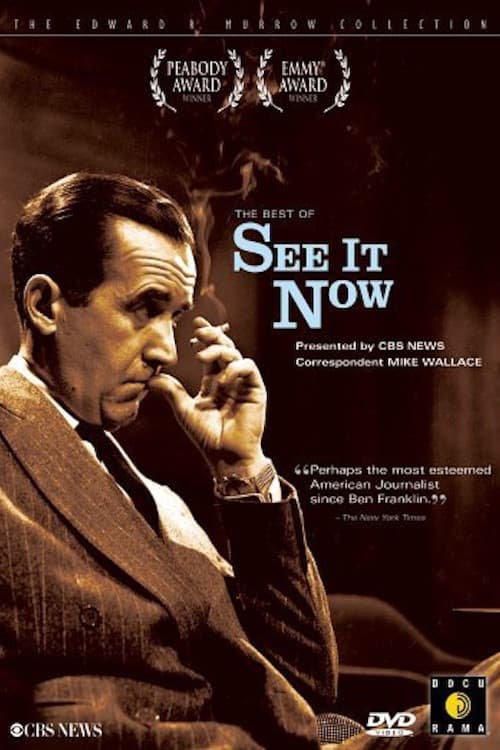
See It Now is an American newsmagazine and documentary series broadcast by CBS from 1951 to 1958. It was created by Edward R. Murrow and Fred W. Friendly, Murrow being the host of the show. From 1952 to 1957, See It Now won four Emmy Awards and was nominated three other times. It also won a 1952 Peabody Award, which cited its

Australian host Steve Irwin and his wife Terri run a wildlife refuge. Their shared passion is educating the world about wildlife, including the much feared crocodile and numerous venomous snakes. Steve's specialty is the capture and relocation of crocodiles. No animal appears too threatening to Steve, his true respect for animals is the foundation for everything he does.

Islands can be home to the most extreme examples of life and the some of the most dramatic landscapes. Natural selection fuels evolution in the most extraordinary way. Isolated for hundreds of thousands of years, pockets of individuals survive, thrive and adapt to fill all available niches fuelling a rapid development of new species. Wildest Islands, a stunning five-part series featuring the world’s most spectacular island locations. Dive into the crystal clear waters of the Caribbean; journey through the lush forests of Zanzibar; discover the unspoilt environs of the Hebrides; and uncover the enduring wonders of the Galapagos Islands as Wildest Islands investigates the rich history of these pristine paradises.

Meerkat Manor is a British television programme produced by Oxford Scientific Films for Animal Planet International that premiered in September 2005 and ran for four series until its cancellation in August 2008. Blending more traditional animal documentary style footage with dramatic narration, the series told the story of the Whiskers, one of more than a dozen families of meerkats in the Kalahari Desert being studied as part of the Kalahari Meerkat Project, a long-term field study into the ecological causes and evolutionary consequences of the cooperative nature of meerkats. The original programme was narrated by Bill Nighy, with the narration redubbed by Mike Goldman for the Australian airings and Sean Astin for the American broadcasts. The fourth series, subtitled The Next Generation, saw Stockard Channing replacing Astin as the narrator in the American dubbing.


